

 Jan 15, 2026


As cylindrical battery technology continues to evolve, OEM manufacturers are placing greater emphasis on larger-format cylindrical cells that can deliver higher capacity, improved thermal behavior, and better system efficiency. Among these formats, the 26700 cylindrical battery has become an important option for industrial, energy, and mobility-related applications.
However, selecting the right cell format is only part of the equation. For OEM buyers, the real differentiator is the capability of the 26700 cylindrical battery factory behind the product. A qualified factory does more than manufacture cells—it ensures consistency, safety, and scalability across the entire lifecycle of OEM cell and pack supply.
This article explains what OEM customers should expect from a professional 26700 cylindrical battery supplier, why many projects choose 3.2V platforms, and how to evaluate a 3.2V 26700 cylindrical battery factory for long-term, stable cooperation.
| Technical Parameter | Standard 26650 (LFP) | Mottcell 26700 (LFP) | Strategic Benefit |
| Height | 65 mm | 70 mm | Optimized Volume Utilization |
| Typical Capacity | 3000 - 3500 mAh | 4000 - 5000 mAh | ~25% More Runtime |
| Energy Density | ~110 Wh/kg | ~140 Wh/kg | Lighter Pack for Same Power |
| Cycle Life | 2,000 Cycles | 3,000+ Cycles | Improved Chemical Stability |
| Cost per Wh | Standard | Lower (-10%) | Higher Capacity/Material Ratio |
Cylindrical batteries remain a preferred choice in many OEM designs because they offer a combination of mechanical robustness, manufacturing efficiency, and predictable electrical behavior. Their metal-can structure supports consistent internal pressure control and effective heat dissipation, which is critical in high-power and long-cycle applications.
The 26700 format, with its larger diameter and increased internal volume compared to smaller cylindrical cells, allows OEMs to:
Increase energy per cell and reduce total cell count
Simplify pack architecture and wiring complexity
Improve thermal distribution inside battery packs
Maintain compatibility with automated welding and assembly lines
These advantages make 26700 cells well suited for applications such as industrial energy storage modules, backup power systems, electric mobility platforms, and heavy-duty industrial equipment.
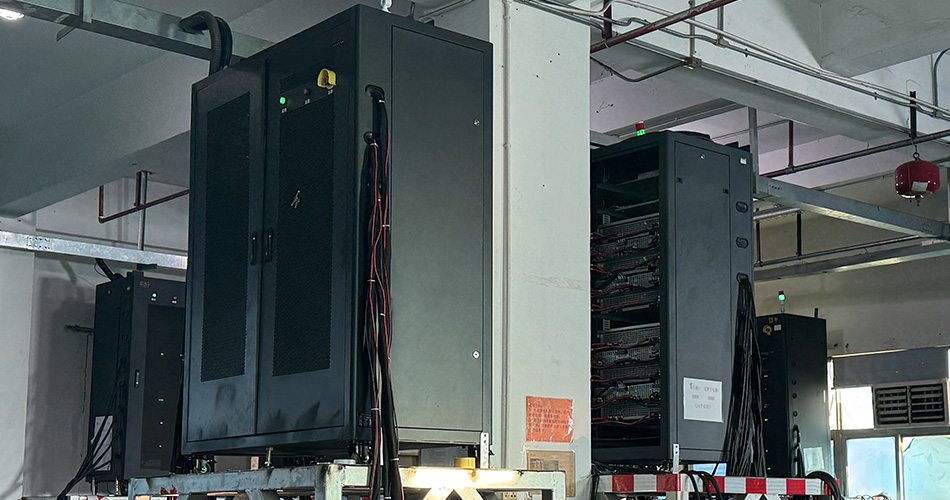
In OEM procurement, the term “factory” should indicate process control, traceability, and engineering capability, not just production capacity. A true 26700 cylindrical battery factory should demonstrate manufacturing discipline at every stage.
For OEM projects, consistency is critical. Even small variations in capacity or internal resistance can affect pack balance and long-term performance. A professional factory implements:
Incoming material inspection
Cell formation and aging processes
Capacity and internal resistance grading
Batch traceability and lot control
These controls ensure that cells used in the same pack behave consistently throughout their service life.
Many OEM customers require more than bare cells. A qualified 26700 cylindrical battery supplier should support custom pack assembly, including:
Series and parallel configuration design
Protection circuit and BMS integration
Connector, wiring, and insulation customization
Mechanical reinforcement for vibration and industrial environments
This capability allows OEMs to reduce development time and ensure system compatibility from the start.
In recent years, many OEMs have shifted their focus toward 3.2V battery platforms, especially for applications where safety, thermal stability, and long cycle life are critical. As a result, searches for a 3.2V 26700 cylindrical battery factory have increased steadily.
The 3.2V platform is commonly associated with stable lithium-based chemistries that offer:
Lower thermal risk under high load
More stable voltage output during discharge
Longer cycle life under frequent charging
Better tolerance for harsh industrial conditions
These characteristics make the 3.2V platform ideal for energy storage, backup power, and industrial applications where reliability is more important than maximum energy density.
A professional 3.2V 26700 cylindrical battery supplier understands that this platform requires chemistry-correct charging logic, protection thresholds, and system-level matching. Without this expertise, even high-quality cells may underperform in real-world use.
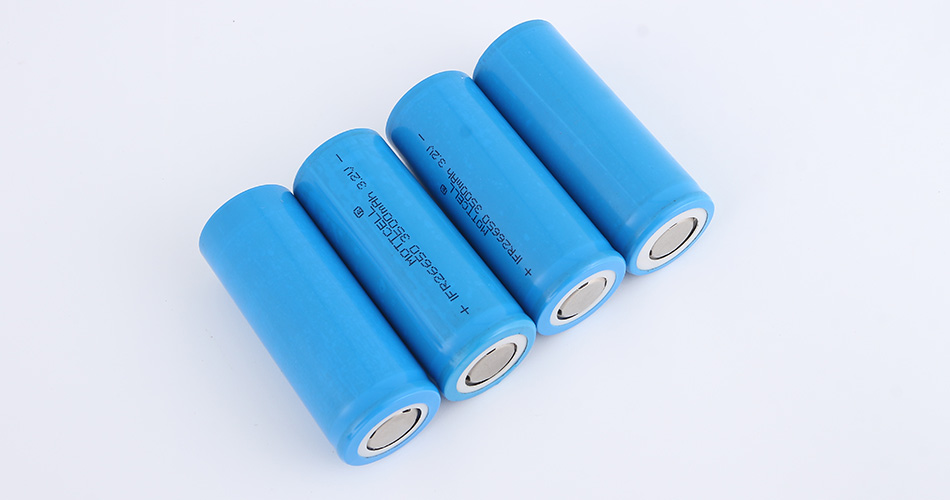
OEM buyers often search for a 26700 cylindrical battery supplier, but not all suppliers operate at the same level. Some act purely as distributors, while others function as manufacturing partners with deep engineering involvement.
A reliable supplier with factory-level capability will:
Ask about your load profile, operating environment, and lifecycle targets
Recommend suitable chemistry and voltage platforms
Support sample validation, pilot runs, and mass production
Provide stable lead times and change-control discipline
When sourcing for long-term OEM programs, working with a 26700 cylindrical battery factory or a supplier with direct factory control significantly reduces supply chain risk.
A professional 26700 cylindrical battery factory should operate with a clearly defined production flow designed to minimize variability and ensure repeatability.
Key process expectations include:
Controlled cell sorting and matching before pack assembly
Automated or semi-automated welding processes with parameter control
Insulation, spacing, and mechanical protection verification
End-of-line testing to confirm electrical performance and safety behavior
These processes are especially important for high-capacity cylindrical cells, where thermal and electrical stresses are higher than in smaller formats.
Due to their balance of capacity and mechanical strength, 26700 cylindrical batteries are commonly used in:
Industrial energy storage and buffering systems
Backup and emergency power supplies
Electric mobility and material handling equipment
Industrial tools and portable machinery
Power modules requiring long runtime and durability
In many of these applications, OEMs prefer to work with a 3.2V 26700 cylindrical battery supplier to prioritize safety and long-term reliability.
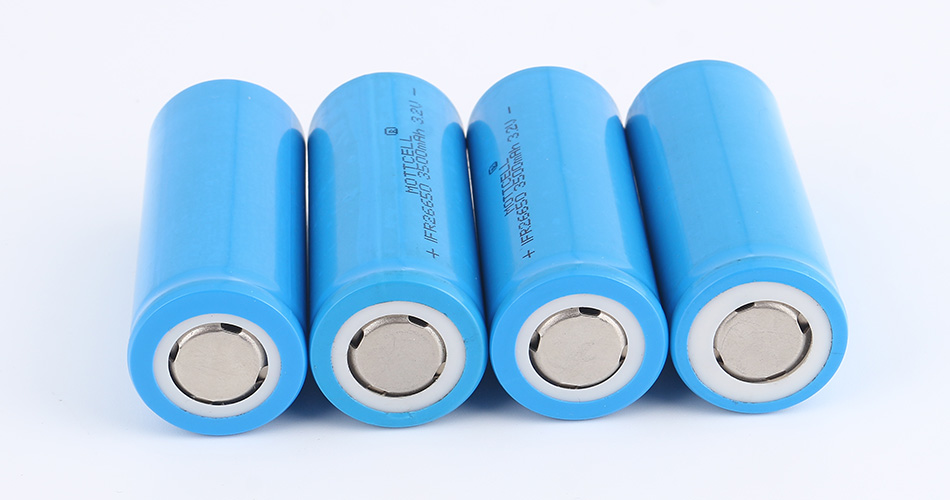
When evaluating a 3.2V 26700 cylindrical battery factory, OEM buyers should focus on both technical and operational capability.
Key evaluation points include:
Chemistry expertise and system-level understanding
Ability to provide guidance on charge and discharge limits
Consistent cell grading and pack matching strategy
Scalable production capacity with stable quality
Clear documentation and traceability practices
Factories that can address these areas transparently are more likely to support successful OEM programs over the long term.
To receive accurate and useful proposals from a 26700 cylindrical battery supplier, OEM buyers should provide:
Preferred chemistry and voltage platform (standard or 3.2V)
Target pack voltage and capacity
Continuous and peak discharge current
Mechanical size constraints or drawings
Connector and wiring requirements
Operating temperature range
Expected annual volume and project timeline
Clear RFQ inputs allow the factory to propose solutions that are technically correct and production-ready.
A 26700 cylindrical battery factory manufactures 26700-format cylindrical battery cells and often provides custom battery pack assembly for OEM applications, focusing on consistency, safety, and scalable production.
OEM buyers choose a 3.2V 26700 cylindrical battery factory when safety, thermal stability, and long cycle life are critical. The 3.2V platform offers predictable voltage behavior and reduced system risk in industrial environments.
A reliable 26700 cylindrical battery supplier offers consistent cell quality, engineering support, traceability, and the ability to scale from samples to mass production without quality drift.
A 3.2V 26700 cylindrical battery supplier understands chemistry-specific system matching and can help OEMs design safer, longer-lasting battery packs for demanding industrial applications.
Selecting the right 26700 cylindrical battery factory is not just about securing cells—it is about building a dependable supply chain that supports product reliability and long-term growth. Whether you are sourcing standard cylindrical cells or working with a 3.2V 26700 cylindrical battery supplier, focusing on manufacturing discipline, engineering capability, and scalability will help you reduce risk and accelerate your OEM projects.
Contact us for a custom [cylindrical battery pack solution]
Related News
Efficient 14650 Cylindrical Battery Factory Insights
Reliable 32650 Cylindrical Battery Factory for OEM Cells and Packs
Efficient AA Cylindrical Battery Factory: Production & Tech
AAA Cylindrical Battery Factory: 3.2V LiFePO4 Specialized Production Base
18500 Cylindrical Battery Factory Insights
22650 Cylindrical Battery Factory for OEM Cell and Pack Supply
26700 Lithium Ion Battery Manufacturer for OEM Applications
Precision Cell Matching: The Core of Quality Manufacturing
36V Battery Pack Performance: High Power for E-Bikes & AGVs
Reliable 24V 280Ah Battery Pack Factory: Grade A Cells Only
Certified 24V 200Ah Battery Factory: OEM & ODM Solutions
24V Battery Pack Manufacturing: Grade A LiFePO4 Precision | Mottcell
Best 24V Battery Pack: ROI & Long-Term Value | Mottcell
24V 300Ah Battery Pack Manufacturer: 2026 Energy Solutions
24V 314Ah Battery Packs: The 2026 Industrial Power Standard
Established in 2005
In 2009, it was awarded the title of "National High tech Enterprise"
 zoe@mottcell.net
WhatsApp: 8617388790296
Fax: 86-0755-84042963
Skype: live:b0ebaecbb8782516
WeChat: +8613428749632

 VR show
 CN
CN Home >


