

 Jan 13, 2026


Factories don’t buy batteries the same way consumers do. When purchasing teams search online, they are typically not looking for a “cheap cell”—they are looking for a stable supply partner who can deliver consistent electrical performance, documented quality control, and export-ready support for long-term production. That is exactly why selecting a trusted 22650 Lithium ion battery supplier matters. The right supplier helps you reduce engineering iteration time, prevent batch-to-batch drift, and protect your brand reputation through reliable, repeatable manufacturing.
The 22650 cylindrical format is increasingly considered in projects where engineers need a practical balance between compact size and usable energy. For many factory applications, it can be a smart option for increasing runtime or improving power capability without forcing a complete redesign of the product enclosure. But whether 22650 is the correct choice depends on chemistry platform, current demand, thermal constraints, compliance requirements, and how the pack will be integrated into the final product.
This article is written specifically for factory customers who want professional guidance—how to qualify suppliers, what technical checkpoints to ask for, how to evaluate quality beyond datasheets, and how to source both standard 22650 cells and custom cylindrical battery packs with stable mass production outcomes.
Cylindrical cells are widely used across industrial and commercial products because they support standardized mechanical placement, modular pack architecture, and scalable production processes. In real factory supply chains, cylindrical cells are commonly applied in portable devices, industrial tools and equipment, energy-related modules, medical and monitoring devices, and many other systems that require stable performance and clear traceability.
The 22650 format is often selected when a product team wants an upgrade path—more energy per cell than smaller sizes while still keeping the pack geometry manageable. In practice, the value of a 22650 solution is not just “capacity.” It is the combination of consistent internal resistance, stable voltage under load, safe thermal behavior, and the ability to scale assembly into repeat orders without quality drift.
If your sourcing goal is reliability, you should evaluate 22650 as part of an engineering system—cell chemistry, pack protection, assembly controls, and quality data—not as a standalone commodity part number.
One of the most important decisions in any 22650 project is chemistry. Chemistry defines your voltage platform, charging requirements, safety margin, and lifecycle expectations. Many buyers make the mistake of assuming “22650 lithium” is one uniform category, but for factories, chemistry differences are critical.
Many cylindrical lithium-ion systems use a nominal voltage around 3.6V to 3.7V and often charge to 4.2V per cell depending on chemistry. These solutions are frequently chosen when energy density is a priority and the device already supports 4.2V charging behavior. Common factory use cases include handheld industrial electronics, portable equipment modules, and applications where compact energy storage is a key design constraint.
If you pursue this platform, your supplier should help you validate voltage sag under peak load, internal resistance stability over life, and thermal rise inside your enclosure. These factors often decide real-world performance far more than the nominal capacity printed on a datasheet.
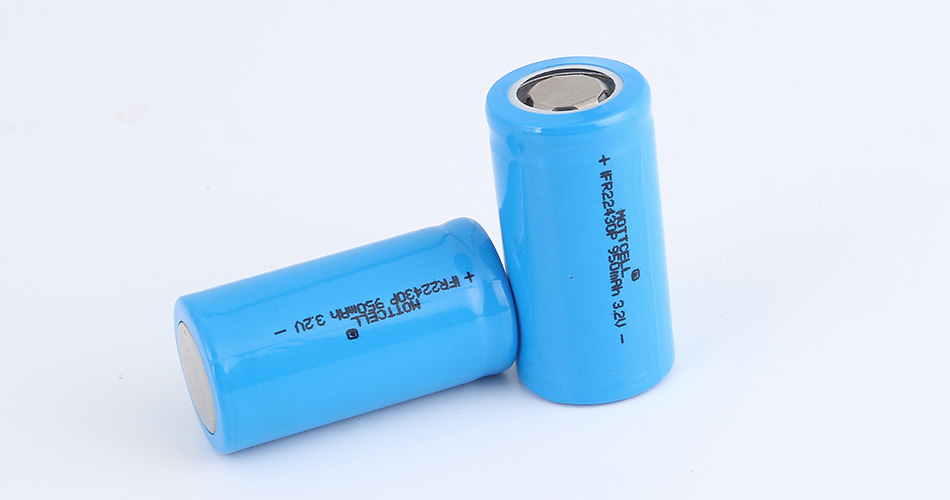
For applications prioritizing safety stability and long cycle performance, LiFePO4 is a popular choice. LiFePO4 systems commonly operate on a 3.2V nominal voltage platform and require chemistry-appropriate charging and protection thresholds. This is not a minor detail—it affects your series configuration design, charger selection, BMS logic, and overall pack safety strategy.
If you are sourcing LFP in this format, you are specifically looking for a 3.2V 22650 Lithium ion battery supplier who understands the LFP platform deeply and can provide consistent cell grading, reliable assembly, and verification data under your operating conditions. Many factory customers prefer LFP for projects such as backup modules, industrial monitoring, emergency lighting, and energy-related applications where stability and lifecycle value matter.
From a supplier qualification perspective, you should also confirm whether the partner can act as a 3.2V 22650 cylindrical battery manufacturer—not only selling LFP cells, but supporting the engineering controls and pack integration capability that factories require.
A trusted supplier is not defined by a single sample shipment. It is defined by process maturity, transparency, and the ability to deliver consistent output at scale. When you screen a 22650 Lithium ion battery supplier, focus on these high-impact areas:
A real factory-grade supplier should be able to demonstrate production capability, quality system structure, and engineering support scope. This includes clear facility information, defined production processes, and the ability to support OEM requirements such as design inputs, validation steps, and change control. If a supplier cannot explain how they maintain consistency across batches, it is difficult to trust them for mass production.
If you are seeking a true 22650 cylindrical battery manufacturer, ask for concrete proof of capability: process flow, QC checkpoints, traceability approach, and standard test scope. Trading-only vendors can sometimes provide products quickly, but factories need long-term stability more than short-term convenience.
Factory procurement demands traceability because it reduces risk. A qualified supplier should support batch traceability, clear incoming inspection rules, and defined acceptance criteria for both cells and packs. For cylindrical pack projects, consistency in internal resistance and capacity distribution is essential; otherwise, multi-cell packs can become imbalanced, leading to premature aging or field failures.
Many factory buyers need export-ready support, including basic safety documentation and shipping compliance knowledge. Even when the final certification pathway is handled by the buyer, a supplier with structured export documentation practices tends to be more professional and easier to work with during scaling.

A common factory sourcing problem is this: the sample looks good, but mass production drifts. That drift is rarely caused by “capacity.” It is usually caused by weak process control. Here are the practical checks that help you avoid that risk:
For series packs, cell consistency is a top driver of lifecycle performance. Ask your 22650 Lithium ion battery supplier how they grade cells by open-circuit voltage and internal resistance, how they manage outliers, and whether they have an aging process designed to stabilize early-life drift.
For custom packs, welding quality and mechanical protection are decisive. Poor weld stability can create intermittent failures, heating hotspots, or vibration-related breakage. A reliable supplier should have controlled welding parameters, fixture consistency, and clear inspection standards.
A pack is only as reliable as its end-of-line test process. Factory-grade suppliers typically implement standardized tests to verify voltage, protection function behavior, polarity, and key safety checks before shipment. They should also be able to provide batch-level testing summaries or records when requested by procurement and quality teams.
Many suppliers claim they can do “custom packs,” but factory customers need more than basic assembly. A competent 22650 cylindrical battery manufacturer should support customization across electrical design, mechanical integration, and compliance readiness.
A pack must be designed for your real current demand, including continuous load and peak pulses. A supplier should be able to recommend appropriate series/parallel configuration, protection thresholds, and BMS logic. This becomes especially important in high-load applications or products with variable peak current.
For LFP projects, a 3.2V 22650 Lithium ion battery supplier must provide chemistry-appropriate protection and charging guidance. Incorrect thresholds lead to nuisance trips, reduced usable capacity, or accelerated degradation.
Factories often require specific connectors, cable lengths, insulation structures, and pack shapes. Custom pack reliability depends on insulation design, spacing, vibration protection, and mechanical reinforcement. A supplier who understands factory environments will proactively address these risks instead of leaving them to chance.
When you move from pilot to mass production, you need strict control over material changes, BMS revisions, and process updates. Strong suppliers can explain how they manage engineering changes, how they notify customers, and how they prevent unapproved substitutions.
Many LFP sourcing failures happen because of system mismatch rather than cell defects. The pack may be assembled correctly, but the charger design, cutoff logic, or operating temperature range creates real-world problems.
If your requirement is LFP in this format, you should shortlist suppliers that can genuinely support a 3.2V 22650 cylindrical battery manufacturer role. That means they can supply stable LFP cells, support correct LFP charging parameters, provide relevant test evidence, and help you design a pack that performs reliably under your actual load and temperature conditions.
Choosing a general supplier who treats LFP as “just another product line” often leads to longer development cycles. A supplier who specializes in the 3.2V platform can shorten time-to-market and reduce costly iteration.
To compare suppliers efficiently and avoid slow back-and-forth communication, provide a complete RFQ package. The more precise your inputs, the more accurate and professional the supplier’s output will be.
Include your chemistry requirement (explicitly state whether you need LFP/3.2V), target voltage and capacity, continuous and peak current requirements, mechanical size constraints or drawings, connector and harness requirements, environment constraints (temperature, vibration, ingress risk), compliance expectations, shipping destination region, expected annual demand, and your sample-to-mass timeline.
When you submit this level of detail, a professional 22650 Lithium ion battery supplier will respond with design clarifications, validation recommendations, and a realistic sample plan—not just a number on a quotation sheet.
Factories should select a 22650 Lithium ion battery supplier that can prove consistent batch control, cell grading and matching practices, stable pack assembly processes, end-of-line testing coverage, and traceability. A trusted supplier also supports a structured path from sample approval to pilot production and mass shipments, helping factories reduce field failure risk and avoid batch-to-batch drift.
A qualified 3.2V 22650 Lithium ion battery supplier should demonstrate clear understanding of the 3.2V LFP platform, provide correct charging and protection recommendations, and support consistency controls for series packs. Factories should request performance data relevant to real operating temperatures and load profiles, and confirm the supplier can support stable scaling beyond samples.
A real 22650 cylindrical battery manufacturer can demonstrate process control, QC checkpoints, traceability, and engineering support capability for both cells and packs. Factories should prioritize manufacturers that can explain how they control variance, verify welding stability, manage change control, and provide repeatable production quality over time—not just one-off shipments.
Factories should work with a 3.2V 22650 cylindrical battery manufacturer because LFP systems require chemistry-appropriate charging thresholds, protection logic, and cell consistency strategies. Specialized LFP support reduces the risk of system mismatch, shortens validation cycles, and improves long-term reliability for safety- and lifecycle-focused applications.
Yes. Many factory customers prefer one partner who can supply cells and also assemble custom packs with defined QC and testing standards. In practice, the best approach is to qualify a supplier who can act as a 22650 Lithium ion battery supplier for ongoing cell supply while also demonstrating the manufacturing and engineering depth of a 22650 cylindrical battery manufacturer for pack assembly. If you need LFP, confirm they can support both a 3.2V 22650 Lithium ion battery supplier program and the capabilities expected from a 3.2V 22650 cylindrical battery manufacturer for stable, scalable delivery.
If you are building a long-term supply chain, focus on the fundamentals: chemistry suitability, stable process controls, weld and assembly robustness, end-of-line test discipline, traceability, and export readiness. When you choose the right partner, you reduce qualification time, lower warranty risk, and gain a supply chain that can scale smoothly with your product demand.
Whether your immediate need is a dependable 22650 Lithium ion battery supplier, a specialized 3.2V 22650 Lithium ion battery supplier, or you are screening for a true 22650 cylindrical battery manufacturer or 3.2V 22650 cylindrical battery manufacturer, the best results come from professional supplier qualification and clear, engineering-driven RFQ inputs.
2V 10440 Battery: Find Top Cylindrical Battery Factory
26700 Lithium Ion Battery Manufacturer for OEM Applications
22650 Cylindrical Battery Factory for OEM Cell and Pack Supply
18500 Cylindrical Battery Factory Insights
AAA Cylindrical Battery Factory: 3.2V LiFePO4 Specialized Production Base
Efficient AA Cylindrical Battery Factory: Production & Tech
Reliable 32650 Cylindrical Battery Factory for OEM Cells and Packs
Efficient 14650 Cylindrical Battery Factory Insights
Established in 2005
In 2009, it was awarded the title of "National High tech Enterprise"
 zoe@mottcell.net
WhatsApp: 8617388790296
Fax: 86-0755-84042963
Skype: live:b0ebaecbb8782516
WeChat: +8613428749632

 VR show
 CN
CN Home >


