

 Jan 12, 2026


Industrial buyers, distributors, and OEM assemblers increasingly rely on LiFePO4 chemistry because it balances safety, cycle life, and stable voltage output for real-world use cases. For bulk procurement, partnering with a dependable 22650 lifepo4 battery factory helps you control quality, reduce supply risk, and keep costs predictable—especially when you need steady deliveries across multiple batches.
A professional wholesale partner should be able to support the full procurement lifecycle: cell selection, spec confirmation, documentation for transport, batch traceability, and optional customization for private label or pack integration.
| Technical Specs | Mottcell 22650 (LFP) | Standard 18650 (LFP) | Strategic Advantage |
| Typical Capacity | 2500 - 3000 mAh | 1100 - 1800 mAh | 60% More Runtime |
| Nominal Voltage | 3.2 V | 3.2 V | Drop-in Compatibility |
| Cycle Life | 2,000 - 4,000 Cycles | 2,000 Cycles | Long-term Stability |
| Diameter | 22 mm | 18 mm | Compact Footprint |
| Max Discharge | 3C - 5C (High Power) | 1C - 3C | Better Load Handling |
A 22650 cell is a cylindrical format (22 mm diameter × 65 mm length). In LiFePO4 chemistry, the nominal voltage is typically 3.2V. Retail specifications commonly describe 3.2V 22650 LiFePO4 cells in the ~2000 mAh class, depending on model and grade.
For wholesale buyers, the key is moving from “retail specs” to factory-verified parameters—capacity grading, internal resistance (IR) ranges, discharge rate, and consistency across lots.
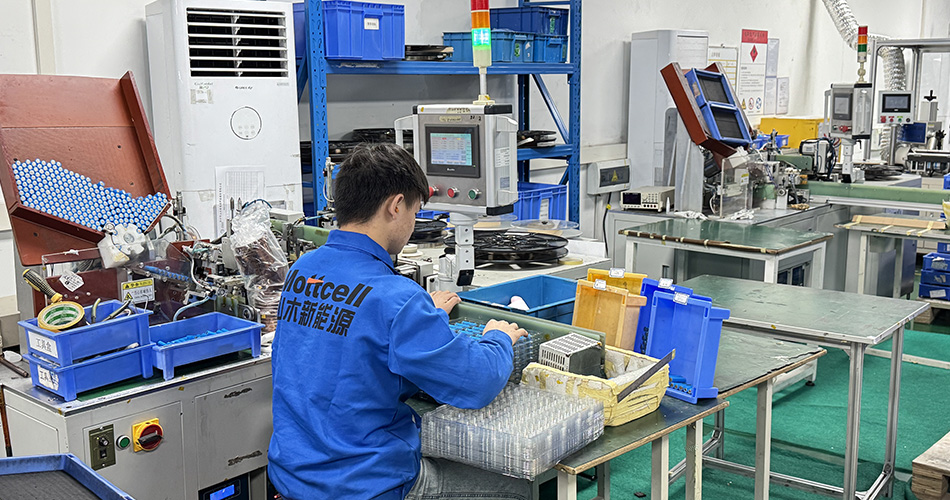
Working directly with a 3.2V 22650 lifepo4 battery factory is typically preferred when you care about:
A factory-led supply chain usually means tighter control over formation, aging, grading, and final inspection—reducing the risk of mixed grades or unstable lots.
If you’re building packs or integrating into industrial products, you’ll need alignment on:
Discharge/charge current capability
Operating temperature range
Cell matching strategy (capacity + IR)
Storage, shelf life, and handling requirements
Many industrial buyers require transport and safety documents before a PO can ship. Wholesale-ready suppliers should be able to provide documentation such as battery transport testing reports and safety data sheets, along with guidance on shipping methods.
Wholesale pricing depends on quantity, grade, packaging, and consistency requirements. Direct factory relationships often provide clearer control over QC, lead time, and specification stability.
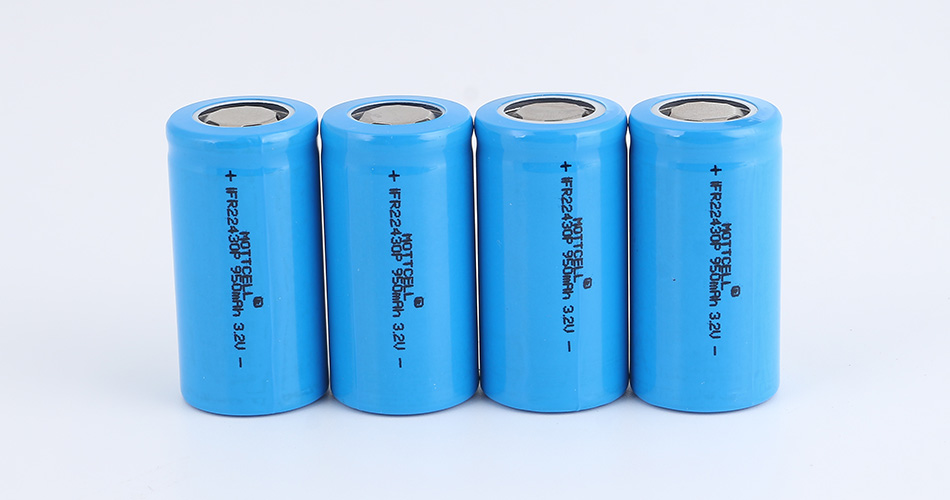
Even when a product is described as “22650 LiFePO4,” wholesale procurement should be driven by measurable specs and acceptance criteria.
A wholesale-ready 22650 lifepo4 battery supplier should confirm:
Nominal Voltage: 3.2V (LiFePO4)
Cell Size: 22650 (22×65 mm)
Capacity Range: depends on grade/model; confirm capacity band and tolerance
Cycle Life Target: confirm test conditions (DoD, C-rate, temperature)
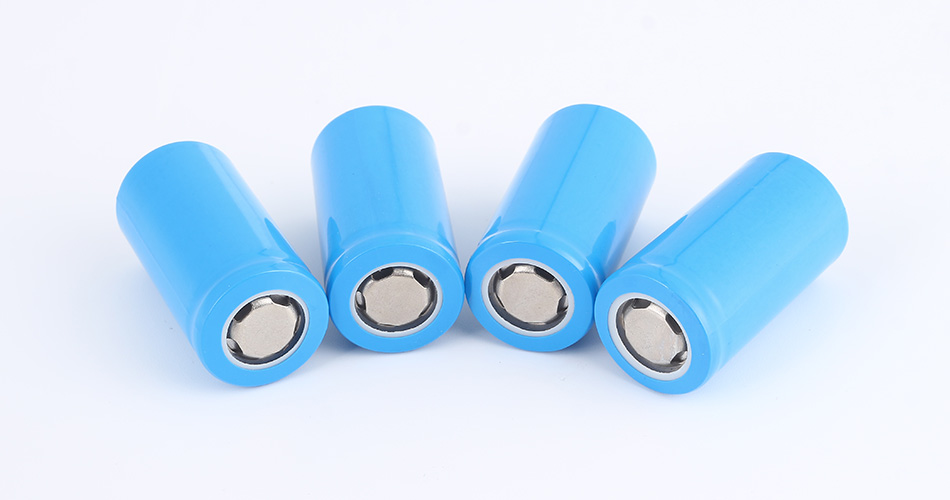
Terminal / Top Style: flat/raised, tabs, or welded options (important for pack assembly)
IR Range: internal resistance distribution and matching standard
Max Continuous Discharge: verified by test report, not only “typical” value
SEO tip for your product page: include a short spec table with voltage, capacity, size, cycle life, weight, and operating temperature—buyers often search using these attributes.
If you’re positioning your business as a 22650 lifepo4 battery factory for wholesale supply, buyers will expect professional QA language and a clear process.
A strong QC framework typically includes:
Incoming inspection (materials and components)
In-process checks (winding/assembly, electrolyte filling, sealing)
Formation + aging (stability screening)
Capacity grading (sorting by capacity bands)
Internal resistance testing (IR matching for pack builds)
Final checks (appearance, voltage, IR, dimensions, sampling AQL)
These steps reduce inconsistency risk and improve pack-level reliability, especially when you are supplying to integrators.
Many wholesale orders start as cell sourcing and evolve into partial or full customization:
Private label packaging
Custom terminal options
Matched cell sets for pack assembly
Pack design with BMS and enclosure
If you’re targeting industrial customers, positioning yourself as both a 22650 lifepo4 battery supplier and a solution partner (cell + pack) improves conversion—because OEMs often want one supplier to handle both specification control and system integration.
Wholesale procurement decisions are rarely made on specs alone. Buyers typically request:
Samples for validation
Pilot runs for pre-production
Mass production after technical approval
Clarify:
Standard lead time for regular grades
Lead time for made-to-order specifications
Buffer stock options for recurring customers
Wholesale buyers will ask about:
Anti-short packaging
Batch labeling and traceability
Carton/pallet standards
Shipping guidance for air/sea delivery and required documents
A professional 3.2V 22650 lifepo4 battery supplier should provide a clear packaging plan that supports safe transportation and warehouse handling.
When customers evaluate a 3.2V 22650 lifepo4 battery supplier, they’re usually trying to reduce procurement and quality risk. Use this selection framework:
Factory capability & traceability
Ask for batch traceability and grading standards.
Document readiness
Confirm required transport and safety documentation.
Transparent test reporting
Request capacity and IR distributions, not only single “typical” values.
Consistency commitments
Define acceptance criteria: capacity range, IR range, defect rules, and sampling plan.
OEM support
Choose a supplier that can support scaling from samples to mass orders—and optionally to battery pack integration.
To speed up quotations and avoid back-and-forth, buyers should include:
Target spec: 3.2V 22650 LiFePO4, capacity, max continuous discharge
Quantity per order + forecast (monthly/quarterly)
Target markets (for compliance needs)
Terminal style requirements
Packaging preference (bulk tray, individual sleeves, private label)
Required transport/safety documents
Delivery terms (EXW/FOB/CIF), destination country/port
This helps your 22650 lifepo4 battery factory quote faster and align on spec acceptance from day one.
A reliable 22650 lifepo4 battery factory is more than a source of cells—it’s a long-term production partner that supports batch consistency, documentation, logistics, and scale. If you’re sourcing for distribution, OEM assembly, or industrial projects, work with a 3.2V 22650 lifepo4 battery factory that can verify specs, provide stable grading, and support compliance documentation.
Ready to source wholesale 22650 cells? Send your RFQ with target capacity, discharge rate, quantity, and required documentation. A professional 22650 lifepo4 battery supplier should respond with a clear specification sheet, testing standards, MOQ, and lead time.
Buying directly from a 22650 lifepo4 battery factory improves batch consistency, enables capacity/IR grading control, and supports stable wholesale delivery planning.
Yes. A qualified 3.2V 22650 lifepo4 battery factory typically supports required transport and safety documents for lithium battery shipping. Confirm documentation types and destination requirements before placing mass orders.
A wholesale-ready 22650 lifepo4 battery supplier should confirm nominal voltage, capacity band, internal resistance range, discharge rate, operating temperature, terminal style, and traceability standards.
3.2V 22650 LiFePO4 cells are commonly used in industrial and outdoor products, backup power systems, and custom battery packs where safety and cycle life are priorities. Work with a 3.2V 22650 lifepo4 battery supplier to confirm suitability for your load profile and environment.
Evaluate the supplier’s factory capability, QC process, grading standards, documentation readiness, sample-to-mass consistency, and ability to scale production. A strong 22650 lifepo4 battery factory will provide transparent test criteria and stable supply planning.
Related News
Top 10440 LiFePO4 Battery Manufacturer Guide
14500 LiFePO4 Battery: Factory Insights & Safety
Top 14650 LiFePO4 Battery Manufacturer
Top 10440 LiFePO4 Battery Manufacturer Guide
16340 Lithium-Ion Battery Manufacturing Process
Top 14650 LiFePO4 Battery Manufacturer
Top 18500 LiFePO4 Battery Manufacturers
36V Battery Pack for E-Bikes and AGVs: OEM Buying Guide
12V 100Ah Battery Pack: Compare 3 Models for OEM Buyers
12V 280Ah Battery Pack: Solar Runtime & OEM Buying Guide
18650 Battery Manufacturer: Cell Specs & OEM Checklist
12V 300Ah Battery Pack: Runtime, BMS and OEM Buying Guide
48V HESS Supplier: Inverter Matching & OEM Checklist
4860 Battery Supplier Guide: Cell Specs & OEM Checks
36V 314Ah Battery Pack Manufacturer: OEM Buying Guide
Established in 2005
In 2009, it was awarded the title of "National High tech Enterprise"
 zoe@mottcell.net
WhatsApp: 8617388790296
Fax: 86-0755-84042963
Skype: live:b0ebaecbb8782516
WeChat: +8613428749632

 VR show
 CN
CN Home >


