

 Feb 23, 2026


In the high-stakes world of industrial manufacturing and product design, the "engine" of your innovation is the power source. For original equipment manufacturers (OEMs), the cylindrical lithium ion battery has remained the gold standard for decades. Its mechanical stability, high energy density, and mature production process make it the go-to choice for everything from medical robotics to electric vehicles and industrial Internet of Things (IIoT) sensors.
However, sourcing the right cylindrical cell battery requires more than just picking a part number from a catalog. It requires a strategic partnership with a manufacturer that understands the nuances of volumetric efficiency, thermal management, and safety certifications. At Mottcell, we specialize in providing high-performance cylindrical battery cells that meet the rigorous demands of modern professional projects.
| Sourcing Criterion | Mottcell Factory Advantage | Standard Sourcing Agent |
| Supply Stability | Direct Control of Production Lines | Dependent on Market Stock |
| Quality Control | 100% Cell Grading & Matching | Basic Sample Testing |
| Customization | In-house BMS & Housing Design | Limited to Standard Off-the-shelf |
| Technical Support | Engineer-to-Engineer (E2E) | Sales-only Communication |
| Lead Time | Predictable (Scheduled Batches) | Highly Volatile |
The cylindrical lithium ion battery is designed with a "jelly roll" structure, where the anode, cathode, and separator are rolled tightly and encased in a rigid metallic cylinder. This design is not accidental—it is a feat of engineering that provides several key advantages for factory-level applications.
Unlike pouch cells, which can swell or be easily punctured, the cylindrical cell battery is protected by a steel or aluminum casing. This high internal pressure capability allows the cell to maintain chemical stability even under heavy mechanical vibration or external impact, which is essential for industrial environments.
When cylindrical battery cells are assembled into a pack, the natural gaps between the round cells create "cooling channels." This allows for efficient heat dissipation, either through passive airflow or active liquid cooling systems. This is why high-drain applications, such as power tools and EV drivetrains, almost exclusively utilize lithium ion cylindrical cells.
Because the cylindrical lithium ion cell has been in mass production since the early 1990s, the manufacturing processes are highly automated. This results in incredibly high consistency in internal resistance (IR) and capacity, which is critical when balancing hundreds of cells in a large-scale industrial battery pack.
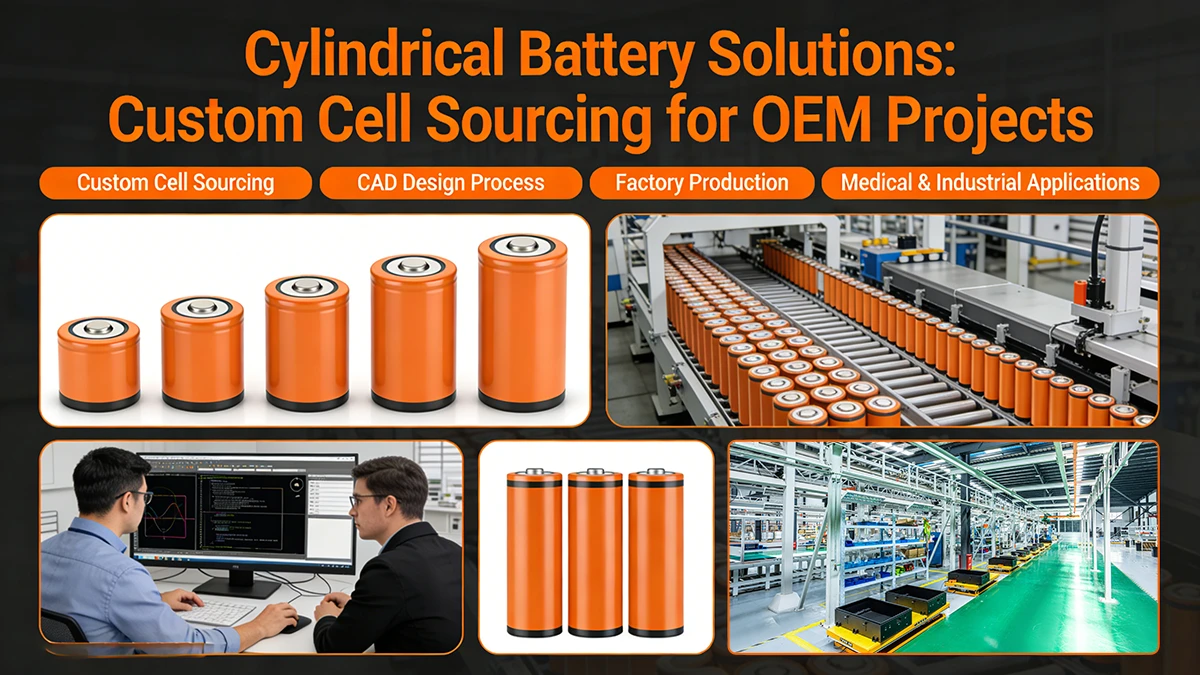
Selecting the correct dimensions is the first step in optimizing your device’s internal footprint. While the 18650 is the most famous, cylindrical battery sizes have expanded significantly to meet modern energy demands.
The naming convention for these cells usually follows a 5-digit code: the first two digits represent the diameter (mm), and the next three represent the height (mm/10).
| Model | Dimensions | Volumetric Energy | Best Industrial Use Case |
| 10440 (AAA) | 10mm x 44mm | Moderate | Precision diagnostic pens, micro-sensors |
| 14500 (AA) | 14mm x 50mm | High | Handheld scanners, tactical lighting |
| 18650 | 18mm x 65mm | Very High | Laptops, power tools, medical carts |
| 21700 | 21mm x 70mm | Extreme | Electric vehicles, high-capacity ESS |
| 26650 | 26mm x 65mm | High (Power) | Heavy-duty robotics, searchlights |
As a leading cylindrical lithium ion cell provider, Mottcell ensures that we match the size not just to your space requirements, but to your discharge (C-rating) needs. A larger cylindrical battery size like the 21700 offers better energy density, while specialized 18650s might offer higher pulse currents for motor-driven applications.
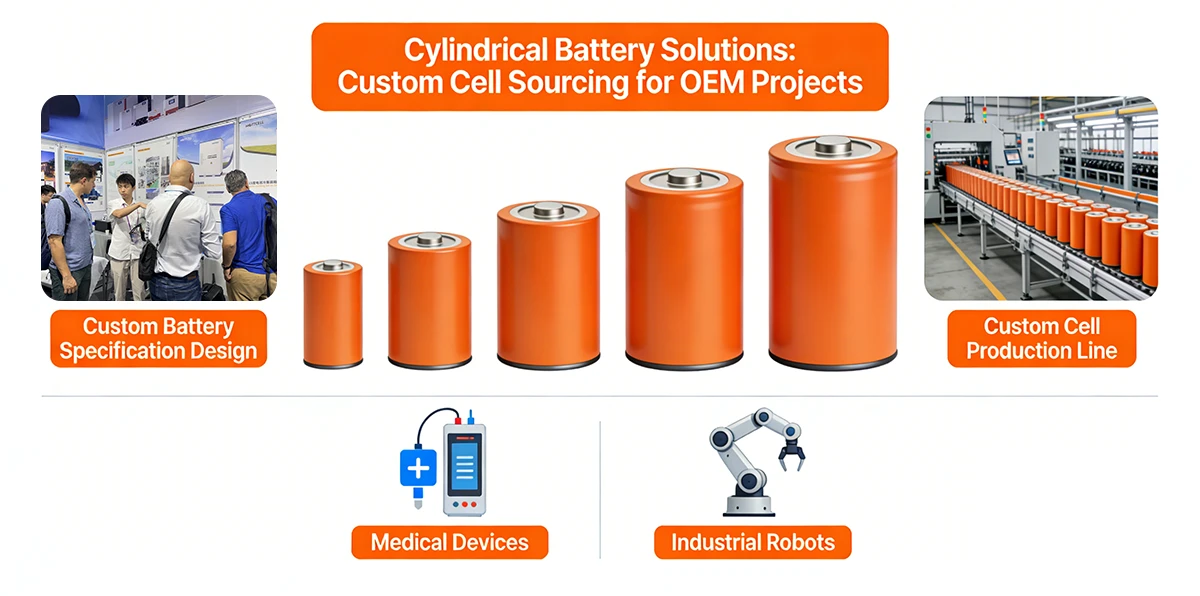
In many precision engineering projects, space is the most expensive commodity. This has led to a surge in demand for the 3.7V AAA cylindrical battery. Unlike the traditional 1.5V alkaline or 1.2V NiMH AAA batteries, the 3.7V lithium version provides nearly triple the voltage in the exact same form factor.
Choosing a specialized 3.7V AAA cylindrical battery manufacturer like Mottcell allows you to "overclock" the performance of small devices. Instead of using three alkaline batteries in series to achieve 4.5V, a single lithium ion cylindrical cell can provide the necessary voltage, freeing up internal space for advanced PCB components or additional sensors.
A professional AAA cylindrical battery factory must utilize clean-room environments. Because the 10440 (AAA) format is so small, even a microscopic speck of dust can cause an internal short. At our 3.7V AAA cylindrical battery factory, we utilize automated laser welding and vacuum electrolyte injection to ensure that every micro-cell meets the "Mottcell Standard" of zero defects.
As your AAA cylindrical battery supplier, we go beyond the cell. We provide custom-designed protection circuit modules (PCMs) that fit into the cap of the battery. This ensures that even the smallest cylindrical battery cells in your device are protected against over-voltage, over-discharge, and short circuits.
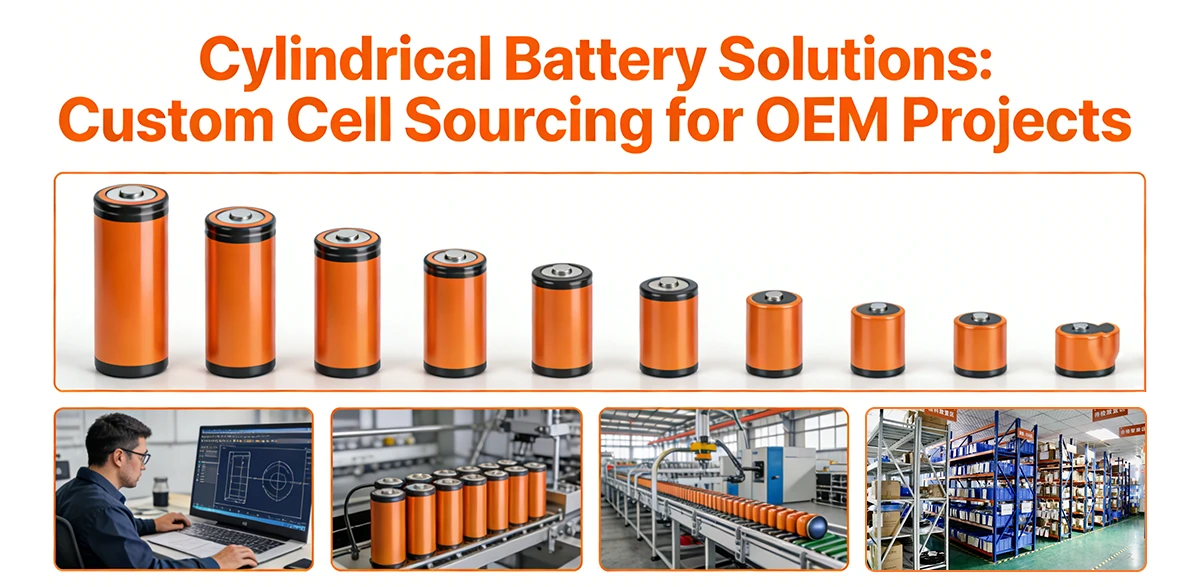
A common question for procurement teams is: Which is better, prismatic or cylindrical? The answer depends on your project’s priorities.
Cylindrical Lithium Ion Battery: Offers better safety, higher pressure resistance, and superior thermal management. It is easier to replace individual cells if a single one fails in a modular design.
Prismatic Cells: Better for "thin-film" applications where you need to maximize every square millimeter of a rectangular compartment. However, they are more prone to swelling and are generally more expensive to manufacture in small volumes.
For most industrial OEM projects involving mobility or high-drain cycles, the lithium ion cylindrical cells remain the superior choice due to their proven reliability and lower TCO (Total Cost of Ownership).
In the pursuit of the "perfect" power source, industrial OEMs often explore chemistries beyond the industry-standard NMC (Nickel Manganese Cobalt) or LFP (Lithium Iron Phosphate). One of the most talked-about innovations in the cylindrical cell battery space is Lithium Titanate (LTO). By replacing the graphite anode with lithium-titanate nanocrystals, this chemistry offers extreme performance—but it comes with significant engineering trade-offs.
For specialized projects, the cylindrical lithium ion cell using LTO chemistry is unrivaled in two areas:
Extreme Cycle Life: While a high-quality cylindrical lithium ion battery typically offers 1,000 to 3,000 cycles, LTO cells can exceed 20,000 to 30,000 cycles.
Rapid Thermal Management: LTO can be charged at rates as high as 10C, meaning a full charge in under 10 minutes, and it remains stable in temperatures as low as -30°C.
Despite these perks, for the vast majority of factory-scale projects, it is vital to understand the LTO battery disadvantages that can impact your product’s market viability:
Lower Volumetric Energy Density: LTO has a lower energy density compared to standard lithium ion cylindrical cells. To achieve the same total capacity as an 18650 NMC pack, an LTO-based system would require a significantly larger physical footprint, potentially doubling the weight and size of your device.
Diminished Nominal Voltage: Standard cylindrical lithium ion battery sizes operate at 3.6V or 3.7V. In contrast, LTO cells operate at a nominal 2.3V to 2.4V. This lower voltage means engineers must put more cells in series to achieve the same system voltage, further increasing complexity and cost.
Prohibitive Manufacturing Cost: Due to the specialized materials and lower production volumes, LTO cells are significantly more expensive than standard cylindrical battery cells. For most B2B applications, the ROI (Return on Investment) only makes sense if the device is intended to stay in service for over 15 years without a battery swap.
If your project requires 20,000+ cycles—such as in heavy-duty automated guided vehicles (AGVs) or specialized military equipment—LTO might be the necessary answer. However, for 95% of other industrial applications, Mottcell’s high-cycle cylindrical lithium ion cell technology provides a far superior balance of cost, weight, and performance.
By using advanced additives in our NMC and LFP cylindrical battery sizes, we bridge the gap—offering high cycle life and rapid-charging capabilities without the extreme price tag or the weight penalties of LTO.
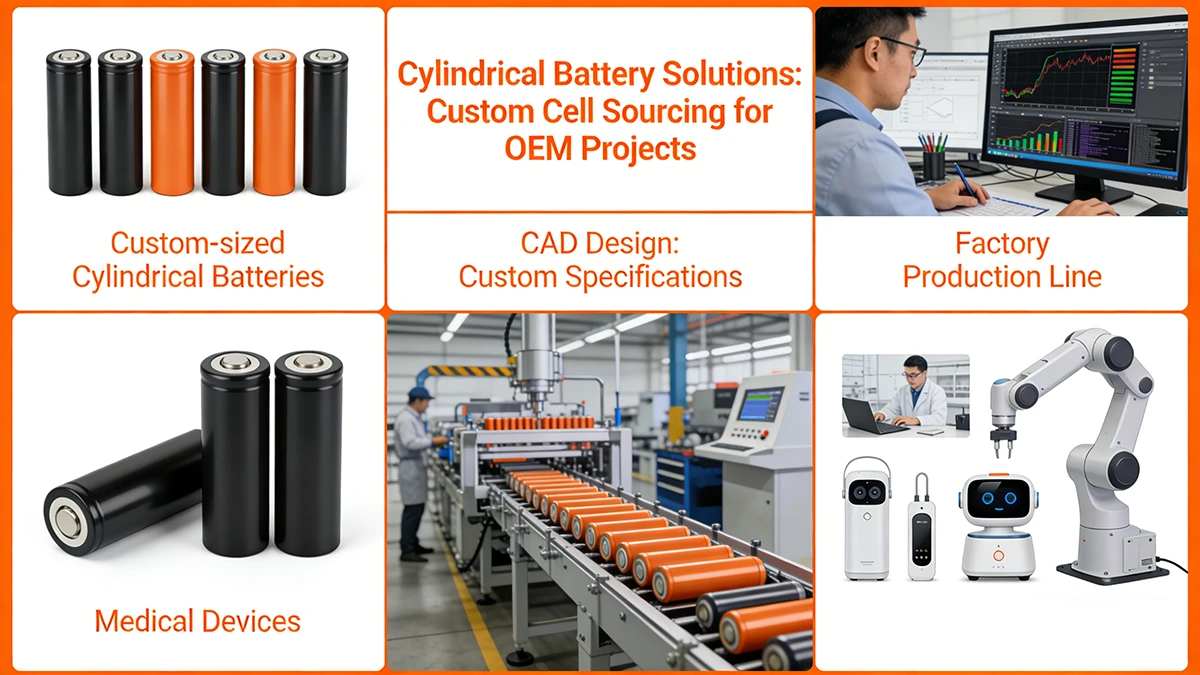
A cylindrical battery is a lithium-ion cell encased in a rigid, round metallic tube. It is the most common form factor for rechargeable lithium technology, prized for its mechanical strength and automated production efficiency.
In the rechargeable lithium-ion world, the three primary types (form factors) are Cylindrical, Prismatic, and Pouch (Polymer). Mottcell specializes in all three, with a heavy focus on high-capacity cylindrical battery cells for industrial OEMs.
Standard sizes (18650, 21700, etc.) are fixed because of the steel casing production lines. However, customization occurs in the battery pack assembly phase. By combining multiple cylindrical battery sizes in unique configurations, we can create a pack that fits any irregular space in your equipment.
Mottcell is not just a trader; we are a vertically integrated AAA cylindrical battery factory. We control the process from raw chemical mixing to the final testing of the 3.7V AAA cylindrical battery, ensuring that our industrial clients receive Grade-A cells with full certifications (UN38.3, CE, UL).
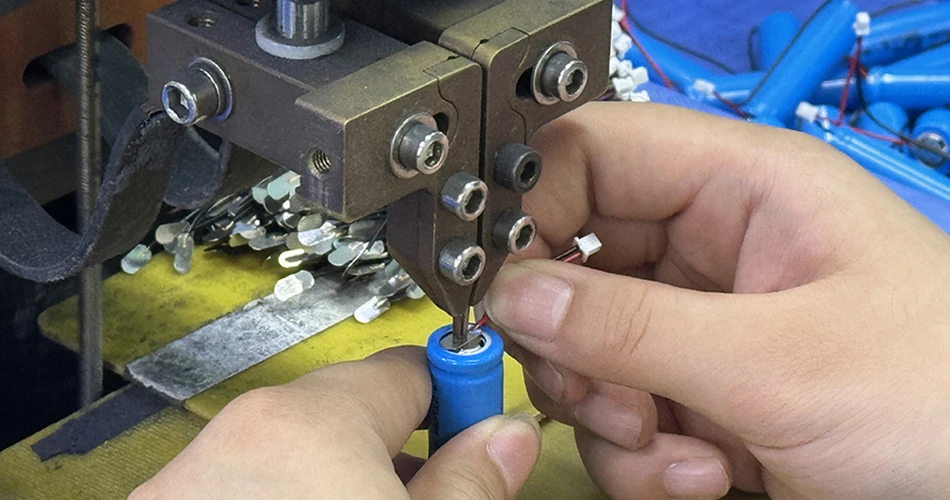
The transition to high-performance cylindrical battery solutions is the fastest way to upgrade your product’s reliability. Whether you need a specialized 3.7V AAA cylindrical battery manufacturer for a micro-medical device or a large-scale 18650 battery pack for industrial robotics, Mottcell provides the technical expertise and manufacturing scale to deliver.
Contact us for a custom [cylindrical battery pack solution]
Related News
Efficient 14650 Cylindrical Battery Factory Insights
Reliable 32650 Cylindrical Battery Factory for OEM Cells and Packs
Efficient AA Cylindrical Battery Factory: Production & Tech
AAA Cylindrical Battery Factory: 3.2V LiFePO4 Specialized Production Base
18500 Cylindrical Battery Factory Insights
22650 Cylindrical Battery Factory for OEM Cell and Pack Supply
26700 Lithium Ion Battery Manufacturer for OEM Applications
2V 10440 Battery: Find Top Cylindrical Battery Factory
14430 Cylindrical Battery Manufacturing Insights
26700 LiFePO4 Battery Manufacturer: 4000-5000mAh Cells
Commercial HESS Supplier: Factory Microgrid Sizing Guide
5kWh HESS Supplier: Home Solar Battery & OEM Options
48V 280Ah HESS Supplier: Solar Battery OEM Buying Guide
12V 314Ah Battery Pack Manufacturer: OEM Buying Guide
48V 300Ah HESS Supplier: Voltage, Runtime and OEM Guide
48V 100Ah HESS Supplier: 5.12kWh Solar OEM Buying Guide
12.8V 200Ah Battery Pack Factory: OEM Sourcing Guide
Established in 2005
In 2009, it was awarded the title of "National High tech Enterprise"
 zoe@mottcell.net
WhatsApp: 8617388790296
Fax: 86-0755-84042963
Skype: live:b0ebaecbb8782516
WeChat: +8613428749632

 VR show
 CN
CN Home >


