

 Jan 13, 2026


Cylindrical lithium batteries remain one of the most dependable energy platforms for OEM products because they are modular, mechanically stable, and scalable for mass production. For factories, the true value of cylindrical solutions is not only in the cell format, but in the manufacturing discipline behind it—consistent grading, stable welding, robust safety design, and repeatable test procedures.
That is why choosing a dependable 22650 cylindrical battery factory is a strategic procurement decision. The right partner can help you shorten qualification time, reduce production risk, stabilize long-term supply, and support export-ready requirements. Whether you need individual 22650 cylindrical cells or fully engineered battery packs, the supplier’s process capability determines whether your project runs smoothly after SOP (start of production).
This article explains what factory customers should expect from an OEM-focused cell and pack partner, how to evaluate a 22650 cylindrical battery supplier beyond basic datasheets, and how to qualify LiFePO4 solutions if your project requires a 3.2V 22650 cylindrical battery factory or a 3.2V 22650 cylindrical battery supplier.
| Metric | Standard 18650 (LFP) | Mottcell 22650 (LFP) | Strategic Benefit |
| Diameter | 18 mm | 22 mm | Slightly wider, much more energy |
| Typical Capacity | 1100 - 1500 mAh | 2500 - 3000 mAh | ~80% Runtime Increase |
| Cycle Life | 2,000 Cycles | 2,500 - 4,000 Cycles | Better Thermal Management |
| Safety Structure | Basic | Reinforced Steel Shell | Better Impact Resistance |
| Ideal For | Consumer Gadgets | Professional Tools/Medical | Higher Reliability Standard |
OEM engineering teams often prefer cylindrical cells because they support structured pack architecture and predictable assembly. Compared with many alternative formats, cylindrical designs allow standardized placement, consistent mechanical support, and stable interconnection strategies. That makes it easier to control production variables and reduce variation across batches.
Another reason cylindrical formats remain widely adopted is supply chain maturity. Cylindrical products have long been used across industrial devices, portable equipment, backup modules, energy-related systems, medical and monitoring devices, and many other categories where reliability matters. For factories, “reliability” includes not only safety performance, but also procurement stability: consistent delivery schedules, predictable quality, and repeatable manufacturing output.
For many OEM projects, the 22650 format is attractive because it can offer a practical balance between energy, size, and manufacturability. But the most important reminder for buyers is that a standardized format does not guarantee standardized performance. Two different factories can deliver very different outcomes even under the same “22650” label. That is exactly why factory qualification must focus on process control and data—not only on nominal capacity.
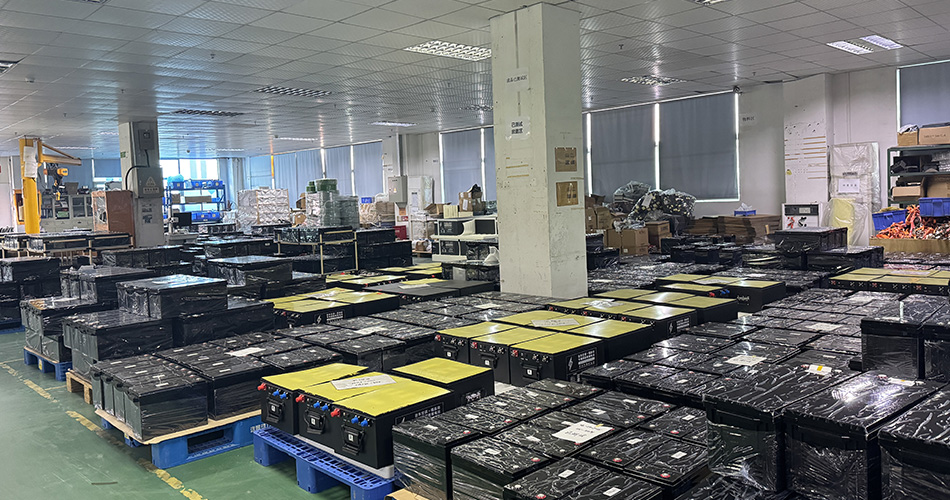
In OEM sourcing, the word “factory” should represent traceable capability. A true 22650 cylindrical battery factory should be able to show how quality is designed into production from start to finish, not merely inspected at the end.
For OEM cell and pack supply, a factory-grade partner should provide:
Even if a supplier offers both cells and packs, they should clearly explain how they verify cell batches, how they grade internal resistance and capacity distribution, and how they reduce the risk of pack imbalance when building series strings.
Factory buyers do not need “generic packs.” They need protection design aligned to their discharge profile, peak current behavior, and thermal constraints. A professional supplier should be ready to discuss continuous current vs peak pulses, protection thresholds, temperature derating guidance, and practical mechanical protection details.
An OEM-oriented factory should have clear assembly flow discipline and testing coverage. Pack assembly success relies on consistent cell matching, reliable welding, insulation and spacing control, and end-of-line verification. If a supplier cannot explain their test scope and traceability approach in clear manufacturing language, that is a warning sign for mass-production stability.
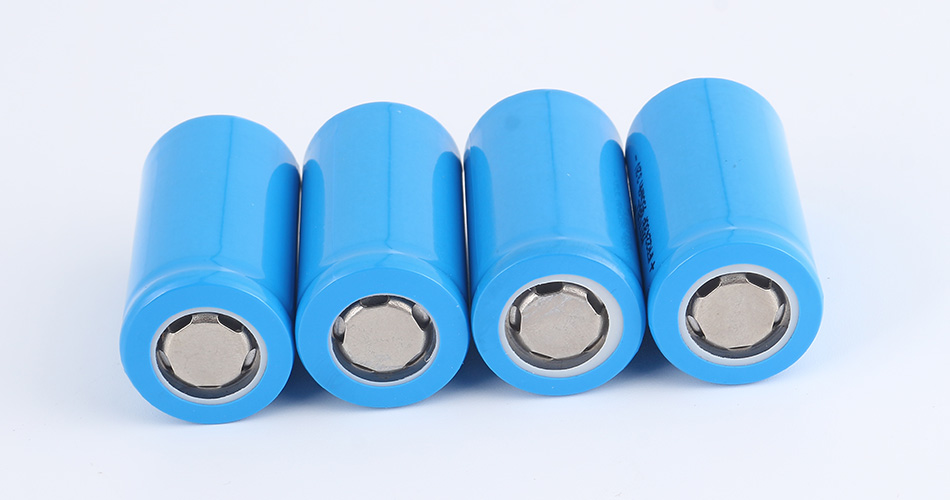
Many buyers begin with the search term 22650 cylindrical battery supplier because it is broad and covers multiple sourcing paths. However, “supplier” can mean very different business models. Some suppliers are full manufacturing partners with engineering and QC systems, while others are trading-focused vendors with limited control over production consistency.
A strong 22650 cylindrical battery supplier behaves like an OEM partner. They ask detailed questions before quoting, such as:
What is your continuous discharge current and peak current?
What is your operating temperature range?
What are your mechanical constraints and connector requirements?
Which certifications or compliance documents do you need for your market?
They also propose a structured qualification plan: sample validation, pilot run confirmation, and stable repeat-order production. In contrast, a trading-only vendor often prioritizes short-term price and availability while providing limited manufacturing transparency and traceability. For factory customers, the long-term cost of instability is often far higher than any short-term savings.
If your project requires stable supply for months or years, it is usually safer to prioritize a partner who can demonstrate the process maturity expected from a 22650 cylindrical battery factory, even if you initially contact them through a supplier channel.
A critical sourcing step is chemistry selection. Chemistry determines voltage platform, charging method, protection thresholds, thermal behavior, and lifecycle value.
Many OEM projects fall into two major platforms:
Conventional lithium-ion systems (commonly 3.6V/3.7V nominal platforms)
LiFePO4 systems (commonly 3.2V nominal platform)
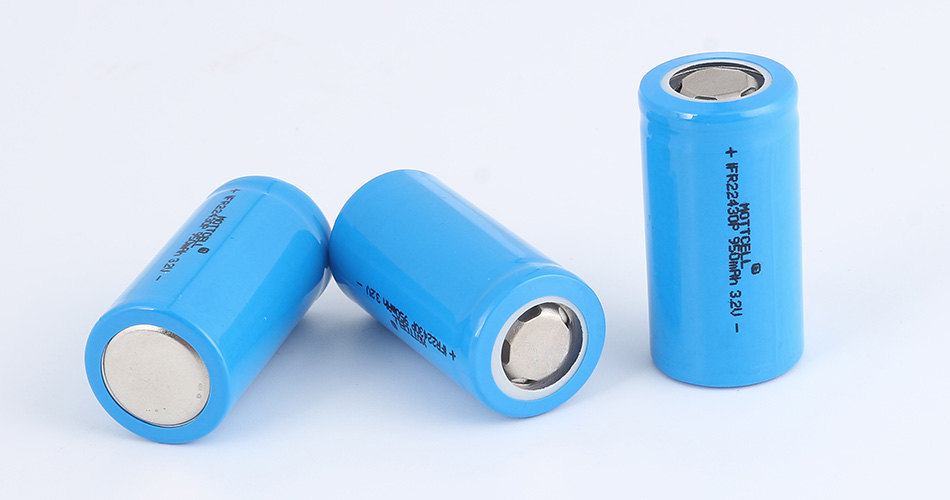
If your project targets LiFePO4, you are specifically in the scope of a 3.2V 22650 cylindrical battery supplier requirement. This is not a marketing detail. It impacts how your pack is configured, how your charger is designed, and how protection thresholds must be set.
For factory buyers, the key risk in LiFePO4 sourcing is system mismatch. Many problems occur not because the cell is defective, but because the charger settings, cutoffs, or protection logic are not aligned to the 3.2V platform. That is why you should qualify your partner as a 3.2V 22650 cylindrical battery factory capability, meaning they can support LFP-specific engineering guidance and provide consistent cell grading for series packs.
If your goal is stable OEM supply, focus on the manufacturing factors that most often drive field failures and warranty costs.
For multi-cell packs, consistency is essential. If internal resistance distribution is wide, the pack will age unevenly. If capacity spread is uncontrolled, series strings become imbalanced. A qualified 22650 cylindrical battery supplier should be able to explain how they grade cells, how they reject outliers, and how they ensure pack-level consistency across repeat orders.
Many pack failures come from interconnect weakness, weld inconsistency, or insulation damage during assembly. This is why welding parameter control, fixture stability, inspection discipline, and mechanical reinforcement matter. A factory-grade partner should treat weld quality as a controlled process with verification points, not as “manual experience.”
End-of-line testing is the last line of defense before shipment. A professional 22650 cylindrical battery factory should perform defined checks and keep traceability identifiers so that any issue can be contained and corrected quickly. For factories, traceability is not paperwork—it is operational protection.
OEM supply demands change control. Materials, BMS components, and process settings should not shift without approval. A stable partner has a clear method for managing engineering changes and communicating them to customers.
If you want accurate quotes and professional engineering responses from a 22650 cylindrical battery supplier, provide complete RFQ inputs:
State your chemistry platform (especially if you require 3.2V LiFePO4), target voltage and capacity, continuous and peak current, size constraints or mechanical drawings, connector requirements, operating temperature range, vibration or environmental risks, compliance expectations, destination markets, annual forecast, and your timeline from samples to pilot to mass production.
Suppliers who can respond clearly to this information are far more likely to be reliable long-term partners.
A reliable 22650 cylindrical battery factory should demonstrate disciplined process control, clear traceability, stable pack assembly capability, and standardized end-of-line testing. For OEM supply, the most important factor is repeatability: the factory should be able to deliver consistent quality across batches and support a structured path from samples to pilot to stable mass production shipments.
When sourcing from a 3.2V 22650 cylindrical battery factory, confirm the supplier truly supports the LiFePO4 3.2V platform with correct charging and protection logic, consistent cell grading for series packs, and validation data under your real load and temperature conditions. A factory that understands 3.2V system requirements helps reduce system mismatch risk and improves long-term reliability.
A professional 22650 cylindrical battery supplier will ask for your current profile, mechanical constraints, operating conditions, and compliance requirements before quoting. They should propose a qualification plan and explain how they control cell consistency, welding stability, pack insulation, and testing. Factory buyers should prioritize suppliers who can demonstrate traceability and process discipline, not only product availability.
Buyers search for a 3.2V 22650 cylindrical battery supplier when they need LiFePO4’s safety and long-cycle value on a 3.2V platform. Because 3.2V projects require chemistry-correct protection thresholds and charging logic, it is important to work with a supplier that can provide engineering support and consistent cell matching for stable pack performance.
If you want a supplier relationship that performs beyond samples, focus on the fundamentals: chemistry suitability, grading discipline, welding stability, insulation and mechanical protection, end-of-line testing, traceability, and change control. When those factors are in place, your supply chain becomes more predictable, your qualification cycles become shorter, and your production risk decreases.
Whether your immediate need is a dependable 22650 cylindrical battery factory for long-term OEM cell and pack programs, or you are shortlisting a 22650 cylindrical battery supplier with deeper engineering and QC capability, stable sourcing starts with professional qualification—and partners who can scale with repeatability.
Contact us for a custom [cylindrical battery pack solution]
Related News
Reliable Rechargeable Battery Solutions for Industrial Applications
Cylindrical Battery Solutions: Custom Cell Sourcing for OEM Projects
Top Cylindrical Battery Manufacturer: Li-ion & LiFePO4 Cells | Mottcell
Efficient 14650 Cylindrical Battery Factory Insights
Reliable 32650 Cylindrical Battery Factory for OEM Cells and Packs
Efficient AA Cylindrical Battery Factory: Production & Tech
AAA Cylindrical Battery Factory: 3.2V LiFePO4 Specialized Production Base
18500 Cylindrical Battery Factory Insights
26700 Lithium Ion Battery Manufacturer for OEM Applications
2V 10440 Battery: Find Top Cylindrical Battery Factory
14430 Cylindrical Battery Manufacturing Insights
12V 280Ah Battery Pack: Solar Runtime & OEM Buying Guide
18650 Battery Manufacturer: Cell Specs & OEM Checklist
12V 300Ah Battery Pack: Runtime, BMS and OEM Buying Guide
48V HESS Supplier: Inverter Matching & OEM Checklist
4860 Battery Supplier Guide: Cell Specs & OEM Checks
36V 314Ah Battery Pack Manufacturer: OEM Buying Guide
26700 LiFePO4 Battery Manufacturer: 4000-5000mAh Cells
Commercial HESS Supplier: Factory Microgrid Sizing Guide
Established in 2005
In 2009, it was awarded the title of "National High tech Enterprise"
 zoe@mottcell.net
WhatsApp: 8617388790296
Fax: 86-0755-84042963
Skype: live:b0ebaecbb8782516
WeChat: +8613428749632

 VR show
 CN
CN Home >


