

 Jan 23, 2026


Choosing a 4860 battery supplier starts with an exact model drawing, a documented cell specification and a sample acceptance plan. Before comparing prices, confirm what the supplier means by 4860, which chemistry is proposed, whether you need loose cells or a complete pack, and which test reports apply to that configuration. A format label alone does not establish capacity, charging limits, manufacturing availability or compatibility with your equipment.
This guide gives OEM purchasing teams and battery pack integrators a practical route from an initial 4860 inquiry to a documented sourcing decision. Mottcell publishes cell and battery pack product families, but this article does not designate an unconfirmed 4860 configuration as a stocked or certified catalog product. Request written model confirmation and a current specification before approving a quotation. Use the checklist below to organize that discussion and identify the evidence your engineering team needs.
| RFQ item | What to confirm before a quotation |
|---|---|
| Model identity | Manufacturer code, drawing revision and meaning of the 4860 label |
| Supply scope | Loose cells, module or finished pack and responsible supplier |
| Electrical requirements | Chemistry, voltage limits, capacity conditions and current duty cycle |
| Mechanical interface | Delivered outline, terminals, tolerances and assembly constraints |
| Evidence and samples | Applicable model documents and written sample acceptance plan |
| Order conditions | Quantity, destination, delivery scope and change-control process |
For an initial review, send your 4860 cell or pack requirements to Mottcell. Include the intended application, a dimensioned drawing or reference specification, electrical requirements, sample quantity and destination market. Ask the response to separate confirmed information from proposed development work. That distinction helps you compare offers without mistaking a broad manufacturing description for approval of the particular battery your project requires.
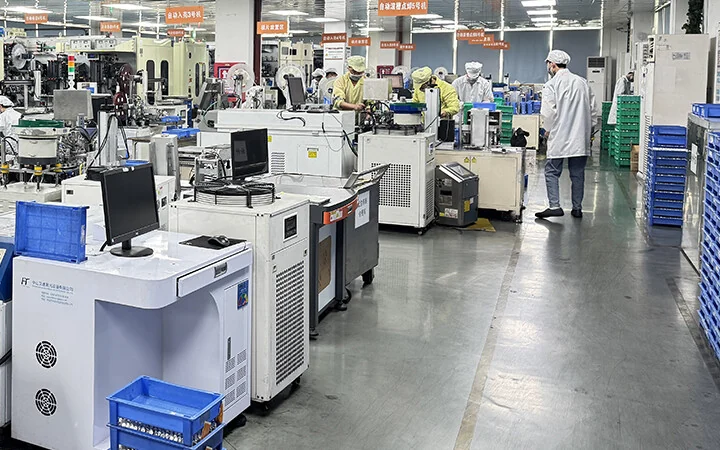
Begin with the identifier used in your own engineering documents. If a drawing, purchasing request and supplier quotation use different labels, resolve the discrepancy before ordering samples. Ask for the complete manufacturer model code and a revision-controlled dimensional drawing. Do not translate the digits in a search term into guaranteed physical dimensions. The final cell outline, terminal arrangement, insulating features and permitted tolerances must come from the proposed model documentation.
Check that 4860 has not been transposed or confused with a different cylindrical format, such as 4680. Similar-looking labels are not sufficient evidence that two cells are interchangeable. Put the agreed identifier on the quotation, sample labels and acceptance record. If your project is exploring a custom size rather than an existing cell, ask the supplier to explain the feasibility review, sample route and documentation that will become available. This avoids building a tooling or enclosure decision around an ambiguous shorthand.
A loose-cell quotation and a finished-pack quotation cover different responsibilities. For cells, define the required model, terminal condition, delivery condition, lot information and documents. For a module or pack, include the assembly drawing, electrical arrangement, connections, protective functions and installation interfaces. Identify which organization owns cell selection, mechanical design, electrical protection, integration testing and the final release decision. Leave no essential interface dependent on an assumption between two suppliers.
Review the published Mottcell cell product families as a starting point for a model discussion. The public catalog contains separate cell families with their own parameter tables. A value listed for another model is not a specification for the requested 4860 cell. If your project requires an assembled solution, also review the battery pack product families and ask for a proposal tied to your particular equipment and configuration. Neither page replaces the specification submitted with your quotation.
The cylindrical shape does not identify the cell chemistry. Ask the supplier to state the proposed chemistry, nominal voltage and permitted operating limits together. Your integration team should compare those limits with the charger, protective electronics and equipment requirements. Avoid carrying a voltage or charging setting from a familiar battery into a new design merely because the format label looks similar. A purchasing comparison needs an agreed electrical specification for each candidate.
Mottcell publicly describes both 3.7V and 3.2V cell families. Those descriptions demonstrate why a general reference to a lithium-ion battery is insufficient for model selection. They do not establish the chemistry or voltage of an unconfirmed 4860 model. Put the required chemistry in the request when it is already fixed by the design. When it remains open, ask each proposal to identify the tradeoffs and the validation needed, so engineering can assess alternatives on their documented merits.
Compare rated capacity only after checking the conditions under which it is measured. Ask for the charge procedure, rest period, discharge current, cutoff condition and test temperature associated with the proposed rating. Confirm whether the figure is a minimum acceptance requirement, a typical value or a nominal designation. Two offers with the same headline capacity can use different measurement conditions, making a direct price-per-capacity comparison unreliable.
Keep charge capacity and energy distinct. For an approved model, nominal energy in watt-hours can be estimated from documented nominal voltage multiplied by capacity in ampere-hours. That calculation does not establish usable energy in your equipment or predict runtime under every load. A practical qualification includes representative operating conditions and an agreed endpoint. Ask for model-specific data rather than transferring a capacity or runtime claim from another cell size, a marketing image or a different pack configuration.
Describe the continuous load and short current events separately. Include the duration and repeat frequency of peaks, the available charging window, standby periods and any simultaneous loads. If the design team has measurements, send the records with the request. If it has estimates, label them as estimates and agree how sample testing will replace them. A supplier cannot reliably evaluate a project from a capacity target and the phrase high power alone.
Ask the proposed specification to state charge and discharge ratings with their operating conditions. Where a short-duration rating is offered, check the allowed duration, repetition and relevant temperature conditions. Do not treat a pulse rating as a continuous rating. For a pack, have the responsible engineers review how cell ratings, connections and protective functions interact. Qualification should confirm operation on the intended duty cycle rather than rely on a general promise that a larger-format cell handles heavier loads.
Ask for a drawing showing the complete delivered outline, dimensional tolerances, terminal geometry and insulation requirements. Review the actual delivered variant, including any tabs or added connection features, rather than only the outline of a bare cell. Supply the available space, assembly method and interface constraints from your project. The integrator should check clearance, mounting and service access before approving samples or releasing production tooling.
Discuss how cells will be connected, restrained and inspected in the proposed assembly. Joining methods and mechanical interfaces need a process appropriate to the confirmed cell design. A familiar cylindrical appearance does not prove that an existing assembly process can be reused. Request the information needed for process review, including any supplier limitations on handling or terminal connections. Have qualified engineering personnel approve the actual joining and protection design. This sourcing guide is not a substitute for an equipment-specific construction procedure.
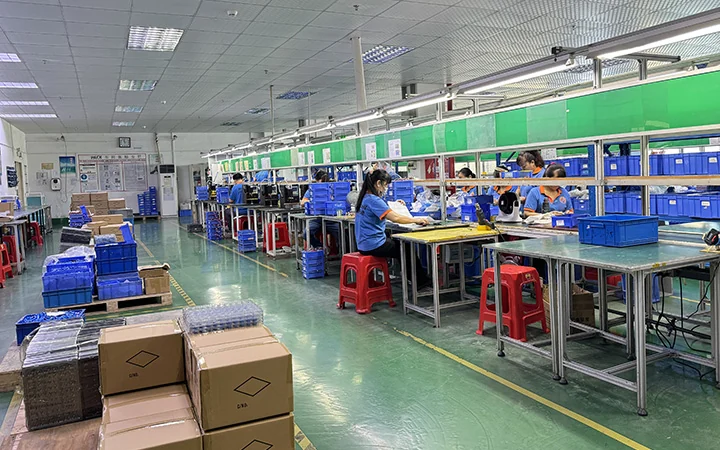
Tell the supplier where the battery will operate and how the application exposes it to heat, cold, moisture, dust, vibration or repeated movement. Distinguish ambient temperature from conditions inside the equipment enclosure. Explain whether the battery experiences long storage periods, frequent charging or loads that vary during a work cycle. Ask which of these conditions are covered by the proposed specification and which require additional assessment.
Charging and discharging conditions should be reviewed separately. A permitted discharge temperature range does not prove charging is allowed across the same range. Likewise, an enclosure appearance does not establish a tested ingress rating. For an assembled battery, request evidence relevant to the complete proposed construction. Compare sample results against the intended installation conditions, and record any restrictions that affect use or maintenance. Do not infer environmental performance from the format name or from a photograph of factory equipment.
Ask whether the quotation covers cells manufactured by the quoting organization, sourced cells integrated into a pack, or a custom development proposal. Each route can have a legitimate place in a project, but the responsibilities and available evidence differ. Request the legal supplier name, proposed model identification, origin information appropriate to the order, and the documents needed to trace sample and production lots. The word factory in a page title does not settle these purchasing questions.
The Mottcell company and production overview provides context for a supplier discussion. Use company information to understand the published business scope, then ask questions about the specific 4860 proposal. Agree how batch identifiers, specification revisions and approved configuration records will accompany deliveries. For a pack using sourced cells, establish how cell changes will be communicated and reviewed. Traceability should let your team connect a delivered battery to the configuration and evidence it approved.
Create a document list with the engineering and compliance teams responsible for the final application. State the destination market, intended use and any customer requirements in the request for quotation. Ask the supplier to identify the documents available for the proposed cell or assembly, the tested model and the relevant configuration. A familiar report title or certification logo does not prove that a particular battery and intended use fall within its scope.
Review document identifiers, issuing organizations, tested samples, conditions and any configuration limitations. Cell documents, pack documents and company management-system certificates serve different purposes. Keep them separate in the approval record. If the quotation includes a transport document, confirm that its scope matches the offered product and planned shipment. Applicable requirements depend on the product and route, so obtain the relevant current documents from the supplier and responsible specialists. Do not mark an unresolved requirement complete using a report for a different model.
Write the acceptance plan before the sample arrives. Identify the questions the evaluation must answer, who performs each check, the test equipment and conditions, and the numerical or observable acceptance limits. Record the sample model, lot identifier, drawing revision and any configuration details. Where the project uses a pack, distinguish incoming-cell checks from integration checks in the target equipment. Do not change an acceptance limit after a test simply to make a sample pass.
The table below is a discussion framework rather than a record of a completed Mottcell test. Your team should add the limits and methods appropriate to the proposed battery and application. Safety or environmental testing belongs in a competent process with suitable facilities and responsible personnel. Retain the results and any agreed changes with the approved specification. That record gives purchasing a clear basis for deciding whether a supplier response is ready for a pilot order.
| Acceptance topic | Record to request or create | Decision supported |
|---|---|---|
| Identity and dimensions | Sample labels and measurements against the approved drawing | Whether the delivered variant fits the approved design |
| Capacity evaluation | Results using the agreed procedure and conditions | Whether samples meet the specified acceptance limit |
| Duty-cycle evaluation | Operating records on representative equipment or an agreed setup | Whether the candidate meets the application requirements |
| Assembly interfaces | Reviewed drawings and relevant integration check results | Whether connection and protection interfaces are approved |
| Documents and traceability | Applicable model reports and sample or lot identifiers | Whether evidence can be tied to the proposed delivery |
If consistency between cells matters to the assembly, agree which measurements the supplier will provide and how they are obtained. Review the method, temperature, state of charge and timing associated with electrical measurements. Results from different methods or sample conditions may not be directly comparable. Ask your integration team to define what it needs for assembly acceptance, and request data for the proposed model and relevant lot rather than an unspecified claim of matched cells.
A summary value can hide a spread of results. When appropriate to the project, ask for the information needed to evaluate the sample distribution and the supplier acceptance limits. Agree how out-of-limit items will be handled and how the delivery record identifies the approved lot. Do not invent a universal matching threshold or assume that every cell in a nominal format has identical behavior. The useful purchasing question is whether the evidence meets the requirement established for your actual assembly and operating conditions.
If the quotation includes a cycle-life claim, request the conditions behind it: charge and discharge procedure, depth of use, temperature, rest periods and the capacity-retention endpoint. Confirm that the tested configuration is relevant to the proposed model. A cycle count without those details is difficult to compare and does not establish how long a battery will serve in your equipment. Avoid converting a general website statement into a warranty expectation.
Describe the expected use pattern and maintenance conditions in your project brief. Ask which available data support that duty cycle and what remains to be validated. Review warranty terms separately from laboratory performance data, including the covered product, operating conditions and process for evaluating a claim. Where there is no model-specific evidence, record the gap and plan the necessary qualification. A transparent development proposal is more useful to a buyer than an impressive service-life number that cannot be traced to a relevant test.
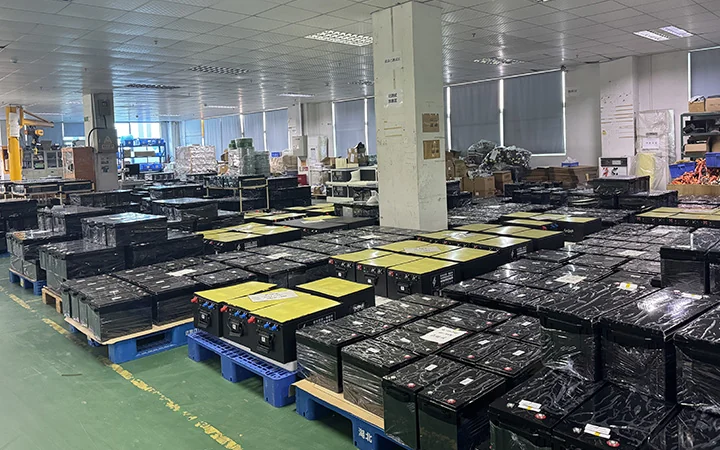
Create a comparison using the same model revision, quantity, delivery condition and requested documentation. Distinguish loose cells from packs, and note whether assembly features, development work, test work or tooling are included. Ask the supplier to identify sample costs, production assumptions, packaging and shipping arrangements clearly. Do not compare a bare-cell unit price with a price for an assembled and documented battery, or mistake an indicative development estimate for a released production quotation.
Confirm proposed minimum order quantities and lead times in writing for the actual project. Discuss how timing depends on model approval, sample acceptance and any required development. Record the treatment of rejected material, approved substitutions and changes after the pilot order. If your team estimates total project cost, show the relevant assumptions instead of importing a savings percentage from another application. A purchasing decision should consider the documented scope and qualification work as well as the quoted unit price.
A useful RFQ brings together the application, agreed identifier, cell or pack scope, chemistry requirement, electrical duty cycle, mechanical drawing, environment, document list, sample plan and purchase quantities. Mark unknowns clearly so the supplier can respond to them. If you are exploring options, separate fixed requirements from preferences. The response should identify a proposed model and explain which requirements it satisfies, which need validation and which require a revised design or another product choice.
Use Mottcell customized service to frame the discussion when your requirements involve an assembly or development proposal. Before production approval, freeze the agreed specification and establish how later changes will be proposed, reviewed and recorded. A change to the cell, terminal variant, protective electronics or assembly process can affect the evidence supporting the original approval. Keep the approved sample configuration and purchase specification aligned, so a later order remains traceable to the battery your team evaluated.
Do not treat the labels as interchangeable. Confirm the manufacturer model code and dimensional drawing, including terminals and tolerances, before approving a sample. If different documents use different identifiers, resolve the discrepancy with the supplier before ordering or committing to tooling.
Request the confirmed model, chemistry, dimensions, capacity test conditions, voltage limits and charge and discharge ratings. Include your application and ask for relevant test documents and lot identification. For a pack, also request its assembly drawing, protection details and integration acceptance plan.
Send your reference drawing, application, electrical requirements, sample quantity and destination market for a model and feasibility review. Obtain written confirmation of availability and the proposed specification. This guide does not establish that an unconfirmed 4860 configuration is a stocked or certified product.
Contact Mottcell with your 4860 RFQ and reference drawing. Ask for a response identifying the proposed model, documentation, sample route and open engineering questions. Use those records to decide the next qualification step and compare quotations on a common basis. This article is published by Mottcell for sourcing guidance. It does not present a completed customer case, laboratory result or engineering sign-off for a specific 4860 model.
12V 300Ah Battery Pack: Series vs Parallel OEM Guide
12V 50Ah LiFePO4 Battery Pack: Size, Runtime & OEM Guide
22650 LiFePO4 Battery Manufacturer: OEM Buying Guide
36V Battery Pack for E-Bikes and AGVs: OEM Buying Guide
12V 100Ah Battery Pack: Compare 3 Models for OEM Buyers
12V 280Ah Battery Pack: Solar Runtime & OEM Buying Guide
18650 Battery Manufacturer: Cell Specs & OEM Checklist
12V 300Ah Battery Pack: Runtime, BMS and OEM Buying Guide
Established in 2005
In 2009, it was awarded the title of "National High tech Enterprise"
 zoe@mottcell.net
WhatsApp: 8617388790296
Fax: 86-0755-84042963
Skype: live:b0ebaecbb8782516
WeChat: +8613428749632

 VR show

 CN
 Home >


