
 VR show

 CN
CN Home >
  Jan 22, 2026


Mottcell 4860 Performance Summary:
Chemistry: Available in Li-ion / NiMH options
Cycle Life: 1000+ Cycles (80% DOD)
OEM/ODM: Full custom pack assembly available
Safety: Integrated CID and Safety Vent
OEM battery sourcing is a performance decision, a safety decision, and a supply-chain decision—at the same time. When your product depends on stable runtime, predictable power delivery, and long service life, the most important step is selecting the right 4860 rechargeable battery manufacturer. A manufacturer-level partner ensures your battery solution remains consistent from samples to pilot builds and mass production, without unexpected quality drift or supply disruptions.
“4860” is commonly associated with 48V 60Ah-class rechargeable battery packs used in industrial and commercial equipment. These packs are widely applied in mobile lifts, material handling equipment, AGVs, electric utility vehicles, backup power modules, and other demanding OEM scenarios where deep-cycle durability and safety margin matter. For many of these applications, LiFePO4 chemistry on the 3.2V platform is preferred because of its thermal stability and long cycle life—driving procurement interest in a 3.2V 4860 rechargeable battery manufacturer and the supporting ecosystem of factory and supplier capabilities.
This article explains what OEM buyers should expect from a professional 4860 rechargeable battery factory, how to evaluate a long-term 4860 rechargeable battery supplier, and why many industrial programs choose a 4860 lifepo4 battery manufacturer for safety-first, deep-cycle performance.
Mottcell 4860 Performance Benchmark (Industrial Grade)
| Feature | Mottcell 4860 (Ni-MH) | Mottcell 4860 (Li-ion) |
| Nominal Voltage | 1.2V | 3.7V |
| Rated Capacity | 3000mAh - 4500mAh | 5000mAh - 6500mAh |
| Cycle Life | ≥ 1,000 Cycles | ≥ 800 Cycles |
| Max Discharge | 3C - 5C Pulse | 2C Continuous |
| Best Application | Cordless Tools / Medical | Robotics / Energy Storage |
Why 4860 Battery Packs Are Popular in Industrial OEM Equipment
Industrial and commercial electric equipment often requires a battery system that can deliver:
Stable power output under sustained load
Deep-cycle durability over long operating periods
Reliable performance in harsh environments
Predictable charge/discharge behavior for fleet operations
Scalable supply for ongoing production and service support
A 48V 60Ah battery configuration (often referred to as “4860”) is a practical platform for these requirements. It provides sufficient system voltage for efficient motor drive and adequate capacity for meaningful runtime, while remaining manageable in size and integration complexity for many OEM designs.
Because these applications involve higher energy throughput and frequent cycling, the battery pack must be engineered—not just assembled. That is why choosing a capable 4860 rechargeable battery manufacturer is essential for OEM reliability and safety.
Chemistry Strategy: Why Many OEMs Choose 3.2V Platforms and LiFePO4
For deep-cycle industrial applications, chemistry selection often prioritizes safety and lifecycle value. LiFePO4 chemistry is widely adopted in industrial systems due to stable thermal behavior and long cycle life, which is why many OEM buyers specifically search for:
4860 lifepo4 battery manufacturer
3.2V 4860 lifepo4 battery manufacturer
Factory-level LiFePO4 pack capability and stable grading control
Advantages OEM Buyers Expect from 3.2V Platforms
The 3.2V platform is commonly associated with LiFePO4-based systems and is frequently selected for industrial programs because it offers:
Strong safety margin and thermal stability
Long cycle life suited for daily charge/discharge use
Predictable discharge behavior that supports stable equipment performance
Reduced maintenance burden and lower long-term cost of ownership
This explains why many buyers evaluate a 3.2V 4860 rechargeable battery factory rather than a generic pack supplier.
However, the benefits of LiFePO4 only appear when the pack is engineered with correct system matching. Many field problems are not caused by cell defects but by incorrect charger settings, mismatched BMS thresholds, or under-designed wiring and thermal management. A qualified 3.2V 4860 rechargeable battery supplier should support platform-correct engineering decisions.
Manufacturer vs Factory vs Supplier: What OEM Buyers Should Demand
In online searches, “manufacturer,” “factory,” and “supplier” can be used interchangeably—but for OEM risk control, they must mean different levels of capability.
4860 rechargeable battery manufacturer
A true 4860 rechargeable battery manufacturer should provide engineering-ready packs, stable quality systems, and repeatable production. They should support OEM documentation, project communication, and long-term supply planning.
4860 rechargeable battery factory
A 4860 rechargeable battery factory should demonstrate production discipline: standardized pack assembly processes, defined QC checkpoints, end-of-line testing, traceability labeling, and stable output across batches.
4860 rechargeable battery supplier
A 4860 rechargeable battery supplier should act as a partner for sourcing and execution, supporting sample builds, pilot runs, and mass orders while maintaining consistent configuration and documentation.
The same expectation applies for LiFePO4 programs:
A 4860 lifepo4 battery manufacturer should demonstrate chemistry expertise and stable deep-cycle performance.
A 4860 lifepo4 battery factory should prove consistent assembly and verification processes.
A 4860 lifepo4 battery supplier should provide stable deliveries and technical support for fleet-scale and industrial use.
What Defines a Professional 4860 Rechargeable Battery Factory
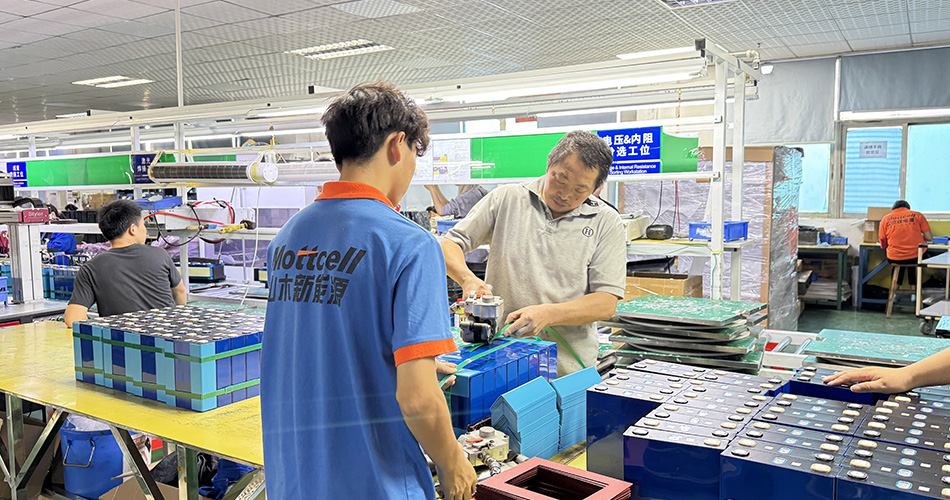
A manufacturer-grade 4860 rechargeable battery factory is not defined by product photos—it is defined by process discipline. OEM buyers should evaluate these essentials:
1) Cell selection and pack-level matching strategy
In a 48V system, cells are configured in series and parallel. Pack reliability depends on consistency in cell capacity and internal resistance. A professional factory should have a clear strategy for:
Cell grading for capacity consistency
Internal resistance sorting to reduce imbalance
Matching methods for parallel groups and series strings
Traceability by lot to isolate issues if needed
This is especially important when sourcing from a 3.2V 4860 rechargeable battery factory, where long-cycle performance depends on stable series-pack behavior over time.
2) BMS integration and protection discipline
The BMS is the brain of the pack. It must be matched to chemistry, current profile, and operating environment. A qualified 4860 rechargeable battery manufacturer should support:
Correct overcharge and overdischarge thresholds
Overcurrent and short-circuit protection aligned with equipment load
Temperature sensing and safety logic for harsh environments
Optional communication features when OEM systems require it
For LiFePO4 programs, a 3.2V 4860 lifepo4 battery manufacturer should show chemistry-correct parameter selection and validation support.
3) Mechanical design for industrial durability
Industrial packs face vibration, impact, and repeated handling. A professional factory should implement:
Robust insulation and spacing design
Strong mechanical reinforcement and mounting structure support
Cable strain relief and connector durability considerations
Protection against environmental stress, where required
This is where a factory-level partner protects OEM warranty cost.
4) End-of-line testing and documentation consistency
OEM programs demand consistency. A true 4860 rechargeable battery factory should operate with standardized end-of-line testing, including functional verification that matches real use conditions.
Stable documentation—pack labels, configuration records, and traceability identifiers—ensures that repeat orders match the originally qualified design.
Why OEMs Prefer a 3.2V 4860 Rechargeable Battery Manufacturer for Deep-Cycle Projects
In industrial use, “high performance” often means stable runtime, reliable safety margin, and long cycle endurance—not just peak power. That is why many equipment OEMs prefer sourcing from a 3.2V 4860 rechargeable battery manufacturer and related factory partners.
Typical deep-cycle OEM scenarios include:
Mobile lifting equipment that cycles daily
Material handling fleets with repeat duty cycles
Industrial carts and utility vehicles used across shifts
Backup power modules requiring predictable capacity retention
Applications where safety compliance and reduced failure risk are priorities
For these projects, working with a 3.2V 4860 rechargeable battery supplier who can support consistent chemistry matching and pack engineering reduces risk and improves long-term fleet stability.
What to Expect From a Reliable 4860 Rechargeable Battery Supplier
A capable 4860 rechargeable battery supplier should support more than delivery. For OEM success, they should provide:
Engineering communication during requirement definition
Clear sample and pilot workflow aligned with OEM timelines
Stable BOM control to prevent unexpected changes after qualification
Documentation discipline for traceability and quality audits
Predictable lead times and supply planning for repeat orders
For LiFePO4 programs, a reliable 4860 lifepo4 battery supplier should also provide guidance on charger matching, storage conditions, and service life expectations for industrial fleets.
Customization Scope: What “OEM Custom” Usually Includes for 4860 Packs
OEMs rarely want a generic pack. Typical customization requests include:
Electrical customization
48V-class system voltage design based on equipment requirement
Capacity targets (such as 60Ah-class) based on runtime needs
Continuous and peak current design matched to motor load
BMS selection and parameter configuration aligned to chemistry and duty cycle
Mechanical customization
Pack enclosure sizing to fit equipment compartments
Connector type and wiring harness requirements
Mounting points, handles, and serviceability considerations
Environmental requirements (industrial dust, humidity, vibration) where applicable
A manufacturer-level partner ensures customization remains manufacturable and reliable, which is why OEMs value a true 4860 rechargeable battery manufacturer rather than a trading supplier.
RFQ Checklist: Get Faster Quotes and Better OEM Proposals
To get accurate engineering proposals from a 4860 rechargeable battery manufacturer or 4860 rechargeable battery supplier, include:
Target voltage and capacity (e.g., 48V 60Ah-class)
Continuous discharge current and peak current
Charger specification and charging method
Operating temperature range and environment risks
Mechanical size constraints and connector requirements
Expected order volume and annual forecast
Timeline for samples, pilot builds, and mass production
Documentation and compliance requirements
Clear RFQ inputs reduce back-and-forth and help the 4860 rechargeable battery factory propose a production-ready design.
FAQ
1) How do I choose a reliable 4860 rechargeable battery manufacturer for industrial OEM equipment?
Select a 4860 rechargeable battery manufacturer that can prove pack-level process discipline, stable BMS integration, and repeatable quality from samples to mass production. Manufacturer-level partners should also support traceability, documentation control, and predictable delivery planning for long-term OEM supply.
2) What capabilities should a professional 4860 rechargeable battery factory provide?
A professional 4860 rechargeable battery factory should implement cell grading and matching strategies, standardized assembly processes, end-of-line testing, and traceability labeling. These capabilities help maintain consistent pack performance across repeat orders and reduce field failure risk.
3) What is the role of a 4860 rechargeable battery supplier in OEM customization?
A 4860 rechargeable battery supplier should support OEM execution by coordinating engineering communication, sample builds, pilot validation, and mass deliveries. The best suppliers behave like factory partners, ensuring configuration stability and documentation consistency throughout the product lifecycle.
4) Why do OEMs choose a 4860 lifepo4 battery manufacturer for deep-cycle applications?
OEMs choose a 4860 lifepo4 battery manufacturer because LiFePO4 chemistry is commonly selected for safety margin, thermal stability, and long cycle life. For deep-cycle fleets and industrial duty cycles, these benefits reduce downtime and lower long-term operating cost.
5) What should I verify in a 3.2V 4860 lifepo4 battery factory before mass production?
Before mass production, verify the 3.2V 4860 lifepo4 battery factory has chemistry-correct BMS thresholds, consistent cell matching, stable assembly controls, and standardized testing. Strong traceability and change control are also essential to prevent quality drift after SOP.
6) How do I qualify a 3.2V 4860 rechargeable battery supplier for long-term industrial supply?
To qualify a 3.2V 4860 rechargeable battery supplier, confirm platform expertise, pack engineering capability, stable documentation, traceability discipline, and scalable production capacity. A reliable supplier should also demonstrate predictable lead times and consistent repeat-order performance.
Call to Action (No Links)
If you are sourcing a 48V 60Ah-class battery solution for industrial equipment, prepare your RFQ with your target runtime, continuous and peak current, charging method, operating environment, mechanical constraints, and annual demand forecast. A qualified 4860 rechargeable battery manufacturer or 4860 lifepo4 battery manufacturer can then recommend a production-ready pack configuration, support pilot validation, and scale into consistent mass production—while keeping the design stable for long-term OEM supply.
Related Articles
Rechargeable Batteries: A Cost-Effective Solution for Sustainable Business
Battery Types: Alkaline vs Rechargeable Industrial Guide | Mottcell
Top Rechargeable Battery Manufacturers & Suppliers in China 2026
Leading 18650 Rechargeable Battery Manufacturer for OEM Projects


