

 May 19, 2026


In the industrial procurement landscape of 2026, engineering directors, chief technology officers, and fleet operations managers face escalating demands for greater energy density within strict physical space limits. As commercial equipment scales in capacity and autonomous operation windows lengthen, selecting the proper electrochemical baseline becomes a critical operational decision. The introduction of the high-capacity 36v 314ah battery pack standard represents a major milestone in medium-voltage lithium platforms.
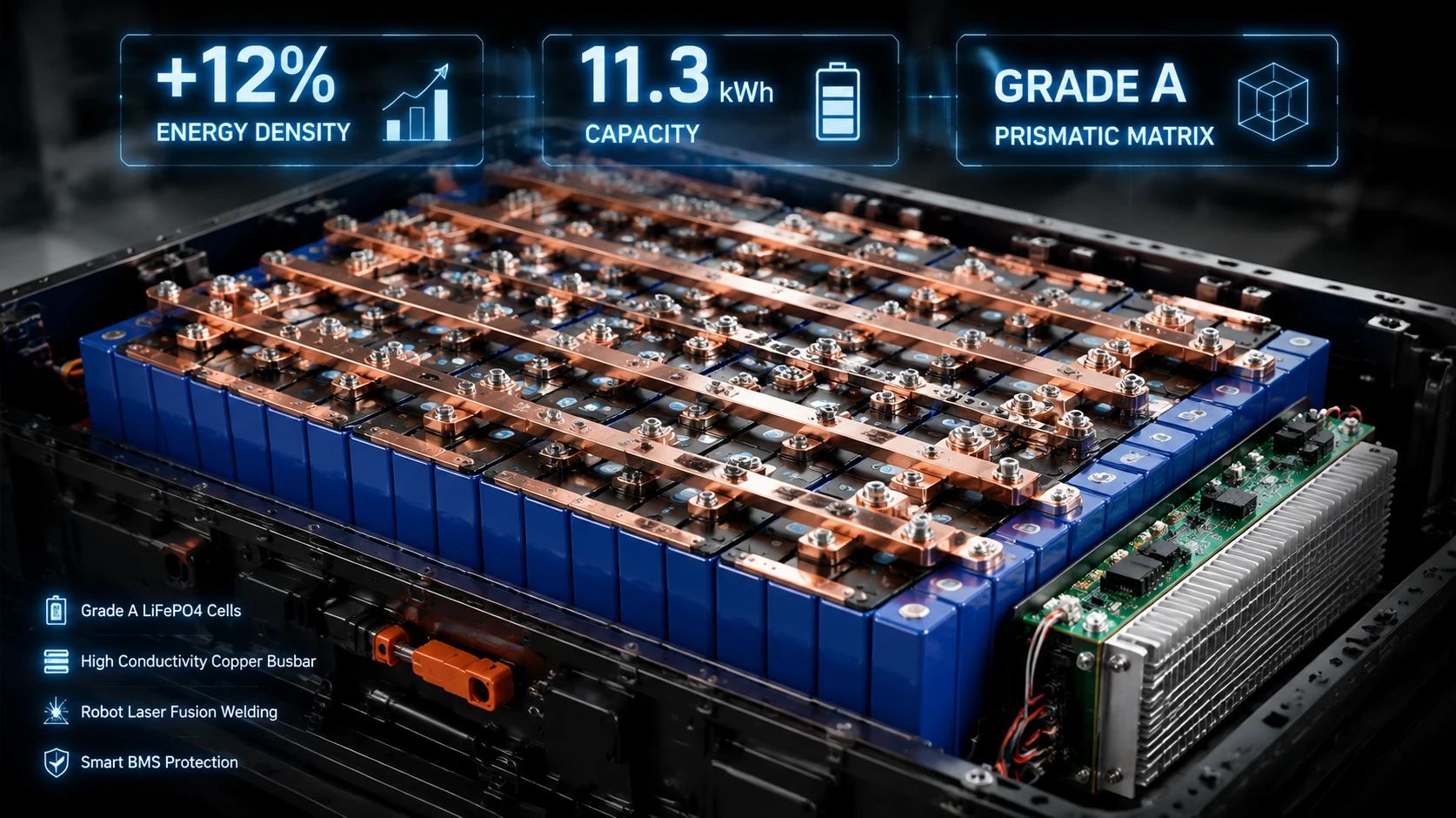
By combining the safety of Lithium Iron Phosphate (LiFePO4) chemistry with advanced large-format prismatic cell manufacturing, this configuration delivers a massive 11.3 kilowatt-hours (11.3 kWh) of raw energy reserves within a centralized, ruggedized enclosure. Calculated via standard electrical properties (36V x 314Ah = 11,304Wh), this specific power envelope provides an optimal upgrade path for systems requiring long continuous runtime without the weight penalties of legacy lead-acid arrays or the structural complexities of higher-voltage battery series.
For B2B procurement teams, sourcing from a vetted 36v 314ah battery pack manufacturer requires an understanding of cell integration, internal resistance balancing, and thermal management systems to secure long-term fleet uptime and mitigate operational risks.
To properly evaluate a modern 36v 314ah battery pack, engineering teams must analyze the internal cell topology and structural engineering metrics that differentiate this platform from legacy 280Ah installations. Achieving a true 314Ah capacity block at a nominal 36V rating requires a precise series-parallel configuration of Grade A prismatic cells, typically arranged in a high-efficiency 11S (11 Series) or 12S (12 Series) matrix depending on the exact operational voltage window required by your heavy-duty industrial motor controllers or commercial power inverters.
| Specification Parameter | Industrial Engineering Standard |
| Nominal Energy Capacity | 11.3 kWh (Calculated precisely as 11,304 Wh) |
| Cell Core Topology | Premium Prismatic LiFePO4 Chemistry |
| Sustained Discharge C-Rate | 1C Continuous / 2C-3C Peak Surge Load |
| Digital Communications Interface | Integrated CANbus / RS485 / Modbus Protocols |
| Enclosure Protection Class | Ruggedized Steel Body / Rated up to IP67 |
The primary engineering breakthrough of the 314Ah cell is its volumetric energy efficiency. Compared to previous-generation 280Ah industry standards, the 314Ah platform yields a significant 12% boost in total energy reserves without increasing the overall physical dimensions of the battery compartment. This density advantage is critical for industrial applications where physical space is fixed by legacy chassis designs, yet operational demands require extended shift cycles.
However, managing an 11.3 kWh concentrated power core requires stringent electrical monitoring. If internal connections experience even fractional micro-ohm variances under heavy load, the resulting localized heat can accelerate cell degradation and trigger premature balancing cut-offs. Sourcing from a certified 36v 314ah battery supplier guarantees that the internal copper busbars, cell spacing constraints, and structural compression plates are engineered to maintain uniform electrical conductivity across the entire cell group.
This robust technical framework ensures your equipment delivers the verified
The high energy capacity of the 36v 314ah battery pack makes it a foundational component across several rapidly electrifying commercial sectors. By replacing legacy power infrastructures with a unified 11.3 kWh lithium core, enterprises can eliminate daily maintenance routines, minimize charging overhead, and secure consistent power output.
In commercial resorts, sprawling corporate campuses, and industrial facility management, heavy-duty utility vehicles demand highly reliable energy reserves. Integrating a specialized 36v 314ah battery pack for golf cart transport networks, airport luggage tuggers, and heavy multi-passenger hospitality vehicles transforms fleet mechanics.
Traditional lead-acid configurations require continuous water top-offs, suffer from extreme capacity drop-offs in low temperatures, and require 8 to 10 hours of stationary charging. Upgrading to a custom Mottcell 314Ah platform allows for rapid opportunity-charging protocols (0.5C to 1C), enabling vehicles to replenish significant power reserves during short driver breaks.
Furthermore, reducing overall vehicle weight by hundreds of pounds dramatically lowers structural wear on drivetrains, tires, and mechanical braking systems.
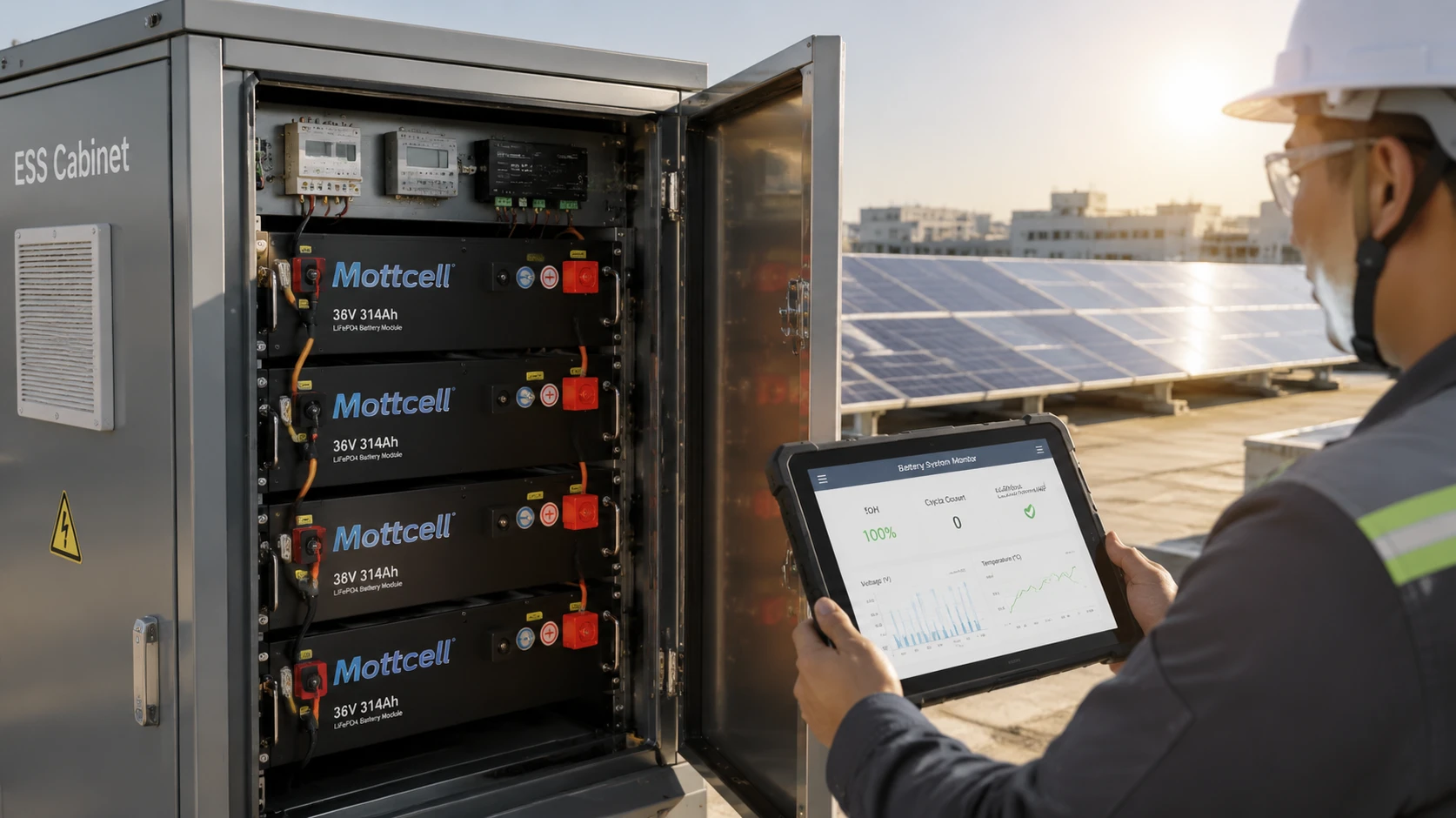
As grid volatility increases, the deployment of a robust 36v 314ah for solar system integration has become standard practice for remote telecommunication base stations, off-grid agricultural operations, and critical monitoring outposts. When utilizing the system as a specialized 36v 314ah for energy storage system (ESS) module, these heavy-duty battery banks provide a vital operational buffer.
| Infrastructure System Layer | Dedicated Technical Function |
| Primary Photovoltaic Input | Solar Array Gathering / Variable DC Grid Input |
| Central Energy Reservoir | 36V 314Ah Battery Core Platform (11.3kWh System Reserve) |
| Telemetry System Monitor | Programmable Smart BMS Layer with Active Data Interfacing |
| Power Distribution Node | Industrial Inverter Grid / Multi-Kilowatt Motor Control Assembly |
The 11.3 kWh capacity block absorbs mid-day solar surges and discharges that stored energy evenly over extended nighttime operating schedules, shielding delicate processing and communication equipment from grid anomalies or blackouts. Procurement officers can evaluate individual housing dimensions and wiring schematics by checking the
As energy capacity scales to the 314Ah tier, factory floor precision dictates the safety profile and lifecycle of the final product. Procurement managers must look beyond simple price matrices and scrutinize the production standards of their chosen supply chain partners. Sourcing from an unverified vendor that relies on manual spot-welding or basic cell sorting introduces severe field risks, including premature cell degradation or internal short-circuits.
Securing a high-performing system requires an advanced, automated 36v 314ah battery pack factory infrastructure. At Mottcell, the journey of a 314Ah industrial module begins with stringent electrochemical sorting. Because individual cells naturally exhibit microscopic differences in internal resistance and capacitance out of raw chemical production, a premier 36v 314ah battery factory implements multi-stage automated testing loops.
| Production Workflow Stage | Industrial Quality Control Protocol |
| OCV & IR Sorting Node | Groups individual cells within precise millivolt and micro-ohm thresholds |
| Laser Fusion Node | Automated robotic welding of high-conductivity copper busbars to eliminate impedance |
| Full Load EOL Testing | 100% full-capacity simulated operational load extraction prior to shipment |
Cells are precisely grouped based on Open Circuit Voltage (OCV) and Internal Resistance (IR) down to tight, single-digit millivolt and micro-ohm thresholds. Following cell sorting, block interconnections are processed using robotic laser fusion welding. This process creates a flawless metallurgical bond between cell terminals and copper busbars, minimizing internal impedance and stopping localized heat zones from forming.
When conducting vendor audits, engineering executives should look for partners that align with
From a corporate financial standpoint, procuring industrial energy storage is an exercise in life-cycle asset optimization. While cheap, uncertified alternatives present a low initial Capital Expenditure (CapEx), they introduce heavy long-term Operational Expenditure (OpEx) through frequent field service, premature replacements, and expensive equipment downtime.
| Sourcing Financial Metric | Generic Standard Import Pack | Mottcell Custom 314Ah Solution |
| Initial Sourcing CapEx | Lower upfront procurement cost | Optimized engineering asset value |
| True Life-Cycle Longevity | 1,800 to 2,500 standard cycles | 6,000+ deep discharge iterations |
| Field Maintenance OpEx | High replacement labor frequencies | Zero-maintenance sealed housing |
| BMS Protective Layer | Basic analog current shut-off | Smart predictive CANbus telemetry |
| Fleet Downtime Risk | Elevated sudden field failure profile | Low risk via live diagnostic streams |
Quantifying long-term ROI requires analyzing the cost-per-kilowatt-hour delivered over the lifetime of the asset. A premium 36v 314ah battery pack built with authentic Grade A prismatic cells provides more than 6,000 deep charge-discharge cycles before its capacity degrades to 80% of its initial value. Under identical industrial duty cycles, conventional lead-acid options rarely survive past 1,500 cycles, meaning a single Mottcell deployment outlasts multiple lead-acid change-out rounds, eliminating repeat procurement and maintenance cycles.
By standardizing your fleet rollout on
By streaming real-time metrics—including individual cell voltage strings, overall State of Health (SOH), and historical temperature extremes—via industrial CANbus or RS485 communication protocols, site supervisors can execute preventative maintenance during normal scheduled maintenance windows. This advanced data integration removes unexpected mid-shift failures, maximizes machine availability, and protects your operational bottom line.
Answer: The primary advantage is increased energy density within an identical form factor. A 36v 314ah battery pack gives you roughly 12% more runtime compared to a 280Ah pack using the same footprint. For automated guided vehicles (AGVs) running multi-shift operations, this additional capacity extends runtime by several hours, reducing charging station bottlenecks and optimizing factory floor throughput.
Answer: At the 314Ah capacity tier, simple passive balancing is not enough to maintain cell uniformity. Mottcell uses an integrated Smart BMS with active balancing algorithms that move energy from higher-voltage cells to lower-voltage cells during the charge cycle. This process minimizes energy waste as heat, maintains cell consistency within millivolt tolerances, and stops premature capacity fade to ensure a service life of over 6,000 cycles.
Answer: Large lithium battery installations holding over 10 kWh of energy face strict international safety and transportation regulations. A certified 36v 314ah battery pack manufacturer ensures the entire assembly undergoes strict testing to achieve UN38.3 (global transport safety standard), CE compliance, and UL certifications (such as UL2580 for electric vehicle drivetrains or UL1973 for stationary energy storage systems). This full traceability protects your company from compliance issues and satisfies industrial insurance requirements.
Sourcing an industrial-grade 36v 314ah battery pack should never be approached as a generic, commoditized procurement transaction. It is a critical investment in your company's core operational infrastructure. By moving away from restrictive off-the-shelf catalog models and embracing a custom-engineered, high-density lithium platform, you systematically eliminate design bottlenecks, secure your hardware supply chain, and maximize long-term operational ROI.
Mottcell combines advanced lithium engineering with full-service OEM customization to deliver certified, high-performance power solutions that excel in demanding commercial environments. To analyze your fleet's specific power metrics, eliminate field failure risks, and secure an expert engineering blueprint tailored to your application, please
48V 300Ah HESS Supplier: Voltage, Runtime and OEM Guide
48V 100Ah HESS Supplier: 5.12kWh Solar OEM Buying Guide
12.8V 200Ah Battery Pack Factory: OEM Sourcing Guide
Commercial HESS Supplier: Factory Microgrid Sizing Guide
51.2V HESS Battery Supplier: 100Ah to 314Ah Capacity Guide
12V LiFePO4 Battery Pack Manufacturer: 50Ah-314Ah OEM Guide
16kWh HESS Supplier: 51.2V 314Ah Buyer’s Guide
5kWh HESS Supplier: Indoor Modular Battery Buying Guide
Established in 2005
In 2009, it was awarded the title of "National High tech Enterprise"
 zoe@mottcell.net
WhatsApp: 8617388790296
Fax: 86-0755-84042963
Skype: live:b0ebaecbb8782516
WeChat: +8613428749632

 VR show
 CN
CN Home >


