

 Nov 09, 2026


When planning 10kWh HESS backup loads, start with a named circuit schedule. It should tell the installer which circuits belong on backup, what happens when grid power disappears, and what to verify before handover. Give each load a priority, a running demand, a start or restart condition, and an observable acceptance test. A system quotation becomes more useful when every supplier receives the same schedule and the same expected outage behavior.
This guide is for solar installers, distributors and OEM buyers planning residential or small-site backup. The worked schedule below is hypothetical. Use the Mottcell 10kWh HESS buying guide for capacity and configuration comparisons. This page begins after the project team has identified a capacity class and needs a circuit plan that can be quoted, checked and handed over.
Describe the site in one sentence, then describe the interruption you want it to survive. A home office may need network access and refrigeration through an evening outage. A small distribution office may need its router, access-control equipment and a few workstations for a defined period. Both can be discussed in the same storage capacity class, even though their start-up events, outage priorities and acceptable interruptions differ.
Define what success looks like to the people who use the site. For internet service, ask whether the requirement is to preserve the existing connection or restore it automatically within an agreed interval. A router that powers back on may still take time to reconnect, and an upstream service failure can stop service even when the local circuit stays energized. Measure the electrical outcome and the service outcome separately.
List exceptions at the same time. An EV charger, water heater or workshop receptacle bank may be excluded from outage operation. A pump may be allowed on request and started only after higher-priority services are stable. Ask the site owner to approve the exclusions before procurement. That conversation is easier during design than after a whole-panel quotation has become the reference for the project.
Give each requirement an owner and a measurable result. The buyer owns the service objective, the installer verifies circuit identity and load behavior, and the equipment supplier documents the operating limits of the proposed configuration. A commissioning record should show which person accepted the result and which equipment revision was present.
A backup circuit schedule follows the site panel directory and identifies the actual equipment served. Use panel references or circuit IDs that the installer can verify. A label such as “office outlets” is incomplete if it serves an essential network switch and an unrestricted outlet where a heater can be plugged in. Record the shared load, then agree how the site will manage it.
For each row, capture the supply phase or leg where relevant, normal demand, observed start event, expected run time, and evidence source. Capture an approximate start duration alongside any peak. A very brief current pulse and a motor start that persists for several seconds can present different demands on the selected inverter. A nameplate, logged measurement and design allowance should each be identified as such.
The table shows what a planning worksheet can contain. All demands and run times are illustrative. The electrical contractor should replace them with measured or documented project values before the design is accepted.
| Circuit or load | Priority | Planning demand and duration | Acceptance observation |
|---|---|---|---|
| Router and network switch | Required | 45 W for 8 hours | Local network returns within the agreed time after transfer |
| Refrigeration | Required | 140 W while running for an estimated 4 hours total | Compressor completes a normal start under the agreed concurrent load |
| Selected room lighting | Required | 110 W for 5 hours | Specified rooms retain lighting in backup mode |
| Workstation and monitor | Deferrable | 180 W for 4 hours | Operator can delay restart until required loads are stable |
| Small pump | Conditional | 350 W for 1 hour total | Starts with required background load running, if approved for backup |
| EV charging | Excluded | Outside the outage budget | Remains outside the backed-up circuit scope during the test |
In this example the listed running energy is 0.36 + 0.56 + 0.55 + 0.72 + 0.35 = 2.54 kWh at the loads. The number is a subtotal over the assumed periods. It excludes system standby use, conversion losses and a project reserve. It gives the procurement team a way to compare the same assumed outage across proposals. If the pump and workstation are both optional, also record the subtotal with either excluded so the owner can see the effect of the operating rule.
Keep the continuous and start-up cases separate. If the five eligible loads were all running at their listed values together, the running total would be 825 W. The refrigeration and pump start behavior remains a separate measurement. The installer should determine which automatic loads can start together after an interruption. A list of running watts cannot establish that peak, and the average over eight hours does not describe it.

Ask the supplier to identify the exact battery, inverter and transfer equipment for the quotation. Request backup-mode continuous output and the overload curve or documented transient envelope. Record the relevant duration, voltage, phase arrangement and operating conditions. The output rating used for grid-connected operation may not be the applicable figure when the site is running on backup.
Also request the available energy for the proposed operating window. Set a minimum starting state of charge for the acceptance scenario, a lower reserve, and any temperature condition used in the comparison. Check whether the offered energy figure is measured at the battery or already expressed as energy delivered to AC loads. This distinction helps buyers avoid applying the same conversion loss twice or comparing figures measured at different points.
Identify the automatic restart behavior of refrigeration, pump controls and electronic loads. An installer may need to agree on a supported restart sequence or exclude a conditional circuit until its start is measured. A quotation that requires sequencing should describe who sets the sequence and what happens when the controller loses power or falls back to a default setting. Put the assumption in the contract schedule so it survives a handoff between sales and installation.
Public planning documents from Enphase on essential-load configurations show how circuit selection and load control can be part of the system design. The equipment in that brief has its own approved arrangements. Ask for equivalent documentation for the Mottcell configuration you are evaluating, including the precise equipment combination and supported behaviors. Compare Mottcell’s current household energy storage range when identifying candidate configurations.
Give the estimator a separate row for equipment that stays powered for the full outage, including any control or communications equipment whose consumption is outside the supplier’s delivered-energy figure. In a hypothetical worksheet, a fixed overhead of 30 W for eight hours adds 0.24 kWh. State where it was measured and whether it is already included in another number. This is particularly useful when comparing one supplier’s AC-delivered figure with another supplier’s battery-side estimate. The assumed overhead here is for illustration and should be replaced with evidence for the equipment under review.
Document how the site will manage conditional demand. A dedicated pump circuit can be listed as available on request, while an unrestricted branch with several users may need an operating limit or a different circuit assignment. Review who can turn each load on, whether the restriction depends on hardware or operator behavior, and what the handover instructions should say. If a proposal depends on automated load control, ask which device makes the decision and what condition triggers a return to normal service. Ask for that answer in writing before treating the control as part of the accepted design.
Prepare the checklist before the site is energized for acceptance. The qualified installer should choose a manufacturer-approved procedure and confirm local requirements, equipment settings and site safety conditions. For commercial or shared premises, agree on the test window with the people affected by any service interruption. Include stop conditions and a person responsible for returning the site to normal service.
Decide whether the test is demonstrating a circuit assignment, a load start, a transfer behavior or a run time. A short transfer demonstration can show that selected circuits respond as expected. A duration claim needs a separate test or a clearly identified estimate based on a measured load profile. If the acceptance test does not run for the promised interval, document the duration actually tested and the basis for any remaining estimate.
Where an existing solar array is part of the project, define a battery-only outage scenario first. Solar production is variable, and the system must support solar operation in the specified outage mode before a PV contribution can be treated as part of the test. For background on retrofit architecture, see the AC and DC coupling comparison. Obtain the relevant operating behavior for the actual design, including how the system behaves with low PV power or a full battery.
Use a record with explicit pass criteria. The following sequence is an example for an approved installation. It describes what to observe, with site operations carried out by the installer under the applicable procedure.
| Condition | Evidence to capture | Example pass basis |
|---|---|---|
| Normal grid supply | Equipment revisions, battery state of charge, current load and fault status | Starting condition matches the agreed test plan |
| Transfer to backup | Timestamp, affected circuits and service interruption | Required circuits meet agreed service recovery limits |
| Start of a conditional load | Background demand, observed start, time and alarms | Start succeeds within the approved configuration and priority rules |
| Return to normal supply | Restore time, alarms, load recovery and recharge state | Site returns to the agreed operating mode and exclusions behave as designed |
| End of test | Actual duration, end charge, exceptions and names | Test scope and any unresolved items are visible to the buyer |
Include a row for a controller restart if the operating requirement depends on a schedule, relay or load-priority feature. Verify that a temporary test setting is restored before signing off. If the system drops a deferrable load, record whether it restarts automatically or requires the operator to acknowledge the event. The customer's expectation about recovery can matter as much as the measured transfer time.
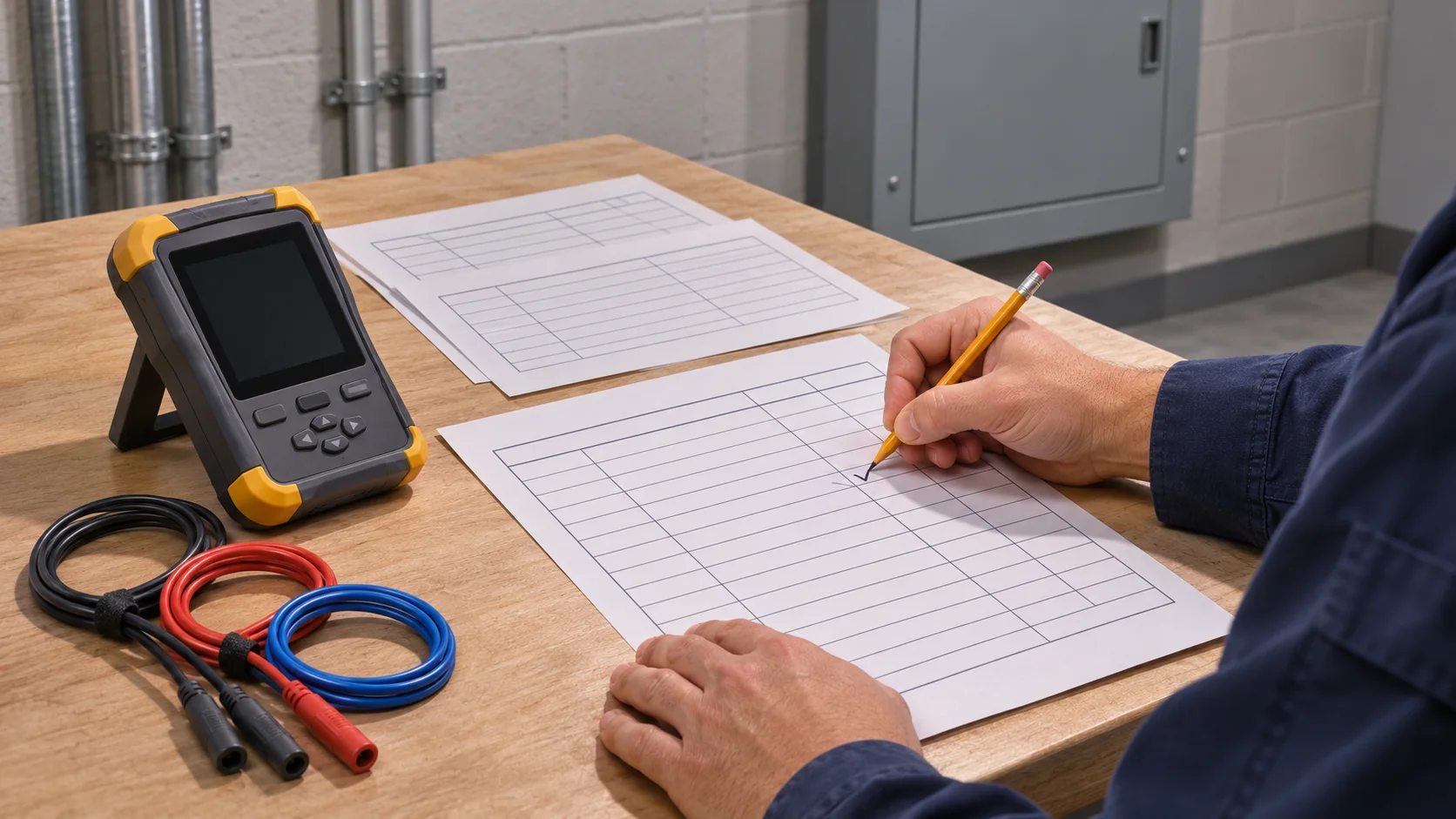
If a circuit loses power, first confirm whether it was intended to be backed up. A mismatch between a panel label and the installer’s circuit map can appear to be a battery issue. Verify circuit assignment and operating mode before comparing the measured load to the system's output envelope. Keep a timestamp for the event and capture the inverter and battery logs while the context is still clear.
If required loads run but a motor starts poorly, compare the event with the approved backup transient capability and confirm whether other loads were running. Document the start time and surrounding demand so the supplier can review the same case. A protective trip is a reason to stop and investigate under the installer’s procedure. The equipment or circuit limits should be resolved before repeating a failed event.
If every circuit functions briefly but the modeled run time is missed, review the initial charge, usable reserve, standby consumption, actual duration and variation in the loads. A refrigerator running more often than the planning assumption or an unexpected shared receptacle load may change the energy budget. Update the worksheet with what was measured, then repeat the comparison at a documented starting condition.
Differentiate between an electrical outage event and the behavior of the equipment fed by the circuit. A rebooting router, a delayed compressor restart and an excluded outlet each require a different interpretation. The record should identify whether the system followed the specified behavior and whether the service requirement needs revision. This gives the buyer a reasoned decision about which change belongs in a revised quote.
Send the circuit schedule together with the operating brief, a basic site drawing prepared by the project team and an outline of the commissioning evidence. Include the market, service arrangement, location conditions, existing PV and inverter information, and the required startup or transfer behavior. For an OEM order that will serve several installations, supply a representative site and state which site variables are allowed to change.
In the quotation, ask the supplier to identify which requirements can be met with the proposed equipment and which require site measurements or a different configuration. Record the allowed substitutions by model revision. A backup test on one combination is difficult to use for the next shipment when the inverter firmware, protection arrangement or battery model has changed without notice.
At handover, keep the approved schedule alongside the installed equipment list, the actual commissioning record, and the operator’s instructions for what can run in an outage. Identify the person who owns changes to the backup panel directory. When the site later adds a pump, receptacle bank or HVAC control, the existing acceptance record tells the project team which assumption needs to be reopened.
For repeat orders, keep one approved test record as a controlled reference. A second site can reuse the form and its definitions, but should have its own measured load profile, circuit assignments and test outcomes. This matters even when the battery model is identical across sites. Panel distribution, automatic starts and operator priorities can change with the premises. If a requirement was deferred at the first site, identify the person who owns the decision and give it a closure date. That keeps an open item visible when the next order is quoted.
Review the circuit list, largest simultaneous demands, starting requirements, usable energy and equipment approval for the proposed backup mode. Whole-site backup can be considered when those checks pass for the chosen configuration. For a project with high intermittent loads, a selected-circuit plan can make the required service easier to define and test.
Define an initial test case with no credited solar contribution. Add a separate solar-assisted case if the selected equipment documentation supports it and the installer can reproduce a meaningful operating condition. Record solar availability and the battery’s state at the start of each test so the results can be interpreted later.
Provide the backed-up circuits, required duration, starting events, transfer tolerance, phase or service details, and the existing PV or inverter model if applicable. Add the intended installation conditions and the acceptance tests you expect to use. The supplier can then respond to the same operating brief the installer will verify.
Bring your priority circuit list, expected outage window and available measurements to the quotation stage. Keep the running-energy subtotal separate from the start-up case, and give each important condition a check the installer can observe. Send your backup load schedule to Mottcell for a configuration review and identify any circuit, transfer requirement or existing inverter that needs a model-specific answer.
10kWh HESS Backup Loads: Circuit Commissioning Guide
12.8V 200Ah Battery Pack Factory: OEM Sourcing Guide
12V 200Ah Battery Pack: Solar Charge Controller Guide
Top 18500 Lithium-Ion Battery Manufacturer (Guide)
15kWh HESS for Solar Systems: AC vs DC Coupling Guide
12V LiFePO4 Battery Capacity Guide: Ah, Wh and Runtime
12V 300Ah Battery Pack: Series vs Parallel OEM Guide
12V 50Ah LiFePO4 Battery Pack: Size, Runtime & OEM Guide
Established in 2005
In 2009, it was awarded the title of "National High tech Enterprise"
 zoe@mottcell.net
WhatsApp: 8617388790296
Fax: 86-0755-84042963
Skype: live:b0ebaecbb8782516
WeChat: +8613428749632

 VR show

 CN
 Home >


