

 Aug 09, 2026


In the modern commercial and industrial manufacturing sector, plant directors, industrial automation engineers, and B2B procurement managers face growing pressures to maintain operational continuity while controlling energy expenditures. While high-voltage microgrids and centralized utility battery vaults protect main facility transformers, peripheral load centers remain highly vulnerable to power quality fluctuations. Remote Supervisory Control and Data Acquisition (SCADA) telemetry cabinets, distributed Programmable Logic Controller (PLC) sub-panels, automated packaging loops, emergency lighting arrays, and solar-powered edge stations require dedicated, highly reliable local energy storage.
Relying on legacy lead-acid, Valve-Regulated Lead-Acid (VRLA), or Absorbent Glass Mat (AGM) batteries for low-voltage applications introduces severe operational vulnerabilities. Traditional lead-acid chemistry suffers from short cycle life (typically 300 to 500 cycles at 50% Depth of Discharge), steep voltage drops under high discharge currents, thermal sensitivity, and heavy maintenance overhead. Furthermore, improper battery sizing—whether undersizing that leads to unexpected low-voltage cutoffs or oversizing that bloats initial capital expenditure (CapEx)—jeopardizes facility ROI.
Transitioning to a nominal 12.8V Lithium Iron Phosphate (LiFePO4) platform solves these challenges by delivering high volumetric energy density, over 6,000 deep discharge cycles, zero maintenance requirements, and stable discharge voltage curves. However, selecting the precise battery capacity requires a deep understanding of load profiles, autonomy requirements, inrush current thresholds, and physical form factors.
This comprehensive engineering sizing guide analyzes Mottcell’s 12V / 12.8V industrial product spectrum—spanning 50Ah, 100Ah, 200Ah, 280Ah, 300Ah, and 314Ah—helping enterprise buyers choose the ideal capacity platform for their operational demands.
To make sound engineering decisions, procurement managers must evaluate the underlying electrochemistry and safety benefits of a nominal 12.8V Lithium Iron Phosphate system compared to legacy energy architectures.
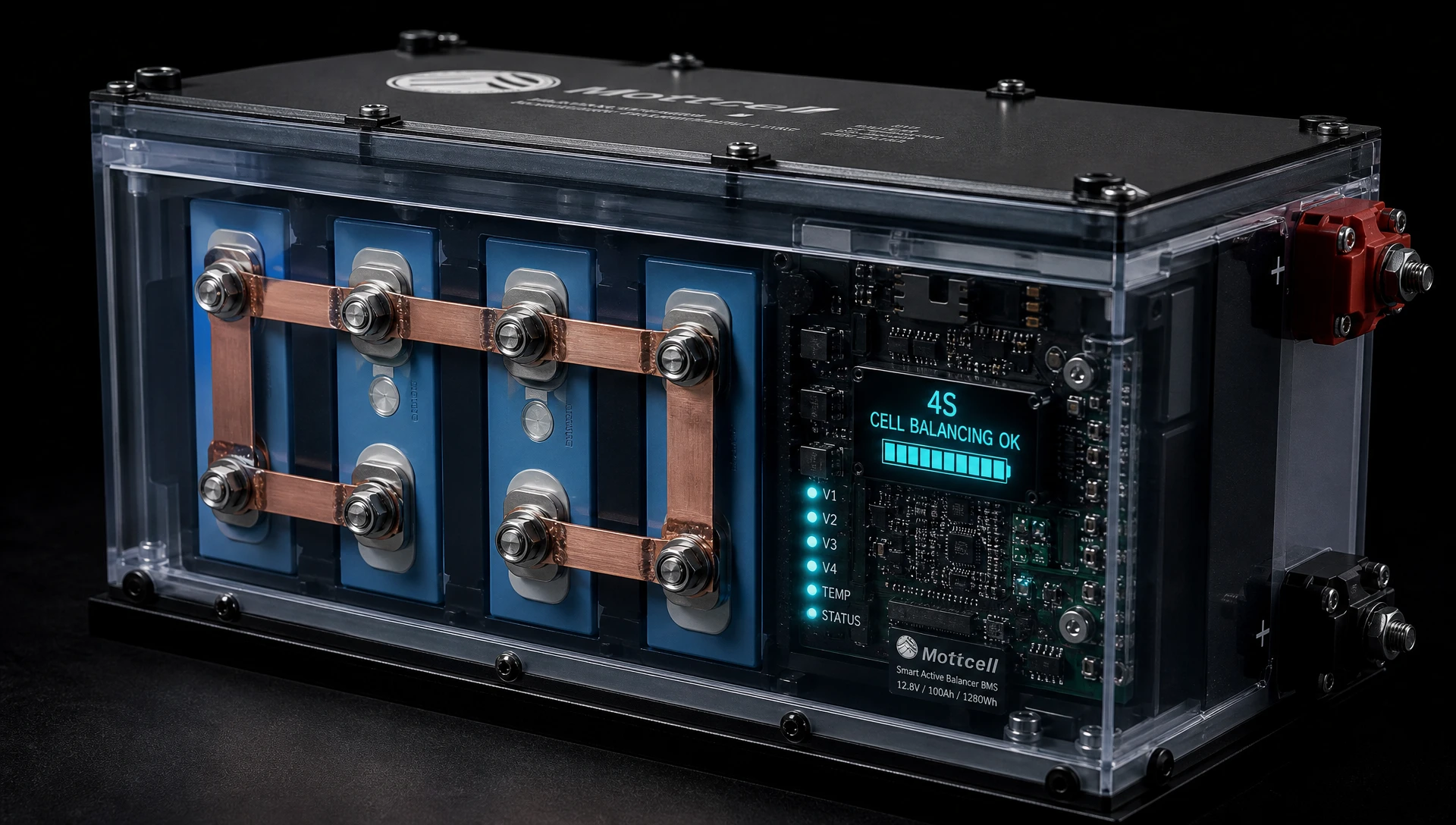
A standard 12V LiFePO4 battery pack is constructed using four large-format 3.2V prismatic cells connected in series (a 4S topology), producing a nominal system voltage of 12.8V DC.
Unlike lead-acid batteries, which exhibit a continuous voltage decay during discharge, a 12.8V LiFePO4 pack maintains a flat discharge curve between 12.8V and 13.2V for over 80% of its discharge cycle. This stable voltage profile ensures that sensitive electronic controllers, DC-DC converters, and motor drives receive consistent power without experiencing brownout-induced restarts.
Under international electrical safety codes (including IEC 61140 and NFPA 70), DC operating voltages below 60V fall under the Safety Extra-Low Voltage (SELV) classification. A 12.8V DC battery system operates well beneath this touch-safe threshold throughout its charge and discharge cycles.
Deploying 12.8V low-voltage energy storage offers clear compliance and operational advantages for industrial plants:
Touch-Safe Maintenance: Plant technicians can perform routine inspections, terminal torque checks, and battery bank expansions safely without needing specialized high-voltage electrician certifications.
Elimination of Arc Flash Hazards: Operating beneath the 60V threshold removes high-voltage arc flash hazards, protecting personnel and reducing workplace liability insurance costs.
Simplified Permitting: Local fire marshals and municipal building inspectors enforce simpler safety codes for SELV installations compared to high-voltage battery vaults.
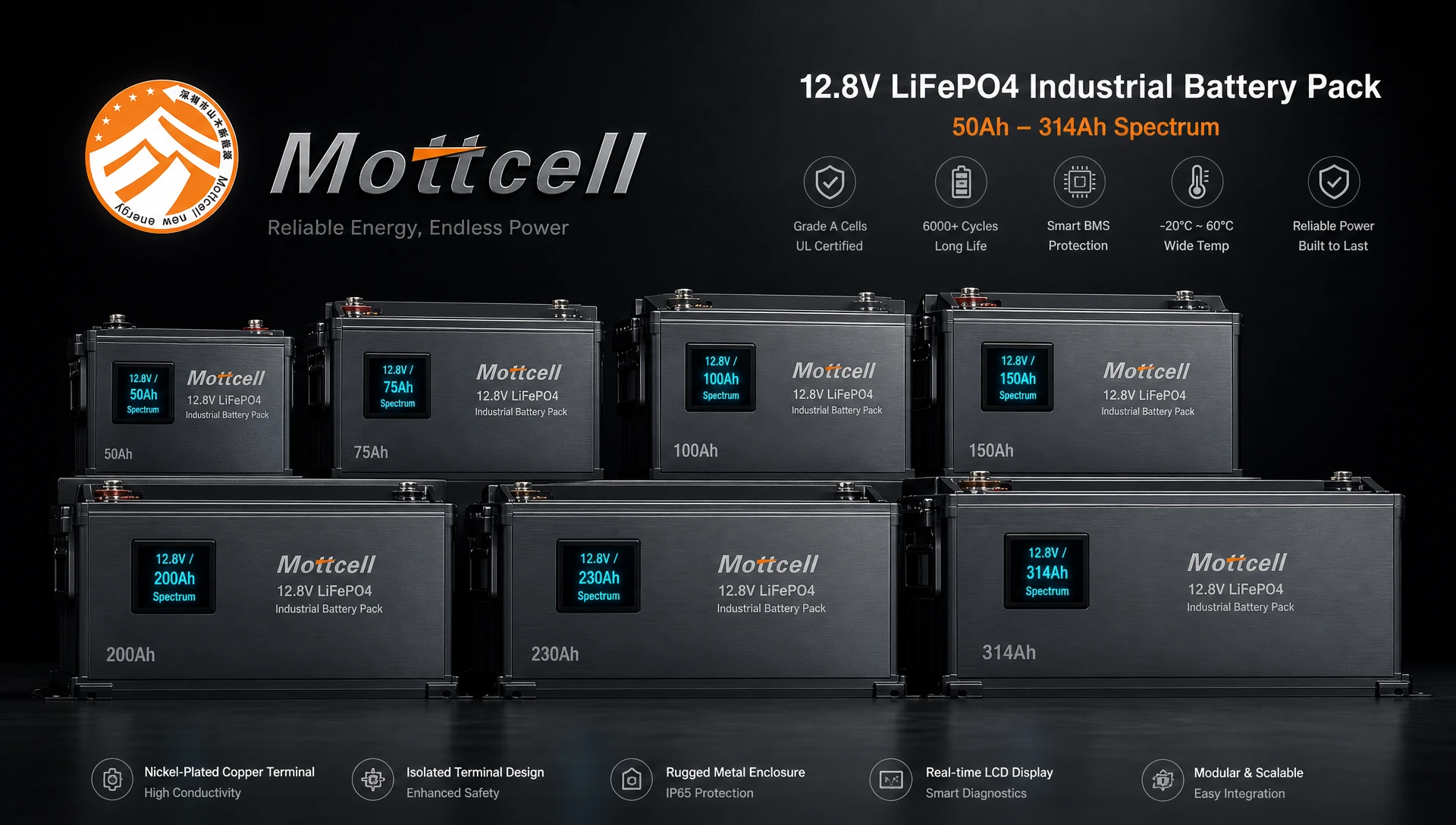
Selecting the correct battery capacity requires balancing energy reserves (kilowatt-hours, kWh) against space limitations, unit weight, and continuous discharge current demands. Mottcell manufactures six distinct 12V / 12.8V capacity tiers engineered for specific industrial applications:
The 50Ah module delivers 640 Watt-hours (0.64 kWh) of nominal energy in an ultra-compact enclosure. Sourced directly from our automated
With a low unit weight, it can be mounted directly inside weatherproof pole cabinets or machine enclosures, providing reliable backup power to electronic data loggers and wireless transceivers without taking up valuable floor space.
Storing 1,280 Wh (1.28 kWh) of energy, the 100Ah module represents the globally standardized B2B workhorse. Manufactured to match standard BCI Group 31 dimensions, sourcing a
The 100Ah module delivers three times the usable energy density of an equivalent SLA battery while reducing unit weight by 60%, making it ideal for telecom base stations, medical cart power, and light commercial backup systems.
Delivering 2.56 kWh of nominal electrical storage, the 200Ah module doubles energy capacity within a compact footprint. Sourced through an authorized
Capable of delivering 200A of continuous discharge current (2.56 kW continuous load), a single 200Ah module can power heavy AC loads through a low-voltage hybrid inverter, serving as a reliable energy buffer for commercial operations.
Built around large-format 280Ah prismatic LiFePO4 cells, the 280Ah module delivers an impressive 3.58 kWh of energy within a single compact housing. Sourcing a
Large 280Ah prismatic cells feature thick aluminum casings, internal explosion-proof safety valves, and heavy copper terminal posts. Sourcing 280Ah modules lowers overall cost-per-watt-hour ($/kWh) by reducing internal wiring complexity and decreasing the total number of parallel battery connections required for large storage arrays.
Delivering 3.84 kWh of continuous electrical storage, the 300Ah module is built for heavy-duty commercial energy storage systems and industrial uninterruptible power supplies (UPS). Sourced directly from a certified
Its heavy-duty internal copper busbars and active BMS thermal monitoring make it an ideal choice for multi-module parallel battery banks powering commercial manufacturing equipment, cold-storage warehouses, and facility peak-shaving operations.
Representing the latest advance in LiFePO4 electrochemistry, Mottcell’s flagship 314Ah module delivers 4.02 kWh of usable energy within virtually identical physical dimensions as traditional 280Ah/300Ah packs. Sourcing a
This higher density allows plant engineers to maximize total energy storage per square meter of floor space, making the 314Ah module the premium choice for modern solar microgrids, data centers, and space-constrained commercial facilities.
To accurately size a 12V LiFePO4 battery system, facility engineers must calculate total daily watt-hour consumption, continuous and peak current demands, inverter efficiency losses, and required backup autonomy days.
To determine total required battery capacity in Ampere-hours (Ah), use the following calculation:
Required Capacity (Ah) = [Daily Load (Wh) x Autonomy Days] / [Nominal Voltage (12.8V) x Max DOD (0.80) x Inverter Efficiency (0.90)]
Load Profile: 24V SCADA telemetry PLC (40W continuous) + wireless radio (10W continuous) running 24 hours per day.
Daily Energy Demand: (40W + 10W) x 24 hours = 1,200 Wh/day.
Target Autonomy: 2 days of continuous backup (no solar input).
Required Usable Storage: 1,200 Wh/day x 2 days = 2,400 Wh.
Factoring DOD & Efficiency: 2,400 Wh / (12.8V x 0.80 x 0.95) ≈ 246.7 Ah.
Selection Recommendation: Deploy one Mottcell 12.8V 280Ah battery pack (3,584 Wh), providing safe headroom for cold weather operation and unexpected communication transmission spikes.
Load Profile: Office lighting, computers, and security systems drawing a steady 1,500W load for an 8-hour outage window.
Total Outage Demand: 1,500W x 8 hours = 12,000 Wh (12 kWh).
Required Battery Capacity: 12,000 Wh / (12.8V x 0.80 x 0.90) ≈ 1,302 Ah.
Selection Recommendation: Connect four Mottcell 12.8V 314Ah battery packs in parallel (4 x 314Ah = 1,256Ah / 16.07 kWh total storage), providing clean, reliable backup power across the 8-hour window.
To help procurement officers evaluate equipment options across different voltage and capacity tiers, Mottcell provides a complete range of low-voltage and high-voltage energy storage products.
Reviewing your facility requirements against our comprehensive
| Product Series Designation | Nominal System Voltage | Energy Storage Capacity (kWh) | Max Continuous Discharge Current | Ideal Industrial Application Profile | Sourcing Impact on Factory Fleet |
| 12V 50Ah | 12.8V DC | 0.64 kWh | 50A (640W) | Remote SCADA nodes, telemetry, pole-mount solar security lights. | Compact, lightweight backup for isolated edge control panels. |
| 12V 100Ah | 12.8V DC | 1.28 kWh | 100A (1,280W) | Group 31 SLA replacements, telecom base stations, medical carts. | Standardized SLA drop-in replacement with triple the energy density. |
| 12V 200Ah | 12.8V DC | 2.56 kWh | 200A (2,560W) | Commercial branch offices, off-grid marine, mobile service vehicles. | Balances high capacity and compact footprint for commercial loads. |
| 12V 280Ah | 12.8V DC | 3.58 kWh | 200A - 280A | High-yield commercial solar arrays, heavy equipment power buffers. | Prismatic 280Ah golden standard for low cost-per-watt-hour. |
| 12V 300Ah | 12.8V DC | 3.84 kWh | 200A - 300A | Heavy-duty industrial UPS, multi-module parallel energy banks. | Heavy-duty power delivery for high continuous current loads. |
| 12V 314Ah | 12.8V DC | 4.02 kWh | 200A - 300A | Next-gen commercial microgrids, high-density space-constrained sites. | Maximizes energy storage per square meter (+12% energy density). |
| HESS 5kwh | 48V / 51.2V | 5.12 kWh | 100A (5,000W) | Distributed automation loops, machine control racks, PLC buffers. | Ideal 19-inch rack-mount building block for 48V low-loss DC buses. |
| HESS 100kwh | 600V - 800V | 100 kWh | High-Voltage PCS | Centralized factory microgrids, peak shaving, transformer buffering. | Supports complete factory grid independence and MW-scale expansion. |
The performance gap between an industrial-grade energy storage asset and a standard retail battery is established on the automated manufacturing line. Sourcing energy infrastructure through intermediate trading companies introduces operational risks, as intermediaries often lack direct oversight over cell sorting matrices, laser welding quality, and BMS firmware calibration.
If unvetted cells with slight variations in Open Circuit Voltage (OCV) or Internal Resistance (IR) are assembled into a 4S series string, the battery pack will experience rapid cell divergence under continuous heavy loads. The cell with higher internal resistance generates localized heat more quickly and reaches its voltage cutoff limit ahead of neighboring cells, forcing the BMS to shut down the module prematurely and reducing overall usable capacity.
As an audited manufacturing authority, Mottcell enforces strict quality control across every manufacturing stage:
Automated 100% Cell Sorting: 100% of incoming Grade-A prismatic cells pass through computerized testing matrices that measure OCV and IR down to microscopic tolerances, ensuring perfectly matched cell strings.
Robotic Laser Fusion Welding: Manual threaded connections can loosen over time due to machine vibrations on factory floors. Mottcell uses automated robotic laser fusion welding to join cell terminals with heavy copper busbars, creating permanent metallurgical bonds with low connection resistance.
Heavy-Duty Structural Compression: Prismatic cells experience subtle physical expansion during high-rate charging and discharging. Mottcell embeds heavy-duty steel compression plates within every enclosure, applying calculated pressure across cell faces to prevent swelling and protect internal layers.
Smart BMS Telemetry Integration: Every Mottcell 12V module is equipped with an industrial-grade smart BMS that features native CANbus, RS485, and Modbus TCP communication interfaces, allowing seamless integration with factory PLCs, hybrid inverters, and central Energy Management Systems (EMS).
For facilities with unique spatial, environmental, or electrical constraints, our engineering team designs bespoke solutions through our specialized
When procuring energy storage infrastructure, corporate executives and financial directors must evaluate total lifecycle economics rather than focusing solely on initial acquisition costs. Choosing low-cost lead-acid batteries may present a lower initial purchase price, but it frequently leads to high operational expenditures (OpEx) through frequent replacements, maintenance labor, and costly downtime.
Standardizing your industrial low-voltage power infrastructure on Mottcell 12.8V LiFePO4 platforms delivers clear financial advantages:
6,000+ Deep Cycle Lifespan: Operating for over 6,000 cycles at 80% Depth of Discharge, a Mottcell LiFePO4 pack provides 10 to 15 years of daily service, easily outlasting four generations of lead-acid batteries.
Zero Routine Maintenance: Sealed LiFePO4 modules require no liquid top-offs, equalizing charges, or acid corrosion management, freeing up maintenance personnel for core plant operations.
Footprint and Weight Efficiency: Delivering three times the energy density of SLA alternatives, LiFePO4 batteries free up valuable floor space and simplify mounting in elevated control cabinets.
For turn-key commercial projects requiring combined energy storage and power conversion, explore our integrated
Answer: A nominal 12.8V 4S prismatic LiFePO4 battery pack offers significant operational advantages over traditional lead-acid (SLA/AGM) batteries. It delivers more than 10 times the cycle life (6,000+ cycles at 80% DOD vs. 300–500 cycles for SLA), maintains a flat voltage discharge curve under load, weighs 60% less, and provides triple the volumetric energy density. Furthermore, LiFePO4 contains no hazardous lead or acid, requires zero liquid maintenance, and exhibits high thermal stability.
Answer: Yes. Mottcell 12.8V industrial battery packs feature intelligent BMS controllers designed for flexible array expansion. Depending on the specific capacity module, packs can be connected up to 4 units in series (creating a 51.2V nominal system) and up to 4 units in parallel (16 total modules), allowing facility engineers to scale both system voltage and Ampere-hour capacity to meet growing load demands.
Answer: Mottcell provides comprehensive OEM/ODM customization for 12V industrial applications. Engineering options include custom steel or aluminum enclosures rated up to IP65 for dust and water resistance, conformal coatings applied to internal BMS circuit boards to protect against chemical fumes and moisture, customized terminal posts, and tailored BMS communication protocols (Modbus TCP, CANbus, RS485) for integration with plant SCADA networks.
Selecting the correct 12V LiFePO4 battery capacity is a critical engineering decision that directly impacts your facility's power reliability, control system uptime, and long-term financial performance. By stepping away from generic trading intermediaries and partnering with a certified, factory-direct supplier, you eliminate technical integration risks, secure your supply chain, and maximize capital investment returns.
Mottcell combines advanced electrochemistry expertise, automated robotic laser manufacturing, and flexible OEM/ODM engineering to deliver reliable energy storage solutions worldwide. Ready to eliminate edge power vulnerabilities, upgrade legacy SLA battery fleets, and receive a customized manufacturing blueprint for your power infrastructure? Please
To calculate your facility's exact daily watt-hour demand, evaluate peak shaving economics, and compare capacity tiers across 5kWh, 10kWh, 15kWh, 16kWh, 48V modular banks, and 100kWh outdoor cabinets, explore our complete technical guide:
Commercial HESS Supplier: Factory Microgrid Sizing Guide
51.2V HESS Battery Supplier: 100Ah to 314Ah Capacity Guide
12V LiFePO4 Battery Pack Manufacturer: 50Ah-314Ah OEM Guide
16kWh HESS Supplier: 51.2V 314Ah Buyer’s Guide
5kWh HESS Supplier: Indoor Modular Battery Buying Guide
48V 200Ah HESS Supplier: Voltage & Inverter Fit Guide
15kWh HESS Supplier: Capacity & Home Backup Runtime Guide
10kWh HESS Supplier: Home Solar Storage Buying Guide
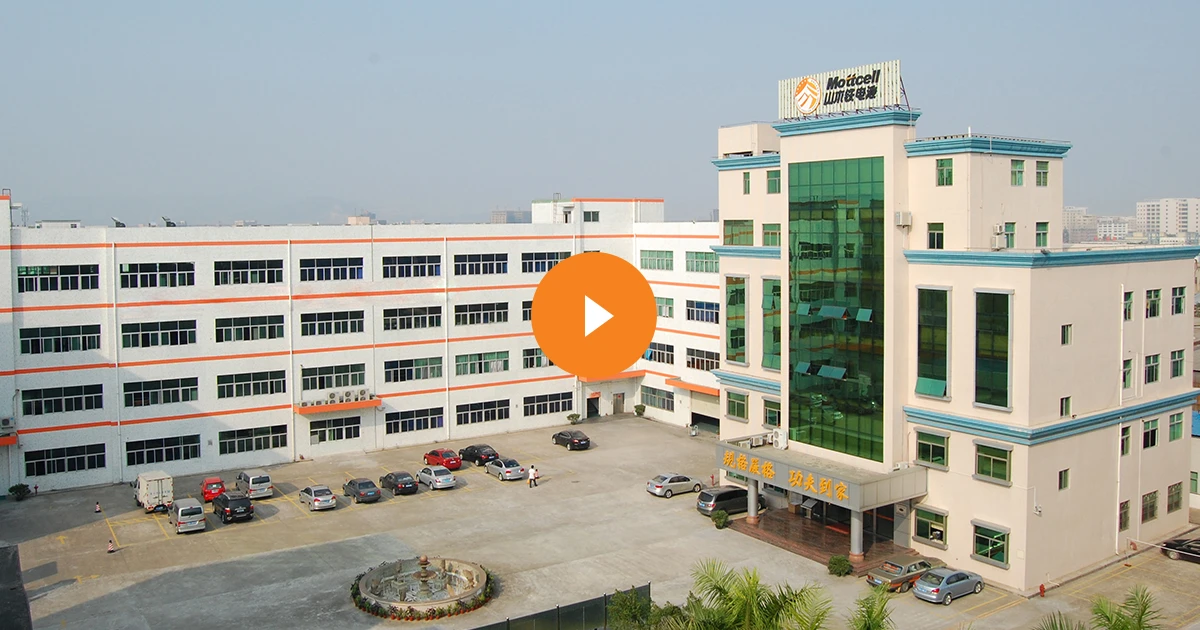
Established in 2005
In 2009, it was awarded the title of "National High tech Enterprise"
 zoe@mottcell.net
WhatsApp: 8617388790296
Fax: 86-0755-84042963
Skype: live:b0ebaecbb8782516
WeChat: +8613428749632

 VR show
 CN
CN Home >


