

 Jun 22, 2026


In the global industrial landscape, factory operational resilience, process automation, and microgrid infrastructure optimization depend heavily on decentralized power setups. As engineering directors, chief technology officers, and B2B procurement managers upgrade their hardware, shifting away from legacy lead-acid batteries has become a clear commercial necessity. Among the versatile low-voltage configurations currently driving factory modernization, the industrial-grade 12v 200ah battery pack serves as a vital modular building block for commercial networks.
When material handling systems, automated guided vehicles, and critical localized backup grids rely on constant power, purchasing low-tier consumer battery options exposes an enterprise to severe field vulnerabilities. True long-term efficiency requires a ruggedized power architecture designed to handle continuous high-current extraction, heavy physical shocks, and variable thermal environments. Sourcing an optimized power asset directly from a certified 12.8v 200ah battery manufacturer ensures that the underlying cell chemistry, structural enclosure framing, and smart monitoring telemetry match your specific industrial workloads, systematically minimizing unexpected field downtime and optimizing your capital expenditure returns.
Evaluating a high-performance 12v 200ah battery pack for an industrial rollout requires engineering teams to look past external case dimensions and analyze the internal cell-level configuration. While retail energy storage options often use lightweight cylindrical cells or volatile polymer pouches, heavy commercial environments demand premium, large-format prismatic Lithium Iron Phosphate (LiFePO4) frameworks. Prismatic LiFePO4 chemistry provides inherent safety advantages for factory floors, including exceptional thermal stability, high structural puncture resistance, and an extended cycle life that outlasts alternative lithium variants under continuous deep-cycling workloads.
At the technical level, a standard industrial 12V platform is assembled by grouping large-format prismatic blocks into a 4S (4 Series) electrical layout. Because the nominal voltage of an individual premium LiFePO4 cell string operates at a stable baseline, coupling four cell blocks in a series configuration yields a highly dependable nominal platform voltage of 12.8V. This integrates perfectly with legacy industrial DC motor controllers, process components, and backup heavy-duty inverters, preventing the conversion losses or early voltage drop-offs common in substandard alternative configurations.
By utilizing advanced cell grouping, a certified 12.8v 200ah battery pack manufacturer packs substantial raw energy capacity into a single compact housing. For applications requiring decentralized, high-reliability infrastructure, deploying a ruggedized module for an explicit 12v 200ah for energy storage system footprint ensures a clean, linear discharge profile. This configuration delivers constant, reliable power across the vast majority of the entire discharge cycle, even when subjected to high-rate continuous current demands.
Enterprise procurement managers can evaluate detailed cell spacing constraints, precise environmental testing data, and advanced battery expansion curves by exploring the detailed engineering specifications in our comprehensive overview of
The compact energy-to-weight ratio of the premium prismatic architecture makes it a preferred power standard across multiple industrial sectors. Sourcing managers utilize this capacity block to maximize space efficiency while securing long-term field survivability across two primary operational environments:
When configuring a modular 12v 200ah battery pack for solar system deployments—such as remote SCADA monitoring equipment, cross-border telecommunication towers, or localized off-grid factory perimeter lighting grids—environmental exposure is a primary concern. Legacy lead-acid systems fail prematurely under the erratic charging patterns generated by solar arrays, which causes severe cell sulfation and shortens battery lifespan.
Premium LiFePO4 modules handle partial state-of-charge profiles smoothly, allowing them to cycle continuously without experiencing capacity loss, ensuring uninterrupted field operations during extended periods of low sunlight. When evaluating hardware for remote field setups, establishing a direct supply chain connection with a certified 12v 200ah for solar system system specialist or optimizing a 12v 200ah battery pack for solar system platform guarantees proper cell matching and long service life.
Inside modern automated manufacturing facilities, automated guided vehicles, electric pallet jacks, commercial scissor lifts, and industrial floor scrubbers run across rigorous multi-shift schedules. Upgrading light material handling fleets to a factory-certified 12.8V lithium block allows operations to implement high-rate opportunity charging during brief operator breaks.
This capability eliminates the need for expensive, time-consuming battery swap-out routines and completely replaces toxic lead-acid charging rooms with clean, space-saving localized charging stations. Furthermore, vessels operating in highly corrosive, high-vibration maritime environments can read the dedicated
| Engineering Evaluation Parameter | Legacy Industrial Lead-Acid Block | Premium Prismatic LiFePO4 Module | Sourcing Impact on Factory Fleet |
| Usable Depth of Discharge (DoD) | Limited Framework Recommended | Full Capacity Extraction Support | Doubles equipment runtime within an identical physical footprint space. |
| Operational Lifespan Over Time | Restricted Cycle Thresholds | Extended Deep Cycling Lifecycle | Slashes long-term procurement replacement frequencies and field labor costs. |
| Opportunity Charge Support | Not Supported (Causes Severe Damage) | Rapid Charge Integration Ready | Enables continuous multi-shift operations without battery swap-outs. |
| Routine Maintenance Overhead | High (Water Top-offs, Degassing Needs) | Zero Maintenance Sealed Design | Reallocates facility engineering labor to core manufacturing machinery tasks. |
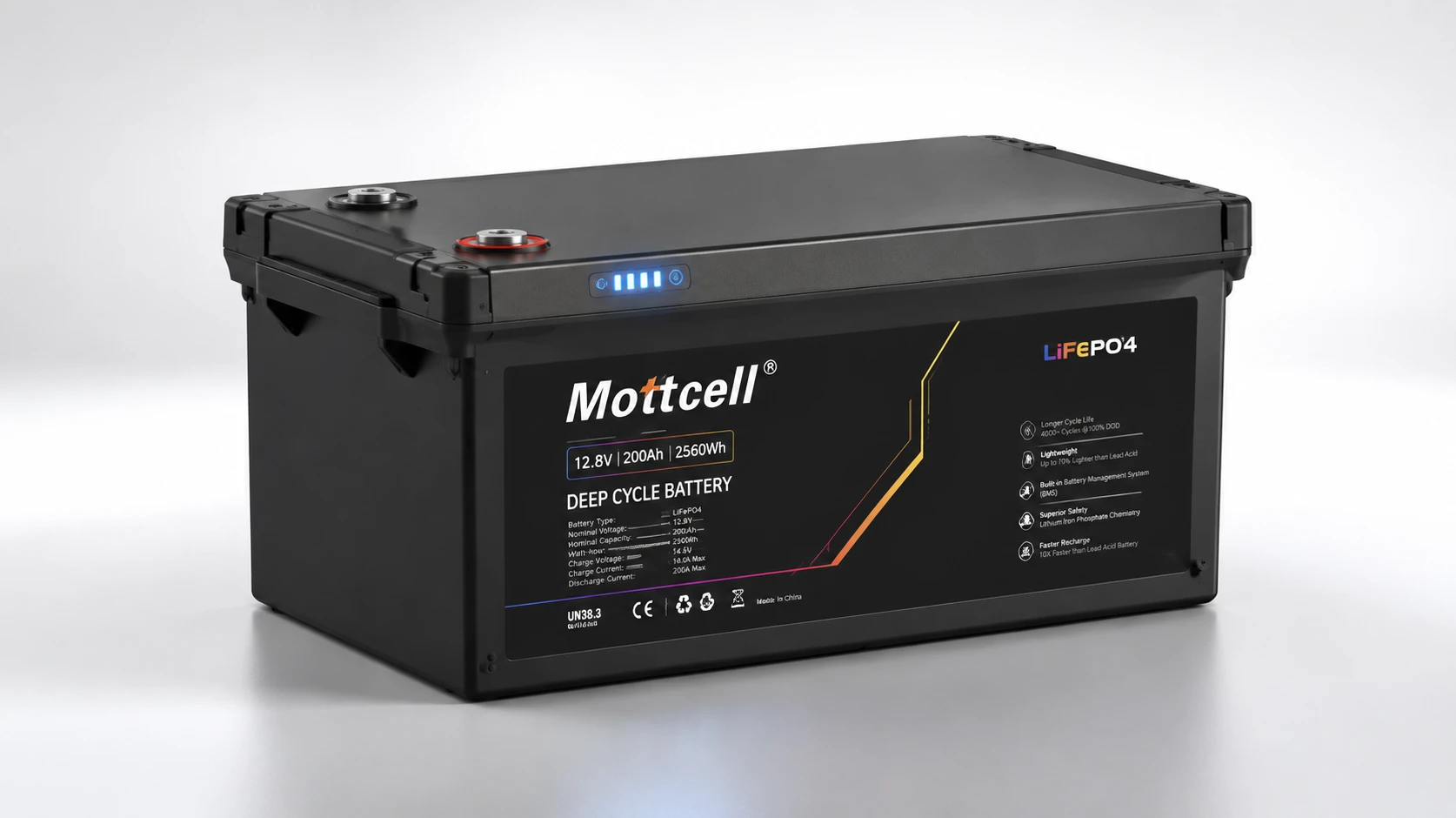
The true performance gap between a commercial-grade industrial power asset and an unvetted retail option is determined on the automated production line. Sourcing energy infrastructure from general trading intermediaries introduces severe operational risks. If individual cells within a series string exhibit even minor variations in open-circuit voltage or internal resistance, the pack will quickly experience capacity tracking errors under continuous heavy loads.
The cell with the slightly higher resistance will generate localized heat more rapidly and reach its upper or lower voltage cutoff points ahead of its neighboring cells. This behavior forces the central management system to shut down the entire module prematurely, reducing the usable runtime of your equipment and causing accelerated battery degradation.
To eliminate these cell imbalances, a qualified 12.8v 200ah battery pack factory utilizes multi-stage, computer-controlled testing loops before physical pack integration begins. High-precision sorting systems match individual cells down to tight millivolt and micro-ohm boundaries, ensuring every component within the series matrix shares identical electrical performance metrics.
Furthermore, to maintain absolute structural integrity under continuous industrial use, a premium 12.8v 200ah battery pack manufacturer replaces manual screw connections with automated robotic laser fusion welding. Laser welding creates a permanent metallurgical bond between the cell terminals and heavy copper busbars, minimizing internal impedance and stopping connection failures caused by heavy facility equipment vibration. Sourcing directly from an audited 12.8v 200ah battery factory provides procurement teams with direct visibility into components and component grading traceability.
Enterprise procurement supervisors can audit these quality control frameworks by reviewing our guide on
The physical environment of a production facility, processing yard, or marine terminal is deeply hostile to electrical infrastructure. To ensure long-term field survivability, the mechanical housing surrounding a heavy lithium core must protect internal electronics from constant structural impacts, high mechanical vibrations, airborne dust, and high-pressure fluid wash-downs.
Prismatic lithium cells naturally undergo subtle volumetric expansion and contraction during high-rate charging and discharging phases. If cells are packed tightly into an enclosure without mechanical constraints, this continuous physical movement can place severe stress on internal tabs, eventually weakening laser welds and breaking voltage sensing connections.
To mitigate this mechanical stress, an industrial-grade 12.8v 200ah battery pack factory utilizes high-pressure steel structural reinforcing plates combined with specialized shock-absorbing end-plates. This mechanical framework maintains calculated, uniform pressure across the cell faces, preventing swelling, preserving cell geometry, and extending overall cycle life. As illustrated in the structural layer stack of image_74a439.png, the internal cell matrix core is protected by a multi-tier mechanical assembly that features a sealed industrial enclosure, high-pressure compression plates, and robotic laser-welded pure copper busbars.
Airborne industrial dust, metallic particulates, and routine fluid wash-downs will cause severe short-circuits if allowed to contact internal electronics. To isolate the core matrix, specialized enclosures are constructed using heavy CNC-machined aluminum or powder-coated, cold-rolled steel.
Advanced factory production lines apply automated pour-in-place polyurethane gaskets to achieve verified ingress protection ratings. These sealed enclosures completely shield internal electronics from dust, ambient moisture, and low-pressure water streams. External connection terminals are engineered from heavy-duty, tin-plated pure copper blocks or marine-grade stainless steel studs, stopping terminal oxidation from degrading electrical performance over multi-year field operations.
Industrial factories often operate across extreme thermal windows, ranging from sub-zero cold-storage facilities to high-heat processing floors near furnace machinery. Because charging lithium cells below freezing triggers lithium plating on the cell anodes—creating permanent capacity loss and internal short-circuit risks—the internal layout must integrate intelligent thermal controls.
Advanced configurations incorporate automated internal heating blankets surrounding the cell core. When the system detects a freezing environment during an incoming charge sequence, the BMS redirects power to warm the internal heating plates first, safely bringing the cell matrix up to optimal temperatures before allowing current into the cells.
Even the most robust electromechanical construction will fail prematurely without a high-performance control system. Every industrial-grade 12v 200ah battery pack requires an integrated, programmable Battery Management System (BMS) that serves as both the primary safety governor and the intelligent data communication hub for the entire module.
The smart BMS continuously monitors vital operational parameters across the internal matrix, executing millisecond-level protective cut-offs if parameters cross safe operating thresholds:
Over-Voltage and Over-Charge Isolation: Automatically pauses incoming charge current if any cell string crosses upper voltage boundaries, preventing chemical over-stress.
Deep Discharge and Under-Voltage Guard: Disconnects the primary terminal relays if any cell drops beneath minimum thresholds, eliminating permanent capacity destruction.
Short-Circuit and Over-Current Protection: Instantly isolates the entire internal cell core during external electrical faults, shielding the factory's wiring grids and machine chassis from fire hazards.
Active Balancing Matrix: Dynamically redistributes energy from higher-voltage cells to lower-voltage cells during the charge cycle, maximizing usable runtime and ensuring a maximized overall service life.
To support modern industrial automation and smart grid integration, the built-in BMS incorporates standardized digital communication interfaces, including CANbus, RS485, and Modbus networks. This connectivity allows your facility’s central programmable logic controller or an external IoT monitoring console to track vital performance metrics in real time.
Operations supervisors can continuously monitor real-time State of Charge, individual cell voltage strings, localized internal temperatures, and overall State of Health. This granular transparency enables predictive maintenance planning, eliminating unexpected downtime and maximizing machine availability. To see how these 12.8V modules integrate seamlessly into utility-scale arrays, browse our current portfolio of high-yield
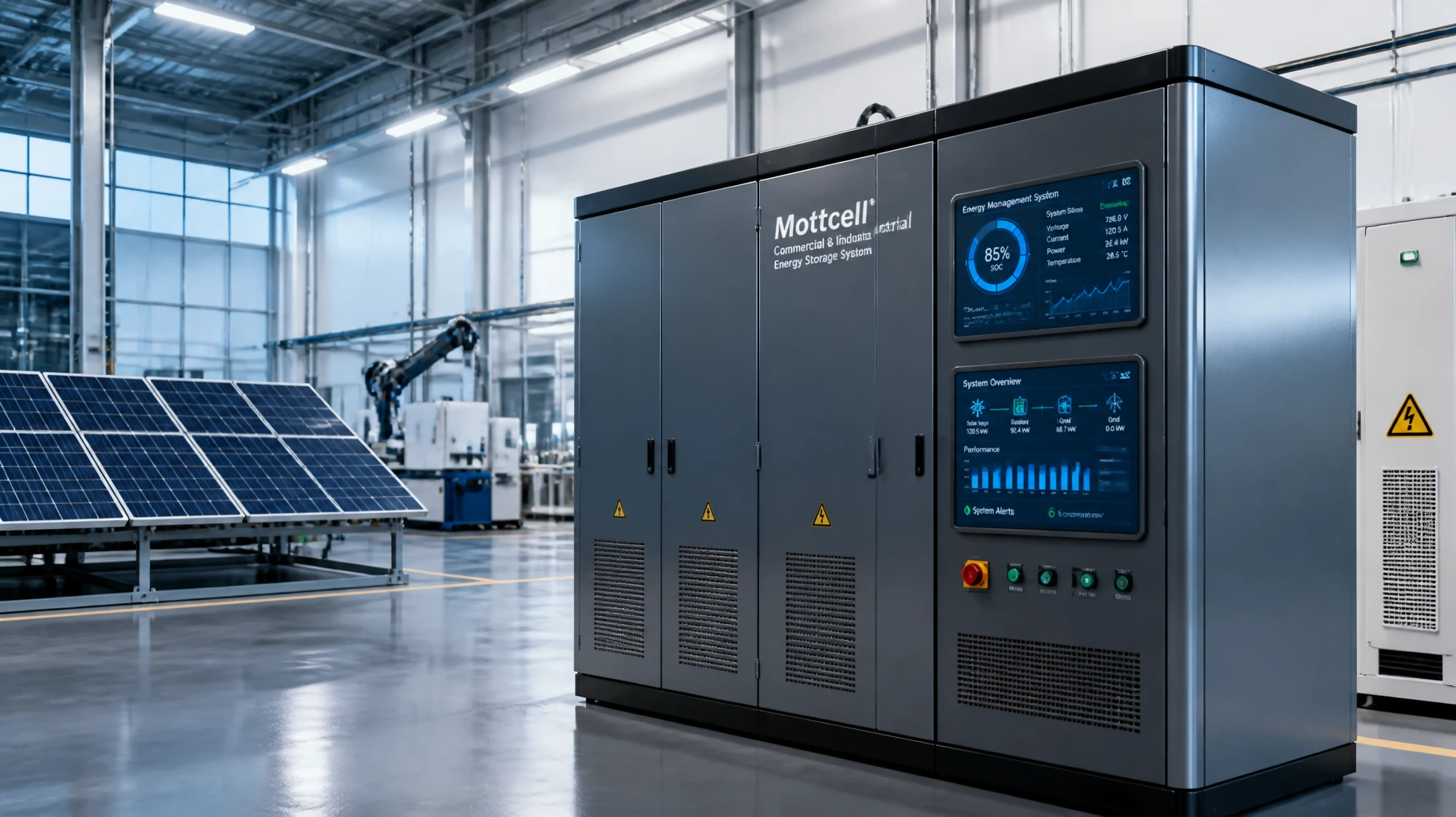
For industrial corporate executives, procurement officers, and factory owners, purchasing energy infrastructure requires an analytical focus on long-term lifecycle economics rather than looking solely at initial acquisition capital expenditure. Sourcing cheap, uncertified import options presents an appealingly low upfront price tag, but it inevitably generates heavy long-term operational expenditures through frequent field service, premature replacements, and expensive equipment downtime.
Quantifying the true return on investment of standardizing facility operations on a premium lithium core requires analyzing total lifecycle costs across several core financial parameters:
Extended Cycle Longevity: A premium Mottcell industrial lithium system utilizing Grade A prismatic cells delivers thousands of full deep-discharge cycles before its capacity degrades significantly below its initial rating. In comparison, deep-cycle lead-acid or AGM alternatives rarely survive past initial operational phases under identical real-world facility duty cycles. This means a single lithium deployment outlasts multiple lead-acid change-out rounds, eliminating repeat procurement and maintenance cycles. Sourcing direct from a verified 12.8v 200ah battery supplier guarantees performance matching over this lifecycle.
Zero Routine Maintenance Overhead: Conventional lead-acid installations require ongoing operational maintenance, including distilled water top-offs, equalizing charges, and continuous terminal cleaning to remove toxic acid corrosion. Premium lithium packs are completely sealed, zero-maintenance systems, allowing fleet operators to reallocate engineering labor to core mechanical tasks.
Mass and Space Optimization: Upgrading a large multi-pack configuration from lead-acid to lithium substantially reduces total battery weight and volume. This physical optimization immediately improves AGV vehicle acceleration, reduces floor loading constraints, slashes drivetrain stress, and frees up valuable warehouse space for functional factory assets.
Predictive Fleet Diagnostics: Sourcing from an authoritative 12.8v 200ah battery pack supplier provides access to programmable BMS telemetry. By streaming real-time performance metrics directly to your facility's central control software, operations can pivot from reactive troubleshooting to proactive management, identifying and addressing minor cell anomalies before they cause unexpected production line stops. Large corporate fleet operators can evaluate tier pricing frameworks by examining our blueprint for
Answer: Because cells naturally exhibit microscopic variations in capacity and internal resistance out of raw chemical production, unvetted cell batches will experience rapid voltage divergence under heavy industrial loads. Mottcell's automated factory implements multi-stage testing matrices to match cells down to tight millivolt and micro-ohm thresholds, preventing capacity tracking errors and ensuring a stable, extended service life.
Answer: A generic battery cannot communicate with system controllers, which can lead to unexpected equipment shutdowns. Mottcell's programmable Smart BMS streams real-time state of charge, cell voltage strings, and state of health data via CANbus or RS485 protocols directly to your facility's central programmable logic controller or remote IoT dashboard, enabling predictive maintenance planning and eliminating unexpected production line stops.
Answer: Prismatic lithium cells naturally undergo subtle volumetric expansion and contraction during high-rate charging and discharging phases. Mottcell integrates heavy-duty, high-pressure steel structural reinforcing plates and specialized shock-absorbing end-plates within our enclosures. This custom framework applies consistent, calculated pressure to the cell faces, preventing swelling, preserving internal cell geometry, and protecting internal connections from heavy mechanical shock and vibration.
Procuring a high-capacity commercial-grade 12v 200ah battery pack framework should never be approached as a routine, commoditized transaction. It represents a long-term investment in your enterprise's core operational infrastructure. By moving away from restrictive off-the-shelf catalog models and embracing a custom-engineered, factory-certified lithium configuration, you systematically eliminate design bottlenecks, secure your hardware supply chain, and maximize long-term operational ROI.
Mottcell combines advanced lithium engineering with full-service OEM/ODM customization to deliver high-performance power solutions that excel in demanding commercial environments. Ready to eliminate field failure risks, optimize your fleet's weight metrics, and secure a tailored production blueprint for your heavy machinery rollout? Please
To compare all low-voltage capacity platforms, read our comprehensive
For heavy-duty solar microgrid arrays, upgrade to our
51.2V HESS Battery Supplier: 100Ah to 314Ah Capacity Guide
12V LiFePO4 Battery Pack Manufacturer: 50Ah-314Ah OEM Guide
16kWh HESS Supplier: 51.2V 314Ah Buyer’s Guide
5kWh HESS Supplier: Indoor Modular Battery Buying Guide
48V 200Ah HESS Supplier: Voltage & Inverter Fit Guide
15kWh HESS Supplier: Capacity & Home Backup Runtime Guide
10kWh HESS Supplier: Home Solar Storage Buying Guide
AGV Lithium Battery: High-Power Industrial LiFePO4 Units
Established in 2005
In 2009, it was awarded the title of "National High tech Enterprise"
 zoe@mottcell.net
WhatsApp: 8617388790296
Fax: 86-0755-84042963
Skype: live:b0ebaecbb8782516
WeChat: +8613428749632

 VR show
 CN
CN Home >


