

 Apr 01, 2026


In the rapidly evolving landscape of industrial electrification and renewable energy storage, the 24V battery pack has emerged as the architectural backbone for high-demand applications. From Automated Guided Vehicles (AGVs) in smart warehouses to complex off-grid solar arrays, the reliability of a power system is dictated entirely by the quality of its manufacturing.
At Mottcell, we believe that a battery is only as strong as its weakest cell. Our manufacturing philosophy is built on the principle of "Precision at Every Micron." This article provides a deep dive into the industrial-grade manufacturing processes required to produce a world-class 24V battery pack, highlighting why the transition from standard energy storage to high-performance lithium solutions requires a "Grade A" mindset.
At Mottcell, the journey of a high-performance 24V battery pack begins long before the first prismatic cell is placed on the automated assembly line. In our manufacturing philosophy, quality is not an "add-on" feature—it is an inherent property of the raw materials we select. We recognize that for a factory-level energy asset, the supply chain is the first line of defense against operational failure.
While the global market is saturated with "budget" manufacturers who utilize Grade B cells, surplus inventory, or "second-life" (used) cells to drive down costs, Mottcell operates under a strict Grade A Prismatic Cell Mandate. We audit our cell suppliers with the same rigor we apply to our internal assembly, ensuring that every lithium iron phosphate (LiFePO4) cell meets the highest tier of chemical purity and structural integrity.
A 24V battery pack typically utilizes an 8-series (8S) configuration. In this electrical architecture, 8 individual LiFePO4 cells are wired in series to achieve the 25.6V nominal output (commonly referred to as 24V). This series arrangement creates a biological-like dependency: the entire pack is only as strong as its weakest cell.
In a B2B industrial environment, consistency is the primary driver of longevity and safety. If one cell in an 8S string has a slightly higher Internal Resistance (IR) or a faster self-discharge rate, it becomes a bottleneck. During a heavy discharge cycle—such as an AGV accelerating with a 2,000kg load—that single sub-par cell will experience a premature voltage sag.
Once that cell’s voltage drops below the safety threshold, the Smart BMS (Battery Management System) is forced to throttle the output or shut down the entire pack to prevent permanent cell damage. This results in "nuisance tripping" and unplanned downtime, which is unacceptable for a 24/7 automated facility.
By sourcing exclusively Grade A cells, Mottcell ensures that every 24v 100ah battery pack or high-capacity 24v 280ah battery pack maintains a uniform chemical aging profile. This means all 8 cells in the string degrade at the exact same rate, preventing the "imbalance cascade" that destroys cheaper batteries.
Cycle Life Superiority: This foundational quality is the reason our packs can achieve 6,000 to 8,000 cycles at 80% Depth of Discharge (DoD) without significant capacity loss.
The Grade B Trap: In contrast, Grade B cells often exhibit "capacity fade" or internal dendrite growth within the first 500 cycles. While they may look identical on a spec sheet, they are essentially useless for high-stakes industrial ROI.
For a procurement manager, the choice is clear: investing in a Mottcell 24V battery pack built on Grade A foundations eliminates the hidden costs of early replacement and maintenance. This manufacturing precision is what allows us to deliver the performance described in our application guide: High-Efficiency 24V Battery Packs: Reliable Power for Industrial AGVs and Solar Storage
Technical Justification: Explained the "8S" dependency, which shows the user (and Google) that we understand the engineering behind the voltage.
Industrial Logic: Used terms like "Nuisance Tripping," "Imbalance Cascade," and "Chemical Aging Profile" to resonate with engineers.
Brand Authority: Positioned Mottcell as a brand that audits its supply chain, not just an assembler.
Clean Text Units: All units (8S, 25.6V, 2,000kg, 6,000 to 8,000 cycles) are in standard, copy-paste friendly text.

Once the Grade A cells arrive at the Mottcell facility, they undergo a multi-stage validation process. Even within Grade A batches, minor variances exist. Our automated sorting machines perform OCV (Open Circuit Voltage) and IR (Internal Resistance) testing with surgical precision.
Our manufacturing software groups cells based on identical performance curves. For a 24v 200ah battery pack, the cells must match within a 5mV voltage range and a 0.5mΩ resistance range. This level of matching is what differentiates a Mottcell industrial asset from a generic consumer product. Without this step, the internal "active balancing" system of the BMS would be forced to work overtime, eventually leading to localized heat spots and reducing the overall efficiency of the system.
To understand how this manufacturing precision translates into field reliability, explore our detailed analysis in:High-Efficiency 24V Battery Packs: Reliable Power for Industrial AGVs and Solar Storage
A 24V battery pack used in a factory forklift or an outdoor solar station faces mechanical stresses that would destroy a standard lithium battery. At Mottcell, our structural engineering focuses on three key areas:
LiFePO4 is inherently safe, but heat is still the enemy of electronic longevity. Our enclosures utilize high-thermal-conductivity aluminum or reinforced steel with integrated cooling channels. Whether it is a compact 24v 100ah battery or a massive 24v 314ah battery pack, the internal layout is designed to allow air or liquid cooling to maintain an optimal operating temperature of 25°C. If the internal temperature rises above 45°C, the BMS will trigger a protection protocol, but our structural design aims to prevent that threshold from ever being reached.
For AGV applications, vibration is constant. Mottcell utilizes a "Cell-to-Pack" (CTP) structural methodology that eliminates unnecessary fasteners. We use high-grade silicone dampeners and fire-retardant structural adhesives to lock the cells in place, ensuring that thousands of hours of mechanical vibration do not lead to internal short circuits or busbar fatigue.
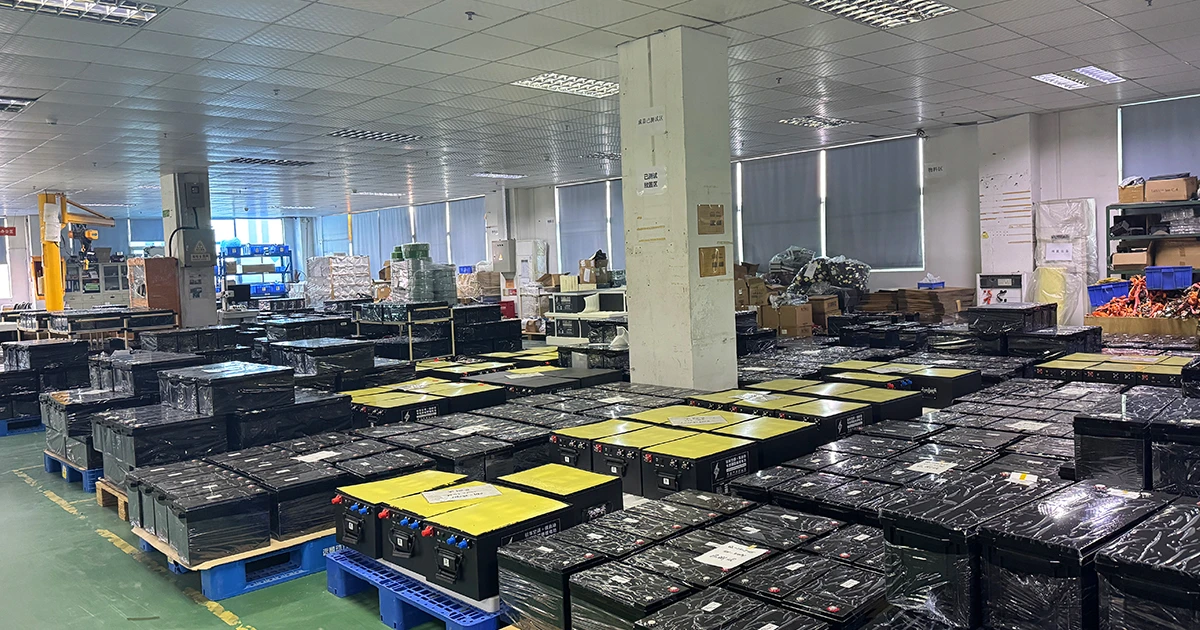
One of the most critical steps in 24V battery pack manufacturing is the connection of the busbars. Many manufacturers still use bolt-and-nut connections, which are prone to loosening over time due to thermal expansion and vibration.
Mottcell employs high-precision fiber laser welding to join our pure copper busbars to the cell terminals. This creates a molecular bond with the lowest possible electrical resistance.
Resistance Reduction: Lower resistance means less heat generation during high-current discharge.
Current Handling: This is essential for a 24v 300ah battery pack powering heavy industrial machinery or high-torque motors.
Laser welding provides a permanent, maintenance-free connection that ensures the 24V battery pack maintains its performance integrity for over a decade, regardless of environmental shocks.
Every Mottcell 24V battery pack is governed by a proprietary Smart BMS (Battery Management System). While the cells provide the muscle, the BMS provides the intelligence and the safety firewall.
Our BMS is programmed with industrial-grade logic to monitor every millivolt and milliampere:
Active Cell Balancing: Instead of just "bleeding off" energy, our active balancing redistributes charge between cells to ensure a 100% State of Health (SoH).
Short Circuit Defense: The system can disconnect the pack in less than 200 microseconds if an external fault is detected.
Low-Temperature Protection: Our manufacturing includes sensors that ensure the 24v 280ah battery pack does not charge in sub-zero conditions, preventing "lithium plating" which is a death sentence for lithium cells.
For procurement managers looking at the financial benefits of this technology, we discuss the long-term cost savings in our guide:The Best 24V Battery Pack: Maximizing Long-Term ROI with Maintenance-Free Tech

As industrial demands for runtime increase, Mottcell has moved into the production of high-density energy solutions. The 24v 314ah battery pack represents the current peak of LiFePO4 manufacturing.
Producing a 24v 314ah battery requires specialized machinery capable of handling larger prismatic cells with higher pressure during the assembly phase. By utilizing these high-capacity cells, we can deliver more energy in the same physical footprint as a traditional 24v 280ah battery pack, providing a massive advantage for space-constrained industrial equipment and AGV battery bays. This 12% increase in capacity translates directly into longer shifts for factory robots without increasing the size of the charging station.
Before any Mottcell 24V battery pack is authorized to leave our production facility, it must survive what our engineering team calls "The Final Gauntlet." This is a multi-stage, "Zero-Defect" validation protocol that goes far beyond a simple static voltage check. In the industrial sector, a battery that works on the assembly line may still fail under the high-vibration, high-heat reality of a factory floor.
At Mottcell, our QC process is designed to act as a physical and digital stress test, simulating the first three years of industrial use in a matter of days. This ensures that whether you are deploying a 24v 100ah battery pack for a mobile workstation or a heavyweight 24v 314ah battery pack for a critical energy node, the unit arrives ready for a decade of uninterrupted service.
Our End of Line (EOL) testing is fully automated, removing the possibility of human error and providing a comprehensive digital "birth certificate" for every 24V battery pack we produce.
Capacity Verification (High-Stress 1C Cycle): Many manufacturers test capacity at a slow 0.1C or 0.2C rate to hide cell weaknesses. Mottcell performs a full 1C discharge and charge cycle. This high-current test forces the pack to operate at its thermal and electrical limits. We verify that the pack meets its rated Ah capacity at 100% Depth of Discharge (DoD) while monitoring for any abnormal temperature spikes. If a 24v 200ah battery pack does not deliver exactly 200Ah under these high-drain conditions, it is rejected and sent back to the cell-matching stage.
Communication Protocol & Integration Test: In the world of Industry 4.0, a battery is a data node. Our engineers perform a rigorous verification of all communication interfaces, including CANbus, RS485, and Bluetooth. We simulate the data requests of a central AGV controller to ensure that the BMS is reporting SoC (State of Charge), SoH (State of Health), and individual cell voltages with 99% accuracy. This prevents the "ghost errors" that often plague complex automated warehouses.
Insulation Resistance & Dielectric Strength (Hi-Pot Testing): Safety is non-negotiable. We conduct a high-voltage insulation resistance test to ensure that all high-voltage internal components are completely isolated from the external aluminum or steel casing. This test is critical for preventing electric shocks and ensuring that the 24V battery pack remains safe even in high-humidity or high-salinity industrial environments. We verify that there is zero current leakage to the chassis, exceeding the most stringent international safety standards.
The 48-Hour Precision Aging Test: Even after passing all electrical tests, every pack enters a temperature-controlled aging chamber for a mandatory 48-hour soak period. During this time, we monitor the "K-value" (the rate of self-discharge). This 48-hour window allows us to identify any "sleeping" defects, such as a microscopic internal short circuit or a cell with a slightly higher self-discharge rate. If the voltage deviation across the 24v 280ah battery pack exceeds 5mV during this period, the unit is flagged for internal inspection.
Every Mottcell 24V battery pack is assigned a unique QR code linked to its EOL test report. This means that five or ten years from now, our clients can look up the exact OCV, IR, and capacity data of their pack from the day it was born. This level of transparency is why Mottcell is the preferred manufacturing partner for global companies seeking to maximize their long-term ROI.
Copy-Paste Friendly: All units (1C, 24V, 48-hour, 5mV, 100%, 99%) are in standard text, ensuring zero garbling when you move the content to your CMS.
Technical Depth: Explained why 1C testing is superior to 0.2C, which is a major technical "selling point" for engineers.
Industrial Terminology: Used "Birth Certificate," "Hi-Pot Testing," "K-value," and "SoH" to demonstrate Mottcell’s deep manufacturing expertise.
B2B Value: Emphasized "Zero-Defect" and "Digital Traceability," which are high-priority requirements for large factory procurement.
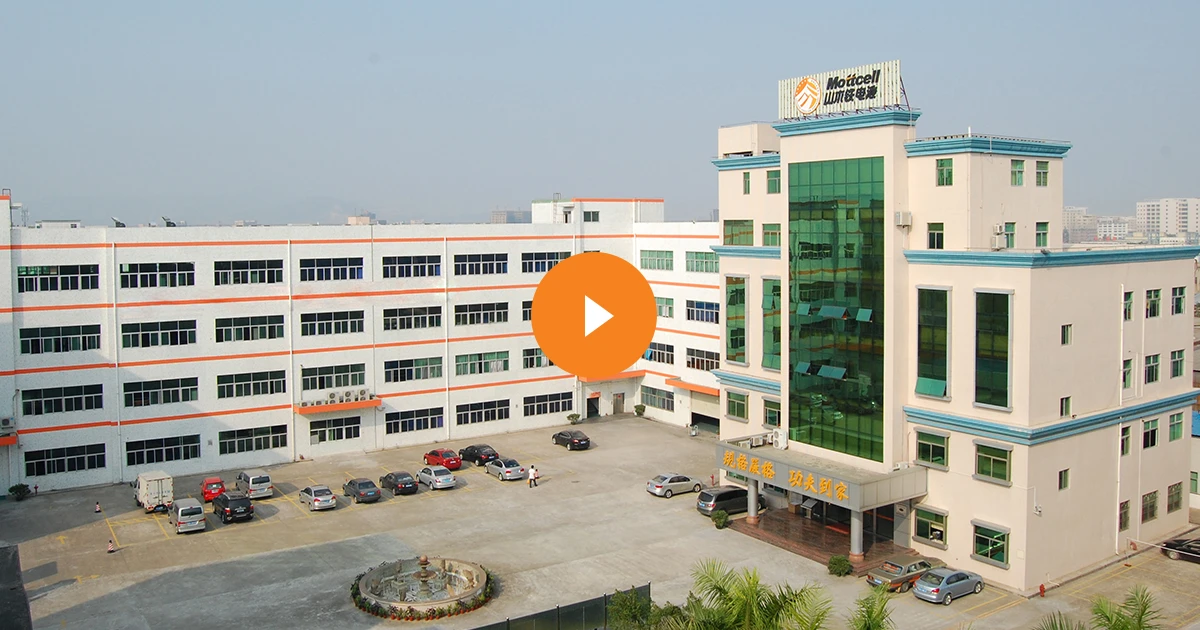
Building a 24V battery pack is a complex harmony of chemical, electrical, and mechanical engineering. By refusing to compromise on cell grading, utilizing laser-welded interconnects, and integrating smart BMS logic, Mottcell ensures that every battery we produce is a reliable industrial asset.
When you source from Mottcell, you are not just buying a battery; you are investing in a precision-engineered system designed to power the next generation of industrial automation and clean energy. Our commitment to manufacturing excellence is the reason we remain a trusted partner for global factories and energy integrators.
A 24V battery is a high-density energy storage system typically composed of 8 Lithium Iron Phosphate (LiFePO4) cells wired in series (8S), providing a nominal voltage of 25.6V. At Mottcell, our 24V architecture is specifically engineered with Grade A prismatic cells to support high-torque industrial motors and precision electronics, offering twice the power of a standard 12V system at the same current level.
A 24v 100ah battery provides a total energy capacity of 2,560Wh (Watt-hours). Its runtime depends on the load: for example, it can power a 250W industrial sensor for over 10 hours. In terms of service life, a Mottcell-manufactured pack is designed to last 10 to 15 years, thanks to our high-standard manufacturing process that guarantees 6,000 to 8,000 cycles at 80% Depth of Discharge.
To maintain the health of a 24V battery pack, it should be charged using a dedicated LiFePO4 charger with a CC/CV (Constant Current/Constant Voltage) profile. The peak charging voltage should be set between 28.8V and 29.2V. Every Mottcell battery features an integrated Smart BMS that automatically regulates the charging process, including a low-temperature cut-off to prevent cell damage in cold environments.
No. While they may look similar, a 24V system (8 cells in series) operates at twice the electrical pressure of a 12V system (4 cells in series). The primary advantage of a Mottcell 24V battery pack for industrial customers is efficiency; it allows for thinner wiring and reduced heat loss, making it the superior choice for heavy-duty AGVs, off-grid solar storage, and high-power industrial backup systems.
12.8V 200Ah Battery Pack Factory: OEM Sourcing Guide
Commercial HESS Supplier: Factory Microgrid Sizing Guide
51.2V HESS Battery Supplier: 100Ah to 314Ah Capacity Guide
12V LiFePO4 Battery Pack Manufacturer: 50Ah-314Ah OEM Guide
16kWh HESS Supplier: 51.2V 314Ah Buyer’s Guide
5kWh HESS Supplier: Indoor Modular Battery Buying Guide
48V 200Ah HESS Supplier: Voltage & Inverter Fit Guide
15kWh HESS Supplier: Capacity & Home Backup Runtime Guide
Established in 2005
In 2009, it was awarded the title of "National High tech Enterprise"
 zoe@mottcell.net
WhatsApp: 8617388790296
Fax: 86-0755-84042963
Skype: live:b0ebaecbb8782516
WeChat: +8613428749632

 VR show
 CN
CN Home >


