

 Jan 06, 2026


A request for “a 16340 rechargeable cell” can produce two apparently identical quotes for parts that will not fit the same device. Mottcell lists both IFR16340 and IFR16340J lithium iron phosphate cells. At the same nominal voltage and capacity, their listed heights differ by a millimetre. A buyer can settle that question before ordering samples by sending the holder drawing and asking the factory to identify the exact part it proposes to ship.
This guide follows that part from quotation to incoming inspection. It is written for an OEM sourcing a cylindrical cell for a compact instrument, light or portable electronic device. Start with the electrical requirements and the space inside the product. Then ask what the factory can show for the sample lot, what will appear on the purchase order, and how a receiving inspector will recognise the approved part when the first shipment arrives.
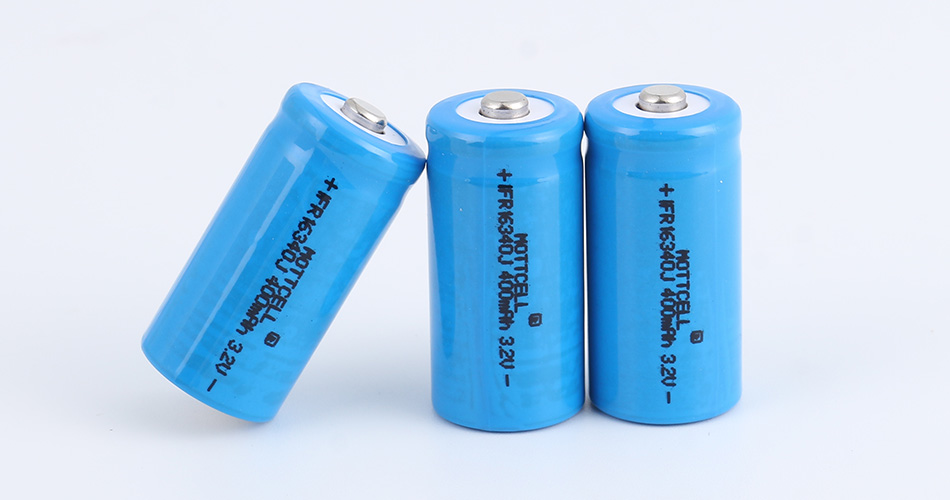
The four entries below come from the Mottcell cylindrical battery cell catalogue. The capacity variants share model names within each pair. Write both the designation and the capacity on the request for quotation. Ask for the current datasheet and drawing revision for that combination, including any additional suffix the factory uses on quotations or labels.
| Cell designation | Capacity | Diameter | Height | Nominal energy* |
|---|---|---|---|---|
| IFR16340 | 400 mAh | 16.4 ± 0.3 mm | 34 ± 0.3 mm | 1.28 Wh |
| IFR16340 | 500 mAh | 16.4 ± 0.3 mm | 34 ± 0.3 mm | 1.60 Wh |
| IFR16340J | 400 mAh | 16.4 ± 0.3 mm | 35 ± 0.3 mm | 1.28 Wh |
| IFR16340J | 500 mAh | 16.4 ± 0.3 mm | 35 ± 0.3 mm | 1.60 Wh |
*Calculated from the listed 3.2 V nominal voltage multiplied by capacity in ampere-hours. These figures describe nominal stored energy. Delivered energy at the device terminals depends on the load, temperature, conversion losses and the voltage at which the device stops operating.
Ask the sales engineer to mark the quoted entry on the drawing. A sample described simply as “500 mAh 16340” could correspond to either height. A drawing with no capacity or electrical specification presents the opposite problem: the mechanical team can approve the sample while purchasing still has two possible parts in its system. Link the drawing, datasheet and quotation to one internal buyer part number before issuing the first order.
Allow for the highest cell permitted by the drawing. The upper catalogue heights are 34.3 mm for IFR16340 and 35.3 mm for IFR16340J. Suppose an enclosure drawing allows a maximum finished cell height of 35.0 mm after its contacts and tolerances have been accounted for. The longer catalogue entry could exceed that limit by 0.3 mm. A single sample that happens to fit would not clear the issue. This example illustrates a drawing review; it is not a measurement of a customer device.
Have the mechanical designer identify the surfaces between which the height is measured. Check the closed cover as well as the empty holder. A spring contact that depresses on the workbench can behave differently once the cover is latched and the product is subject to ordinary handling. Record the permitted range of travel and contact pressure from the holder supplier. Where the drawing omits a critical tolerance, resolve it before treating fit as approved.
Define the delivered configuration explicitly. A bare cell, a cell with welded tabs and a finished assembly with leads can require different clearances. A protection board or terminal modification may also change the overall dimensions. The catalogue entries above do not establish which additions are supplied or what dimensions a custom assembly will have. Ask separately for an assembly drawing, the terminal orientation and an image showing where the label and lot mark will remain visible after installation.
Give the factory a short description of a representative operating day. An instrument that sleeps between measurements, a lamp that holds one brightness setting and a transmitter that draws brief peaks can use the same amount of charge over a day while placing different demands on a cell. State the continuous load, the largest expected peak, its duration and how often it repeats. Identify whether the figures were measured at the battery input or at the regulated output.
A simple calculation helps the buyer spot an unrealistic requirement early. Consider a hypothetical instrument drawing an average of 40 mA at the cell terminals. Dividing 400 mAh by 40 mA gives ten hours on paper. The same arithmetic gives twelve and a half hours for 500 mAh. Neither figure establishes an operating-time claim. The device might shut down when voltage dips under a pulse, or its current might rise as the cell voltage falls. Verify the actual duty cycle on a sample in the intended equipment.
The charging system deserves its own line in the RFQ. State its model, approved chemistry, voltage limits, current control and the temperature range in which charging is permitted. The Mottcell 3.2 V catalogue entries list a charge cut-off of 3.65 V. A size marking such as 16340 or RCR123A on a charger does not establish that it supports this chemistry or the exact cell. Use the manufacturer's approved charging specification for the quoted revision. A disposable primary CR123A must never be recharged.
If the same product housing is used across several regions, identify every charger and power accessory that ships with it. Two visually identical chargers may carry different model numbers or firmware. Purchasing can keep this manageable by recording approved combinations in one short list and referring to the list in the order. When a distributor proposes another charger later, engineering has a clear reference for deciding whether that combination needs a separate review.
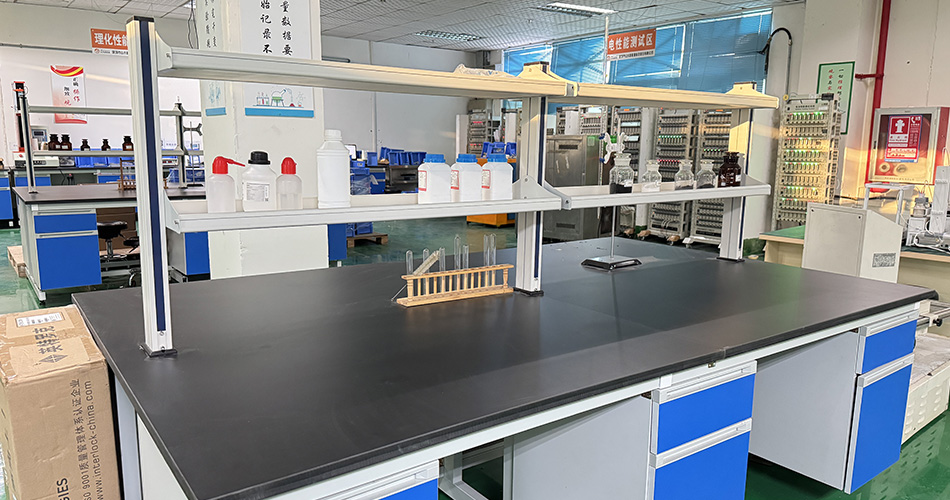
Mottcell outlines its quality control and production process on its company page. A tour or a production video can show how work is organised. For purchase approval, ask to see how a cell in a shipping carton connects to a production lot and the inspection record for that lot. The factory can use redacted example documents when discussing the process. For the actual order, agree which records will identify the shipped items and who will answer questions if the carton label and the inspection sheet do not match.
| Buying decision | Ask the factory to provide | What the buyer checks |
|---|---|---|
| Approve a model | Current drawing and datasheet for the proposed capacity and finish | The same identifiers appear on the quotation and sample paperwork. |
| Approve the sample result | Sample lot code and test conditions | Engineering can repeat the comparison and recognise any differences in method. |
| Release a shipment | Lot-linked outgoing inspection record and packing list | Receiving staff can reconcile cartons, quantities and the approved revision. |
| Review a change | Description, affected lots and proposed introduction date | The buyer can decide whether fresh samples are needed before shipment. |
Capacity is a useful example of why the method matters. Compare the starting condition, discharge current, ambient temperature, lower voltage limit and rest interval used in the two reports. A test run under the factory reference conditions answers a different question from a run in a customer's pulsed-load device. If the results differ, first establish which question each test answered. Keep both records with the lot code instead of averaging two unrelated measurements.
The same principle applies to internal resistance. Ask whether the reported value is based on an AC or DC method, the measurement conditions and the state of charge at the time. A change in fixture, contact quality or measuring method can affect the reading. Agree on a consistent procedure before using the number to accept or reject a shipment. If the supplier offers only a typical figure, ask which acceptance limit, if any, it is prepared to put in writing for the order.
Keep two questions separate during sampling. First, does the cell match the agreed factory specification? Second, does the finished device meet its performance requirements with that cell installed? A cell may meet its specification while the device shuts down earlier than planned. Conversely, a demonstration that runs well for one afternoon does not establish lot consistency. Assign one owner to each question and record a pass criterion for each before samples arrive.
For a compact data logger, a sensible acceptance sheet might include enclosure closure, startup at the normal operating temperature, a complete logging cycle and successful transmission at the lowest intended state of charge. The product owner defines the conditions and limits for its equipment. Label the sample, device revision, charger and software build in the results. If an engineer changes the shutdown threshold during the evaluation, record a new run so that the two results remain interpretable.
Decide how to handle a mixed outcome before it delays production. If the sample meets the cell capacity criterion but fails the device runtime test, send the factory the operating profile and trace from the failed run. Ask engineering to check the voltage at the device input, the load step and any connector losses. Do not authorise a different cell or revise an acceptance limit on the strength of an informal suggestion. The next trial should state exactly what changed and which result would resolve the discrepancy.
Retain identified reference samples and the associated drawings where appropriate. A retained sample can help a receiving inspector compare finish or label placement, but the drawing remains the reference for dimensional tolerances. An inspector should not reject a production cell solely because its printed label sits slightly differently from one development sample unless label position was defined as a requirement. Record the features that matter for fit, function, traceability and customer-facing appearance.
Request prices against the same part, finish, quantity and delivery point. A quote for loose, individually insulated cells and another for a tested assembly with a connector may use the same capacity figure but cover different work. Ask each supplier to identify tooling, fixtures, packaging, sample costs and any testing charged separately. Specify the currency and commercial delivery terms so that purchasing can calculate a comparable landed cost using its own freight and import assumptions.
Separate the pilot quantity from the expected repeat order. A factory may be able to send a small quantity from existing stock while requiring a different lead time for a new production lot with a customer-specific label. Ask which lead time starts at order confirmation and which starts after drawing or artwork approval. A production promise that depends on an unsigned drawing cannot safely be used to schedule the launch of the finished device.
One way to compare bids is to make a single spreadsheet row for each unresolved difference. For example, quote A includes a lot-linked inspection sheet and plain wrapping, while quote B includes branded packaging but does not describe its outgoing report. Ask both factories to quote the same packaging and documentation. This avoids paying for a feature that the project does not use or choosing a cheaper offer that omits a record your receiving team needs for every delivery.
At pilot release, give purchasing a short approved-part record. It should identify the factory's part and capacity, the buyer's internal code, the document revisions, the approved finish and the agreed packing configuration. Include a named contact for technical questions and a route for reporting discrepancies. The same record can be attached to a repeat purchase order months later, when the original sample discussions may no longer be easy to retrieve.
Define which changes require notice. Examples to discuss include terminal geometry, insulation, labeling, the delivered capacity variant and a move to a different production site. The buyer and supplier should agree on the notice period and what evidence is required for each material change. A packaging artwork change might need a proof review; a modified terminal may require another enclosure trial. State who can approve each change and how the first affected lot will be identified.
When a discrepancy is found, keep the original carton and the identifiers on representative units together. Record the affected quantity, lot markings, order number and the way the problem was detected. Separate affected stock from accepted stock under the buyer's usual receiving procedure. Give the factory enough evidence to investigate without treating the first suspect unit as proof that every carton is affected. Agree how replacement, reinspection or other disposition will be documented before releasing the remaining stock.
A repeat order is also a good time to check what field information is useful to the factory. “The cell did not last” is difficult to investigate. A report with the device revision, charger model, operating temperature, time in service and observed symptom gives both sides a starting point. Where it is safe to do so, record the device's error message or telemetry. Follow the supplier's return instructions for affected units; an ordinary parcel return may be inappropriate for a damaged battery.
Start with one sentence describing what the device does and who will install or replace the battery. Add a sketch or controlled drawing of the available space, then identify the required chemistry, approximate capacity, expected load and charger. If a detail is still open, label it as a design question instead of copying a specification from a similar device. This lets the factory distinguish firm requirements from the points on which an alternative might be welcome.
For example, a buyer might request a quote for a 3.2 V, 500 mAh candidate for a compact measuring instrument, with a limit on finished height and separate prices for pilot and repeat quantities. Engineering could attach its holder drawing and measured current trace. Purchasing could then ask the factory to return the proposed part designation, revision, terminal drawing, quotation validity and a list of unresolved compatibility questions. These example requirements illustrate the structure of an enquiry; they do not describe an approved device configuration.
Before authorising the order, ask the person responsible for incoming inspection to read the supplier's response. Can that person tell what should arrive, which document to use and what to do if the label differs? A missing drawing revision or an unexplained substitution is easier to resolve while the quotation is open. Keep the signed-off response with the purchase order so that production, quality and sourcing all work from the same set of requirements.
Use only a battery type the device manufacturer approves. Check the operating voltage window, contacts, finished dimensions and charging arrangement. Similar size names alone do not establish compatibility. A primary CR123A is single-use and must never be placed in a charger.
The Mottcell catalogue lists the standard cell at 34 ± 0.3 mm high and the J variant at 35 ± 0.3 mm. Both have 400 and 500 mAh entries. Request the drawing for the exact finish and capacity before approving holder fit.
Ask for the quoted part number, current electrical datasheet, mechanical drawing, sample lot identifier and capacity test conditions. If a document is required for your market or transport route, confirm that its scope identifies the offered model and configuration.
For a model-specific quotation, send Mottcell your 16340 cell requirements with the holder drawing, load profile, charging details, pilot quantity and expected repeat volume. Ask the team to identify the proposed cell and the remaining checks for sample approval.
16340 LiFePO4 Battery Factory Guide for OEM Cell Buyers
48V 300Ah HESS: Solar Backup Reserve and Recharge Guide
Industrial 12V LiFePO4 Battery Pack: OEM Buying Guide
12V 314Ah Battery Pack: Solar Inverter Shutdown Guide
36V 314Ah Battery Pack Manufacturer: OEM Buying Guide
48V 200Ah HESS: Solar Battery Expansion Planning Guide
48V 200Ah HESS Supplier: Voltage & Inverter Fit Guide
12V 300Ah Battery Pack: Alternator & DC-DC Charging Guide
Established in 2005
In 2009, it was awarded the title of "National High tech Enterprise"
 zoe@mottcell.net
WhatsApp: 8617388790296
Fax: 86-0755-84042963
Skype: live:b0ebaecbb8782516
WeChat: +8613428749632

 VR show

 CN
 Home >


