

 Jan 19, 2026


OEM buyers don’t purchase batteries as “parts.” They purchase power performance, reliability, and supply stability. If your product depends on long runtime, high consistency, and repeatable pack assembly, choosing the right 32650 Lithium ion battery manufacturer becomes a strategic decision—not a simple quotation comparison.
The 32650 cylindrical format is widely used in industrial and energy-related products because it offers large cell volume, strong mechanical structure, and scalable pack integration. But the same “32650” label can hide major differences in chemistry, safety design, internal resistance control, and factory quality systems. That’s why experienced procurement teams evaluate not only the cell, but the full capability of the 32650 Lithium ion battery factory behind it.
This article explains how OEMs should source 32650 cylindrical cells and custom packs, when to choose a 3.2V platform, and what to verify to reduce risk from sampling through mass production.
| Comparison Item (1kWh Pack) | 18650 (2600mAh) | Mottcell 32650 (6000mAh) | Benefit |
| Total Cells Needed | ~106 Pieces | ~46 Pieces | -56% Fewer Cells |
| Welding Points | 212 Points | 92 Points | Lower Failure Risk |
| Assembly Time | High | Low (Fast Production) | Reduced Labor Costs |
| Mechanical Stability | Standard | Excellent (Rigid) | Better for Vibration |
| Cycle Life (LFP) | 2,000 Cycles | 3,000 - 5,000 Cycles | Extended ROI |
The 32650 format is a large cylindrical cell that suits applications where buyers value runtime, robustness, and long-term stability. Compared with smaller cylindrical sizes, 32650 cells can support higher capacity per cell and reduce the total number of cells required in a pack. Fewer cells often means fewer weld points, simpler wiring, and lower assembly risk—important for industrial products that must run consistently in the field.
OEM customers typically choose 32650 cells for projects such as:
Backup power modules and emergency energy systems
Portable power units and industrial equipment power sources
Renewable energy storage-related products
Long-runtime lighting, monitoring, or control systems
Custom battery packs that prioritize durability over compactness
Because many of these products operate in demanding environments, the supplier’s quality control and pack engineering capability matter as much as the cell’s nominal capacity.
A common sourcing mistake is treating “32650 lithium ion” as one single product category. In practice, OEM projects often choose between two broad directions:
These platforms are often chosen when energy density is a primary goal and the system design is optimized for 4.2V charge behavior. In this category, OEM buyers typically demand:
Stable internal resistance to support consistent power under load
Reliable safety performance (protection strategy is critical)
Controlled batch-to-batch consistency for pack building
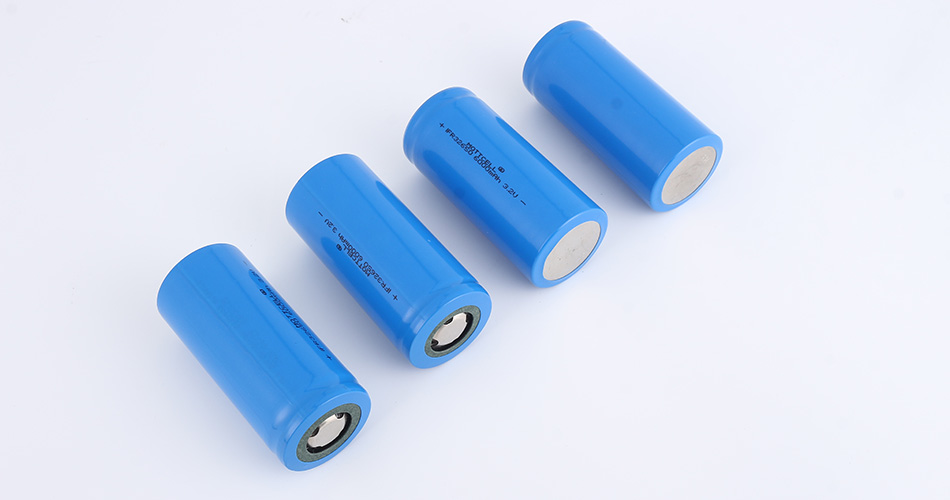
Many industrial customers prioritize safety margin, thermal stability, and cycle life. That’s where a 3.2V 32650 Lithium ion battery manufacturer becomes especially relevant. In many sourcing contexts, the 3.2V platform is associated with lithium iron phosphate–based systems and other stable chemistry solutions that are widely selected for long-cycle applications.
If your product is designed for long service life, frequent cycling, or higher safety margin requirements, working with a 3.2V 32650 Lithium ion battery factory that understands chemistry-correct charging and protection logic can reduce field risk and shorten development cycles.
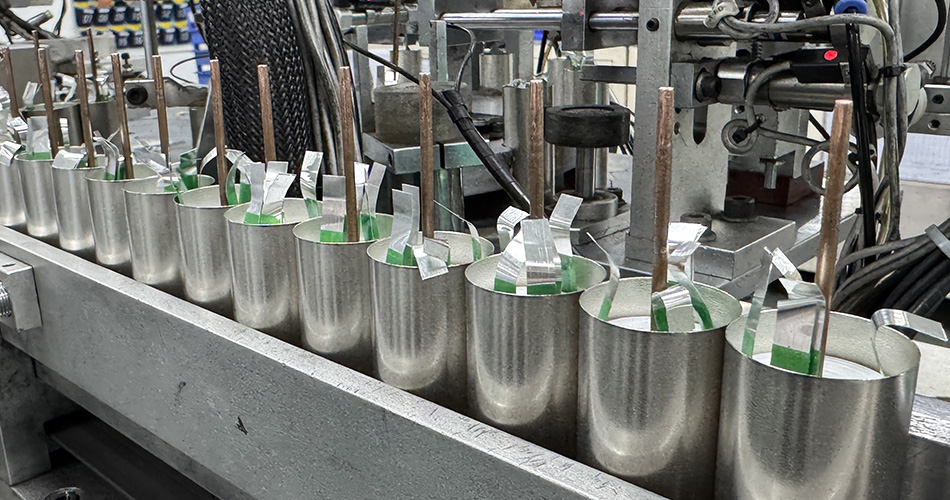
A true 32650 Lithium ion battery factory does not simply ship cells. It provides an OEM-ready manufacturing and engineering process that supports consistency, traceability, and scalable production.
For multi-cell packs, differences in capacity and internal resistance create imbalance. Over time, imbalance reduces usable capacity and accelerates degradation. A professional 32650 Lithium ion battery manufacturer should demonstrate:
Clear grading standards for capacity and internal resistance
A method for handling outliers and drift
Batch traceability (so issues can be isolated quickly)
Documentation practices that help OEMs maintain quality records
OEM programs often require custom packs—not only cells. Your supplier should be able to support:
Series/parallel configuration design based on voltage and capacity targets
Protection circuit and BMS integration aligned with your load profile
Harness, connector, and insulation customization
Mechanical reinforcement for vibration, shock, and industrial handling
Guidance on pack layout to improve thermal stability and service life
A manufacturer that can deliver custom packs as an engineered product—rather than “assembly by request”—will reduce risk during validation and mass production.
Field failures are frequently caused by pack assembly issues: weld instability, insulation damage, polarity mistakes, or weak mechanical support. OEM-grade factories typically implement structured checkpoints, including:
Controlled welding parameters and process stability
Defined inspection steps for mechanical and electrical correctness
End-of-line tests that confirm pack function and safety behavior
Consistent labeling and traceability identifiers for shipment control
This is what separates a true 32650 Lithium ion battery factory from a trading-style supplier.
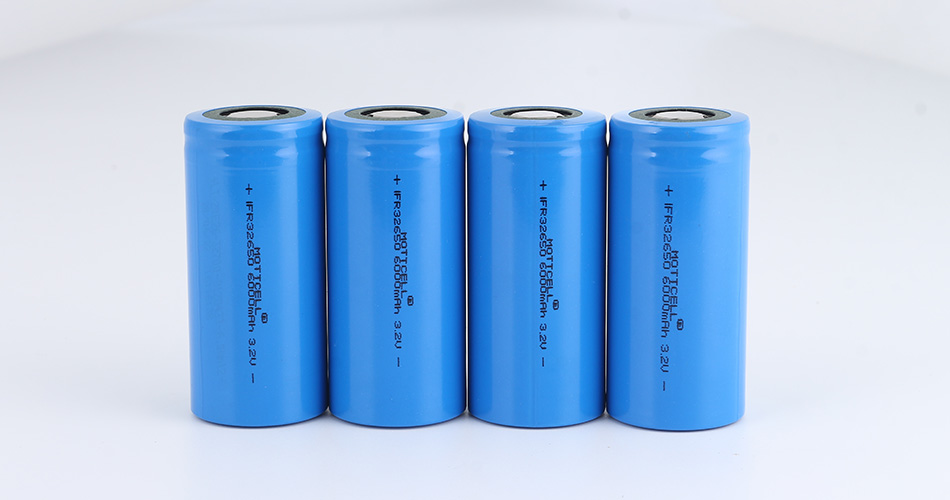
If you’re building products in energy storage, backup, or industrial environments, your procurement team may intentionally search for a 3.2V 32650 Lithium ion battery manufacturer. The reason is simple: 3.2V platforms are often selected when reliability and safety stability outweigh the need for maximum energy density.
Working with a 3.2V 32650 Lithium ion battery factory can offer:
More stable thermal behavior for safety-first designs
Long cycle performance for systems with frequent charge/discharge
Predictable voltage characteristics for controlled system behavior
Better fit for harsh environments where stability matters
However, these advantages only appear when the factory understands system matching. The most common failure mode in 3.2V projects is not “bad cells,” but charger/BMS mismatch and incorrect protection thresholds. A qualified factory should be able to support chemistry-correct recommendations and validation guidance.
When you compare suppliers, focus on manufacturing evidence and OEM readiness rather than marketing claims.
A reliable 32650 Lithium ion battery manufacturer can explain how they control quality through production, not only how they test at the end. You should expect clear answers about grading, traceability, and process controls.
OEM customers require predictable delivery. A professional 32650 Lithium ion battery factory should show capacity planning discipline, stable lead times, and the ability to scale without quality drift.
OEM projects move fastest when suppliers ask the right questions early. A serious supplier will request:
Your continuous and peak discharge current
Operating temperature range and environment conditions
Mechanical constraints and integration requirements
Compliance and documentation expectations
Timeline for samples, pilot, and mass production
If a supplier only asks “how many pieces,” they may not be ready for OEM-level cooperation.
“Custom” in OEM procurement typically includes both electrical and mechanical dimensions:
Electrical customization: voltage platform, capacity target, current capability, protection thresholds, BMS functionality
Mechanical customization: housing size constraints, connector type, cable length, mounting structure, insulation design, shock/vibration reinforcement
Production customization: labeling, packaging, traceability format, test records, consistent lot delivery behavior
A capable 32650 Lithium ion battery factory can support these needs while keeping the pack design safe and manufacturable at scale.
To get accurate engineering feedback from a 32650 Lithium ion battery manufacturer, include these in your RFQ:
Chemistry requirement (explicitly state if you need a 3.2V platform)
Target voltage and capacity
Continuous discharge current and peak current
Size limits or mechanical drawings
Connector and wire requirements
Operating temperature range and environment constraints
Required certifications and destination markets
Estimated annual demand and your timeline (samples → pilot → SOP)
This information helps the supplier propose a realistic configuration, protection strategy, and production plan.
A 32650 Lithium ion battery manufacturer produces 32650 cylindrical cells and may also support custom battery pack assembly for OEM projects. The best manufacturers focus on consistency controls, traceability, and scalable supply to meet industrial reliability requirements.
OEM buyers often choose a 3.2V 32650 Lithium ion battery manufacturer for applications that prioritize safety stability, long cycle life, and predictable performance. A 3.2V platform is commonly selected for energy-related and industrial systems where long-term reliability is critical.
Before mass production, confirm the 32650 Lithium ion battery factory can provide consistent grading, traceability, stable welding/assembly processes, and end-of-line testing. OEM-ready factories also support change control and clear documentation practices to prevent quality drift over time.
To qualify a 3.2V 32650 Lithium ion battery factory, verify chemistry expertise, system-matching support (charger and protection thresholds), consistent cell grading for series packs, and production stability from samples to pilot runs and mass shipments.
Choosing the right 32650 Lithium ion battery manufacturer is the fastest way to reduce engineering risk, improve pack reliability, and protect your production schedule. Whether you need standard 32650 cells or are sourcing from a 3.2V 32650 Lithium ion battery manufacturer for safety-first industrial systems, the winning approach is the same: verify consistency controls, confirm pack engineering capability, and ensure the 32650 Lithium ion battery factory can scale with repeatable quality.
Related Articles
High-Capacity Lithium Ion Batteries: Reliable Power for Industrial Innovation
Lithium Ion Battery Solutions: High-Capacity Cells for Professional Projects
Lithium Polymer vs Lithium Ion: The Professional Industrial Guide | Mottcell
Lithium Ion Battery Manufacturer: High-Performance 18650 Solutions
Reliable 4860 Lithium Ion Battery Manufacturer and OEM Factory
32700 Lithium Ion Battery Manufacturer for OEM Applications
26700 Lithium Ion Battery Manufacturer for OEM Applications
14650 Rechargeable Battery Factory: Power & Innovation
Lithium Ion Battery Guide: Industrial OEMs & Global Sourcing | Mottcell
16kWh HESS Supplier: 51.2V 314Ah Buyer’s Guide
5kWh HESS Supplier: Indoor Modular Battery Buying Guide
48V 200Ah HESS Supplier: Voltage & Inverter Fit Guide
15kWh HESS Supplier: Capacity & Home Backup Runtime Guide
10kWh HESS Supplier: Home Solar Storage Buying Guide
12V LiFePO4 Battery Pack Manufacturer for OEM Projects
51.2V HESS Battery Supplier | Solar Storage OEM Guide
AGV Lithium Battery: High-Power Industrial LiFePO4 Units
Established in 2005
In 2009, it was awarded the title of "National High tech Enterprise"
 zoe@mottcell.net
WhatsApp: 8617388790296
Fax: 86-0755-84042963
Skype: live:b0ebaecbb8782516
WeChat: +8613428749632

 VR show
 CN
CN Home >


