

 Feb 09, 2026


In the intricate world of industrial manufacturing and product engineering, energy is the most vital raw material. Selecting the right power source is not merely a logistical step; it is a fundamental engineering decision that dictates product reliability, user experience, and market competitiveness. Understanding popular battery sizes & ratings is essential for any procurement manager or engineer looking to optimize system performance.
As a global leader in high-performance power solutions, Mottcell provides this comprehensive guide to help factory-level clients navigate the landscape of energy storage—from the standard household cells to the high-capacity rechargeable 18650 batteries that drive modern industrial innovation.
| Cell Model | Diameter × Height | Volume (cm3) | Energy Density | Best Strategic Use |
| 14500 (AA) | 14mm × 50mm | 7.7 | Moderate | Handheld Sensors |
| 18650 | 18mm × 65mm | 16.5 | High | Most Versatile / Medical |
| 21700 | 21mm × 70mm | 24.2 | Highest | High-Power / EVs |
| 32650 (LFP) | 32mm × 65mm | 52.3 | Reliable | Solar / AGV Storage |
| 32700 (LFP) | 32mm × 70mm | 56.3 | Durable | Backup Power Systems |
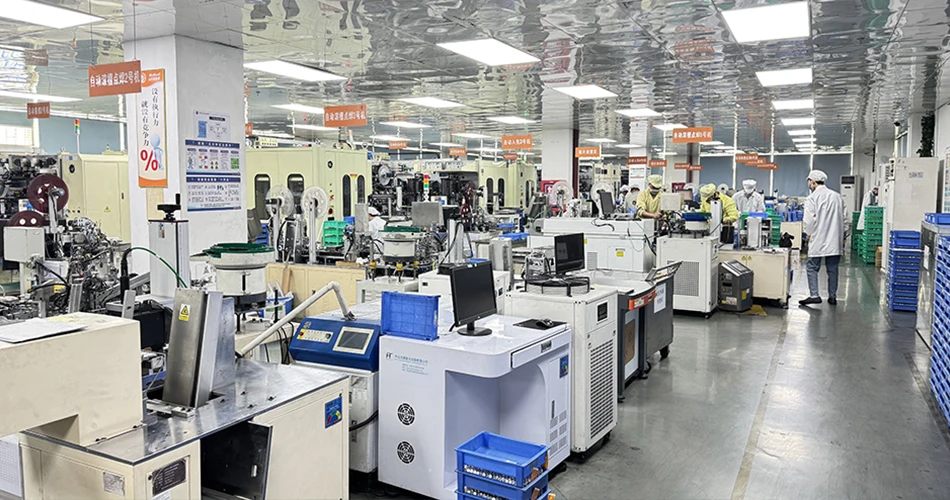
For handheld sensors, remote controls, and portable diagnostic tools, the traditional "Alphabet" sizes remain the industry standard. However, the chemistry behind these sizes has shifted dramatically toward sustainability and high-drain efficiency.
When looking for the aaa battery best suited for industrial use, you must consider the duty cycle. For low-drain devices, standard alkaline may suffice, but for professional equipment, recommended rechargeable batteries are the superior choice.
Triple A Battery Voltage: Standard alkaline AAA cells provide 1.5V, while the voltage of triple a battery in a NiMH (Nickel Metal Hydride) rechargeable is typically 1.2V. Despite the lower nominal voltage, NiMH maintains a flat discharge curve, providing consistent power longer than alkaline.
Top Rated AAA Rechargeable Batteries: Modern industrial-grade nickel metal hydride aa batteries and AAA counterparts are designed with "Low Self-Discharge" (LSD) technology, retaining up to 85% of their charge even after a year in storage.
The aa nimh rechargeable batteries are the workhorses of the handheld tool world. For OEMs, sourcing the best aa aaa rechargeable batteries means looking for high mAh (milliampere-hour) ratings, which indicate how much energy the cell can hold. High-capacity AA cells can reach 2500mAh to 2800mAh, providing hours of runtime for precision instruments.
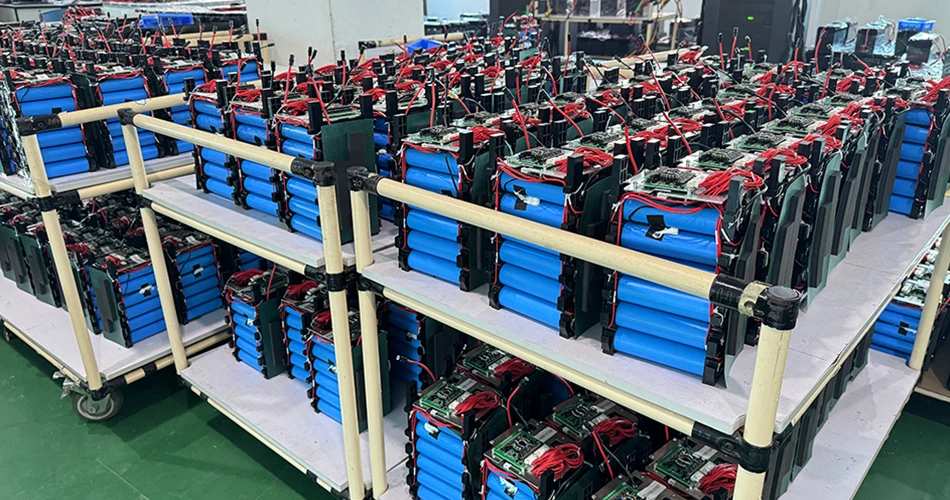
In the realm of IoT sensors, CMOS backups, and miniature medical devices, the CR2032 lithium coin cell is king.
CR2032 Battery Voltage: The nominal cr2032 battery voltage is 3.0V. It is vital to monitor the 2032 battery voltage during system design; once the voltage drops below 2.0V, most precision electronics will fail to initiate.
Stability: Lithium coin cells are prized for their 10-year shelf life and extreme temperature resistance, making them ideal for "set-and-forget" factory sensors.
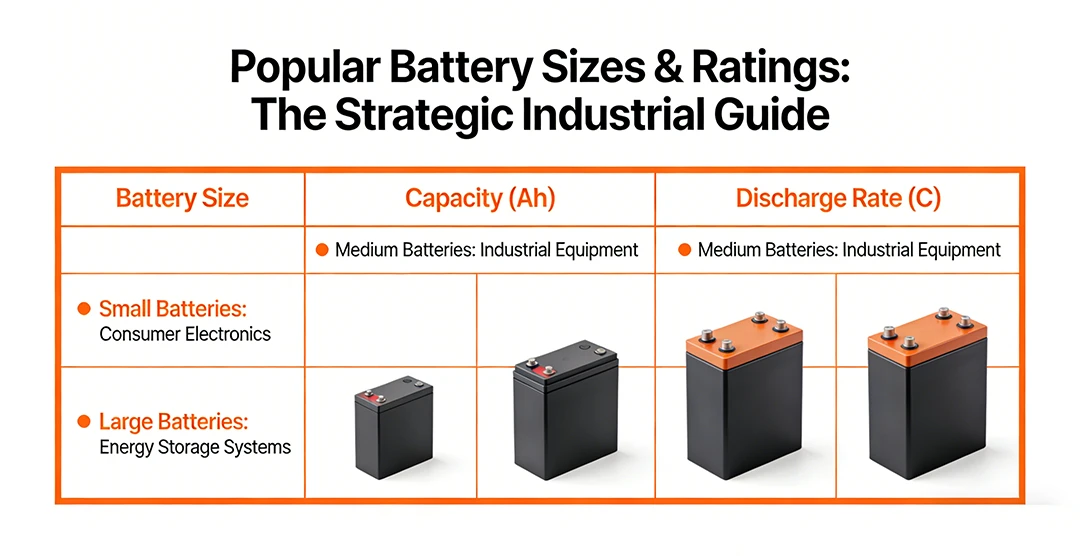
When your application requires high energy density and high discharge rates—such as in electric vehicles, AGVs (Automated Guided Vehicles), or high-end power tools—the 18650 cell is the undisputed leader among popular battery sizes & ratings.
The icr 18650 battery uses a Lithium Cobalt Oxide (LiCoO2) chemistry. This specific type is favored for its high specific energy. However, for industrial environments where safety is paramount, many OEMs now opt for INR (Nickel) or IFR (Iron Phosphate) chemistries within the same 18mm x 65mm form factor.
Buying individual rechargeable li-ion 18650 battery units is common for small-scale tools, but industrial OEMs usually require a structured 18650 battery pack.
18650 Battery Pack Design: A pack battery 18650 configuration involves wiring multiple cells in series (to increase voltage) and parallel (to increase capacity).
Customization: At Mottcell, we provide custom-engineered 18650 battery pack solutions, integrating smart Battery Management Systems (BMS) to ensure thermal stability and balanced charging across every cell.
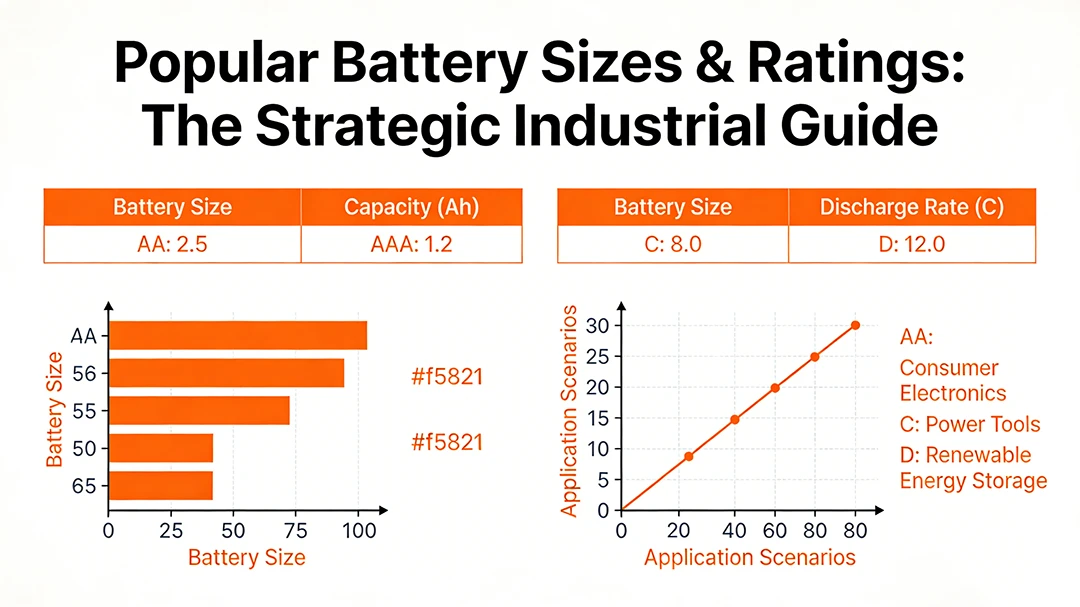
Choosing from popular battery sizes & ratings requires more than just picking a cell that fits. You must calculate the energy demand of your specific application.
Determine Voltage Requirements: Does your system need the 1.2V of nickel metal hydride aa batteries or the 3.7V of a rechargeable li-ion 18650 battery?
Calculate Load (Amps): How much current does the device draw at peak performance?
Define Desired Runtime: How many hours must the device operate before needing a recharge?
Consider Environment: Will the battery be exposed to high heat (favoring LiFePO4) or extreme cold?
By following this logic, you move from simply buying "a battery" to sourcing a "power system."
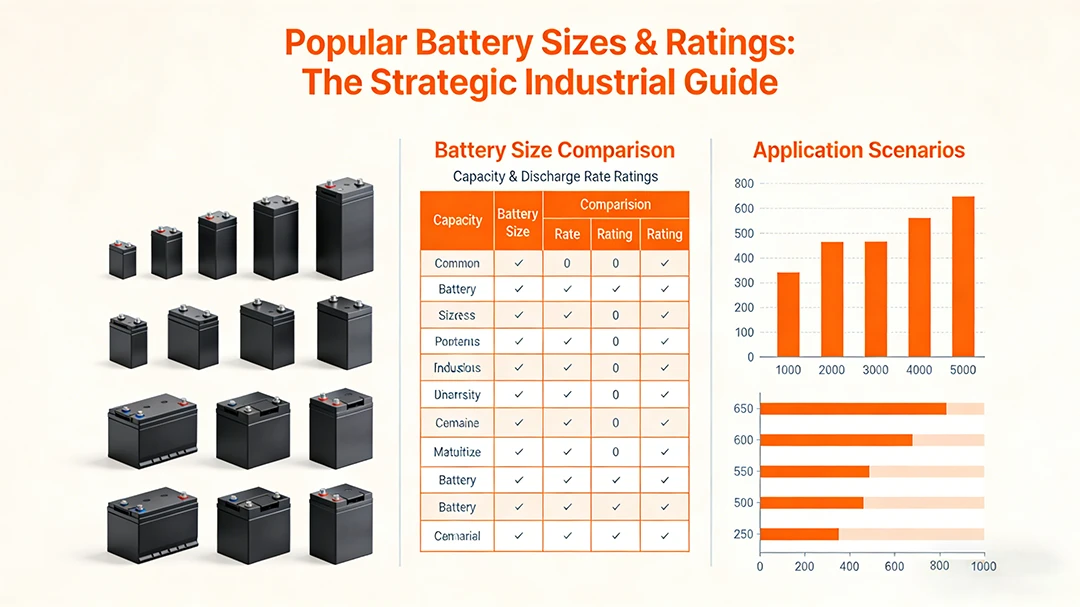
Battery size refers to the physical dimensions and form factor of a cell (e.g., the 18mm x 65mm of an 18650). However, in an industrial context, "size" also refers to the capacity (Ah) and energy (Wh) the battery can deliver. At Mottcell, we help you match physical size with electrical capacity.
To calculate the size, multiply the device's power draw (Watts) by the required runtime (Hours) to get Watt-hours (Wh). Divide this by the system voltage to find the required Amp-hour (Ah) rating. For example, a 10W device running for 5 hours at 12V requires a 4.16Ah battery.
Choosing the right capacity involves balancing weight, cost, and runtime. While a high-capacity 2800mAh AA NiMH battery offers longer life, it may be heavier. For rechargeable 18650 batteries, capacity typically ranges from 2600mAh to 3500mAh. Mottcell’s engineers can assist in finding the "sweet spot" for your OEM specifications.
While Battle Born is a popular consumer brand for RVs, Mottcell provides specialized, factory-direct OEM solutions that compete in performance but offer greater customization for industrial integration. We provide the technical transparency required for B2B procurement that retail brands often lack.
Navigating popular battery sizes & ratings is the first step toward a superior product. Whether you need recommended rechargeable batteries for handheld devices or a complex 18650 battery pack for industrial machinery, Mottcell provides the Grade-A cells and engineering expertise to power your success.
Related News
14650 Rechargeable Battery Factory: Power & Innovation
Leading 18650 LiFePO4 Battery Factory for Global Energy Solutions
Leading 18650 Rechargeable Battery Manufacturer for OEM Projects
Industrial 18650 Cylindrical Battery Factory: Dual-Technology Bulk Production for Global Markets
Rechargeable Battery Manufacturer: Custom AAA OEM Cells
The Lead-to-Lithium Transition: A Strategic Deep Dive
Cylindrical, Prismatic, or Pouch: Which Battery Format Keeps Your Project Safe — and Profitable?
Comparing Rechargeable Battery Types | Industrial Guide
Alkaline vs Rechargeable Battery | Industrial Choice Guide
Lithium Polymer vs Lithium Ion: The Professional Industrial Guide | Mottcell
LiFePO4 vs Lead Acid: The Ultimate Guide for Industrial Applications
Lithium Ion Battery Manufacturer: Custom High-Capacity Cells for OEM Projects | Mottcell
Established in 2005
In 2009, it was awarded the title of "National High tech Enterprise"
 zoe@mottcell.net
WhatsApp: 8617388790296
Fax: 86-0755-84042963
Skype: live:b0ebaecbb8782516
WeChat: +8613428749632

 VR show
 CN
CN Home >


